
New AC Installation Cost in California (2026 Guide)
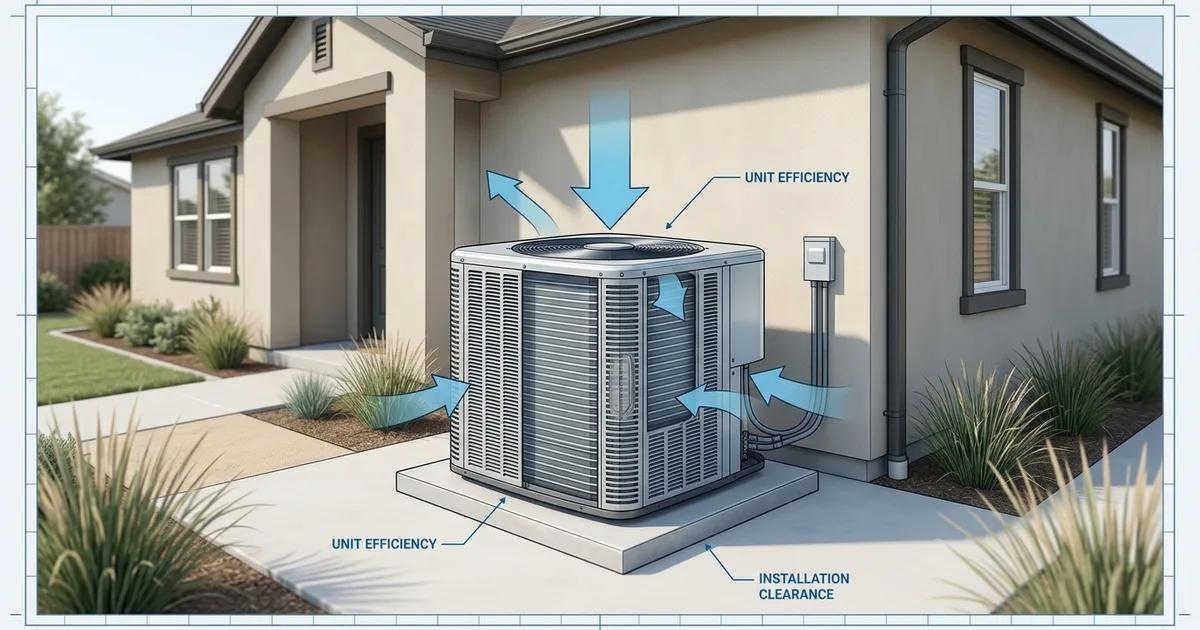
Sacramento summers routinely hit 105°F. A functioning AC isn't a luxury — it's what keeps your home livable from June through September. So the first question most homeowners have when their old system gives out is a simple one: how much is this going to cost?
The honest answer: a new central AC installation in California costs between $5,000 and $19,000, depending on system size, system type, whether your ductwork is reusable, and where you live. Sacramento-area homeowners tend to land in the $8,000 to $15,000 range for a full replacement.
This guide covers central AC, heat pump, and mini-split pricing — broken down by tonnage and home size, with real numbers from verified sources. We'll also explain California's SEER2 efficiency rules, what a Title 24 permit actually costs, and which rebates are still on the table in 2026.
For broader HVAC cost context including repairs and service calls, see our Sacramento HVAC cost guide.
Key Takeaways
- Central AC installation in California runs $5,000–$13,500 for most homes; full HVAC system replacement hits $8,000–$19,000 (Air & Plumbing Inc., 2026; PULSE HVAC, 2026).
- Heat pump systems cost more upfront ($12,000–$17,000) but qualify for SMUD rebates up to $3,000 — the only major rebate still active in Sacramento in 2026.
- Every new AC in California requires a permit and a HERS inspection under Title 24. Budget $450–$1,000 for permits and testing combined.
- California's federal minimum is 14.3 SEER2 for most split-system AC units. SMUD requires 15.2 SEER2 to qualify for its heat pump rebate.
How Much Does AC Installation Cost in California?
In 2026, a new central AC installation in California costs $5,000 to $13,500 for most homes when the existing ductwork is reusable (Air & Plumbing Inc., 2026). Full HVAC system replacements — AC plus furnace — typically run $11,000 to $19,000 in the Sacramento area (PULSE HVAC Sacramento, 2026). Homes without usable ductwork add another $5,000–$10,000 on top.
These numbers are higher than national averages for good reason. California labor costs run 15–25% above the national baseline. State efficiency rules under SEER2 require higher-grade equipment. And every installation triggers a Title 24 permit and field inspection that adds to the total.
The table below shows typical installed costs for the Sacramento area by system type and home size.
AC Installation Cost by System Type and Home Size (Sacramento, 2026)
| Home Size | System Type | Typical Installed Cost |
|---|---|---|
| 1,000–1,500 sq ft | Central AC only (existing ducts) | $5,000–$7,000 |
| 1,500–2,000 sq ft | Central AC only (existing ducts) | $6,500–$8,500 |
| 2,000–2,500 sq ft | Central AC only (existing ducts) | $8,000–$10,500 |
| 2,500–3,500 sq ft | Central AC only (existing ducts) | $10,000–$13,500 |
| 1,500–2,000 sq ft | AC + gas furnace (full system) | $11,000–$15,000 |
| Any size | High-efficiency AC + 90%+ AFUE furnace | $14,000–$19,000 |
| Any size | Ducted air-source heat pump | $12,000–$17,000 |
| Single room/zone | Ductless mini-split (one zone) | $3,000–$8,000 |
| Whole home | Multi-zone mini-split (3–4 heads) | $9,000–$19,000 |
Sources: Air & Plumbing Inc., 2026; PULSE HVAC Sacramento, 2026; Modernize, 2026.
What Does AC Installation Cost by Tonnage?
Tonnage — the cooling capacity of your AC — is the single biggest driver of equipment cost. In 2026, a 1.5-ton system costs roughly half as much as a 5-ton system (Fixr, 2026). The right size depends on your home's square footage, insulation, sun exposure, and ceiling height. An undersized system runs constantly without cooling properly. An oversized one short-cycles, wastes energy, and wears out faster.
Here's how national installed costs translate to California with a typical 15–20% regional premium:
California AC Installation Cost by Tonnage (Estimated, 2026)
| System Size | Home Size (approx.) | National Range | California Estimate |
|---|---|---|---|
| 1.5-ton | 600–900 sq ft | $3,650–$6,250 | $4,300–$7,500 |
| 2-ton | 900–1,200 sq ft | $4,250–$7,500 | $5,000–$9,000 |
| 2.5-ton | 1,200–1,500 sq ft | $4,500–$8,000 | $5,300–$9,600 |
| 3-ton | 1,500–2,000 sq ft | $5,000–$9,150 | $5,900–$11,000 |
| 4-ton | 2,000–2,500 sq ft | $6,950–$11,600 | $8,200–$13,900 |
| 5-ton | 2,500–3,500 sq ft | $7,800–$14,000 | $9,200–$16,800 |
National ranges: Fixr, 2026. California estimates apply a 15–20% regional labor and equipment premium consistent with Air & Plumbing Inc., 2026.
A note on sizing: Sacramento's climate calls for slightly more cooling capacity per square foot than milder coastal regions. When you get quotes, ask each contractor to show you the Manual J load calculation they used. That's the industry-standard method for sizing equipment correctly. If a contractor gives you a price without doing one, that's a red flag.
Central AC vs. Heat Pump vs. Mini-Split: Which Makes Sense?
The three main options for cooling a Sacramento home each have a different price profile, efficiency story, and rebate situation. In 2026, the right choice depends heavily on your current heating setup and whether you're eligible for SMUD incentives.
Central AC (split system) is the most common replacement in Sacramento. It pairs an outdoor condenser with an air handler or furnace inside and delivers cool air through your existing duct system. Installed cost: $5,000–$13,500 depending on size. If your gas furnace is still in good shape, this is often the most cost-effective path. No SMUD rebate applies for cooling-only systems.
Heat pump systems do both heating and cooling from a single unit. They're more efficient than gas furnaces in moderate climates — Sacramento winters rarely drop below 30°F, which is exactly the operating range where heat pumps shine. Installed cost runs $12,000–$17,000 for a ducted system (PULSE HVAC Sacramento, 2026). The higher upfront cost is partly offset by SMUD rebates (more on that below).
Ductless mini-splits work best for additions, garages, converted spaces, or older homes with no existing ductwork. A single zone costs $3,000–$8,000 installed; a three- or four-zone whole-home system runs $9,000–$19,000 (Modernize, 2026). Mini-splits skip the duct installation cost entirely, which can make them cheaper than running new ducts in an older home.
What SEER2 Rating Does California Require?
As of January 1, 2023, California follows federal Southwest region efficiency minimums under the SEER2 testing protocol (HVACDirect.com, 2023). The legal minimum is 14.3 SEER2 and 11.7 EER2 for split-system AC units under 45,000 BTU. Larger split systems (45,000 BTU and above) require 13.8 SEER2 and 11.2 EER2.
You may see "15 SEER" mentioned around California — that's the old pre-2023 rating under the original SEER test. The equivalent under SEER2 retesting is 14.3 SEER2, which represents the same physical efficiency. They changed the measurement method, not the efficiency bar.
SEER2 Minimums Quick Reference (California, 2026)
| Equipment Type | California Minimum | SMUD Rebate Minimum |
|---|---|---|
| Split AC <45,000 BTU | 14.3 SEER2 / 11.7 EER2 | No rebate for AC-only |
| Split AC ≥45,000 BTU | 13.8 SEER2 / 11.2 EER2 | No rebate for AC-only |
| Air-source heat pump | 14.3 SEER2 / 7.5 HSPF2 | 15.2 SEER2 minimum |
| Single packaged unit | 13.4 SEER2 / 10.6 EER2 | N/A |
Source: HVACDirect.com, 2023; SMUD Heating and Cooling Rebates, 2026.
Most equipment sold today already meets or exceeds these minimums. The practical impact for homeowners: don't let a contractor install a unit pulled from old inventory. Make sure any new equipment has a current AHRI certificate showing it meets the 2023 SEER2 standards.
Does New AC in California Require a Permit?
Yes — and this surprises a lot of homeowners. California requires a building permit for any new AC installation, and virtually all jurisdictions also require a HERS (Home Energy Rating System) field inspection under Title 24 to verify the system was installed correctly (LA Heating and Air, 2025).
In Sacramento, you're looking at roughly $200–$500 for the permit and another $250–$500 for HERS testing — call it $450–$1,000 total on top of your equipment and labor quote. The HERS inspector verifies refrigerant charge, airflow, and duct leakage. If the installation doesn't pass, there's typically an additional $125/hour re-inspection fee (LA Heating and Air, 2025).
Your contractor must file three forms with the state energy compliance system: a CF1R (Certificate of Compliance), a CF2R (Certificate of Installation), and a CF3R (Certificate of ECC Verification). A reputable contractor will handle all of this — it's part of doing the job legally.
What to ask your contractor: "Will you pull the permit before starting?" If they suggest skipping permits to save money, that's a liability you don't want. Unpermitted HVAC work can complicate home sales and void equipment warranties.
Starting January 1, 2026, the updated 2025 Title 24 Building Energy Efficiency Standards also added new "heat pump readiness" provisions. Homes replacing older gas furnaces may need electrical panel evaluation as part of the permitting process.
What Rebates Are Available for AC Installation in 2026?
This section changed significantly in late 2025. Several major programs are now closed. Here's the honest picture for Sacramento homeowners right now.
SMUD rebates (active as of February 2026):
SMUD boosted its rebates in February 2026 specifically to fill the gap left by expired federal programs (SMUD News Release, February 18, 2026).
- Gas-to-electric heat pump conversion (variable-stage): $3,000 rebate
- Gas-to-electric heat pump conversion (two-stage, minimum 15.2 SEER2): $2,000 rebate
- Electric-to-electric heat pump HVAC upgrade: $1,000 rebate
- Go Electric panel upgrade bonus (with gas-to-electric conversion): additional $2,000
Standard central AC units that keep a gas furnace do not qualify for SMUD rebates. Single-stage heat pumps are also excluded. Installation must be done by a contractor in the SMUD Contractor Network.
A gas-to-electric heat pump conversion with a panel upgrade could stack up to $5,000 in SMUD rebates — a meaningful offset on a $12,000–$17,000 heat pump installation.
What's closed:
- TECH Clean California (PG&E's market-rate heat pump incentive): closed November 14, 2025. No new reservations are being accepted (TECH Clean California, 2025).
- HEEHRA federal rebates (income-qualified, up to $8,000): fully reserved and closed as of February 24, 2026.
- Federal 25C energy efficiency tax credit: expired December 31, 2025. This credit covered 30% of heat pump costs up to $2,000 and 30% of central AC costs up to $600 for installs completed through December 31, 2025. Congress did not renew it (Rewiring America, July 2025; IRS).
What Does Ductwork Add to the Cost?
If your home doesn't have existing ductwork — common in older Sacramento homes built before central air was standard — plan to add $5,000–$10,000 for new ducts on top of the AC system cost (Air & Plumbing Inc., 2026). National estimates run $2,400–$6,600 for ductwork, but California's labor market pushes that range up.
Full system installations with new ductwork in Sacramento often total $16,000–$23,000 for a mid-size home. That's a meaningful difference from the standard replacement cost, and it's worth getting at least two quotes from licensed contractors.
Homes without ductwork should also consider mini-splits seriously. A multi-zone ductless system for a 1,500-square-foot home typically costs $9,000–$14,000 installed — often cheaper than running new ducts and adding central AC. The tradeoff is less uniform airflow compared to a ducted system.
For a full cost comparison of all your options, get a quote from a licensed Sacramento HVAC contractor who does both ducted and ductless installations. That way you're comparing real local numbers, not national averages. A-CLASS Heating and Air offers free in-home estimates for new AC installations throughout the Sacramento area.
Frequently Asked Questions
How much does it cost to install central AC in California?
Central AC installation in California costs $5,000 to $13,500 for most homes when existing ductwork is reusable. Full HVAC system replacement — AC plus furnace — typically runs $11,000 to $19,000 in the Sacramento area, depending on system size and efficiency rating (PULSE HVAC Sacramento, 2026).
How much does it cost to install AC in a house?
A 3-ton central AC system in a 1,500–2,000 sq ft California home runs $6,500–$10,500 installed, assuming existing ducts are in good condition. Heat pump systems cost $12,000–$17,000 but qualify for up to $3,000 in SMUD rebates in the Sacramento area (SMUD, 2026).
Does a new AC need a permit in California?
Yes. Every new AC installation in California requires a building permit, and most jurisdictions also require a HERS field inspection under Title 24. In Sacramento, permit fees run $200–$500 and HERS testing adds another $250–$500 (LA Heating and Air, 2025).
What SMUD and PG&E rebates are available for AC in 2026?
SMUD offers $2,000–$3,000 for gas-to-electric heat pump conversions, plus a $2,000 Go Electric panel upgrade bonus — up to $5,000 stacked. Standard central AC doesn't qualify. PG&E's TECH Clean California program closed in November 2025. The federal 25C tax credit expired December 31, 2025 and is no longer available (SMUD, 2026; Rewiring America, 2025).
What is the SEER2 minimum for AC in California?
California's Southwest region requires at least 14.3 SEER2 and 11.7 EER2 for split-system AC units under 45,000 BTU — effective since January 2023. SMUD's rebate program requires 15.2 SEER2 minimum for qualifying heat pump systems (HVACDirect.com, 2023; SMUD, 2026).
Getting an accurate quote starts with a proper in-home load calculation — not a ballpark from a website. Sacramento's climate, home construction style, and attic conditions all affect what size system you actually need and how much it will cost to run.
A-CLASS Heating and Air is a Sacramento-based family contractor. We've been doing installs and replacements in the area since 2016. If you want a straight answer on what your home needs and what it'll cost — no upsell, no runaround — give us a call at (916) 342-9108 or schedule a free in-home estimate.
Frequently Asked Questions
How much does it cost to install central AC in California?
Central AC installation in California costs $5,000 to $13,500 for most homes, depending on system size and whether your ducts are in good shape. Sacramento-area homeowners typically pay $8,000 to $13,000 for a complete AC and furnace replacement. Adding new ductwork can push the total to $16,000 or more.
How much does it cost to install AC in a house?
A 3-ton central AC system installed in a 1,500- to 2,000-square-foot California home typically costs $6,500 to $10,500. That includes equipment and labor but assumes existing ductwork is reusable. Heat pump systems run $12,000 to $17,000 but qualify for SMUD rebates up to $3,000 in the Sacramento area.
Does a new AC need a permit in California?
Yes. California requires a permit for any new AC installation, and most jurisdictions also require a HERS inspection to verify efficiency compliance under Title 24. In Sacramento, expect to pay $200 to $500 for the permit plus another $250 to $500 for HERS testing. Your contractor should pull the permit before starting work.
What SMUD and PG&E rebates are available for AC in 2026?
SMUD offers up to $3,000 for gas-to-electric heat pump conversions and a $2,000 Go Electric bonus for panel upgrades in 2026. Standard central AC systems do not qualify for SMUD rebates. PG&E's TECH Clean California program closed in November 2025. The federal 25C tax credit also expired December 31, 2025 and is no longer available.
What is the SEER2 minimum for AC in California?
California falls in the Southwest region under federal standards. Split-system AC units under 45,000 BTU must meet at least 14.3 SEER2 and 11.7 EER2. Larger split systems require 13.8 SEER2 and 11.2 EER2. SMUD rebates go further and require at least 15.2 SEER2 for qualifying heat pump systems.