What whole-home care looks at
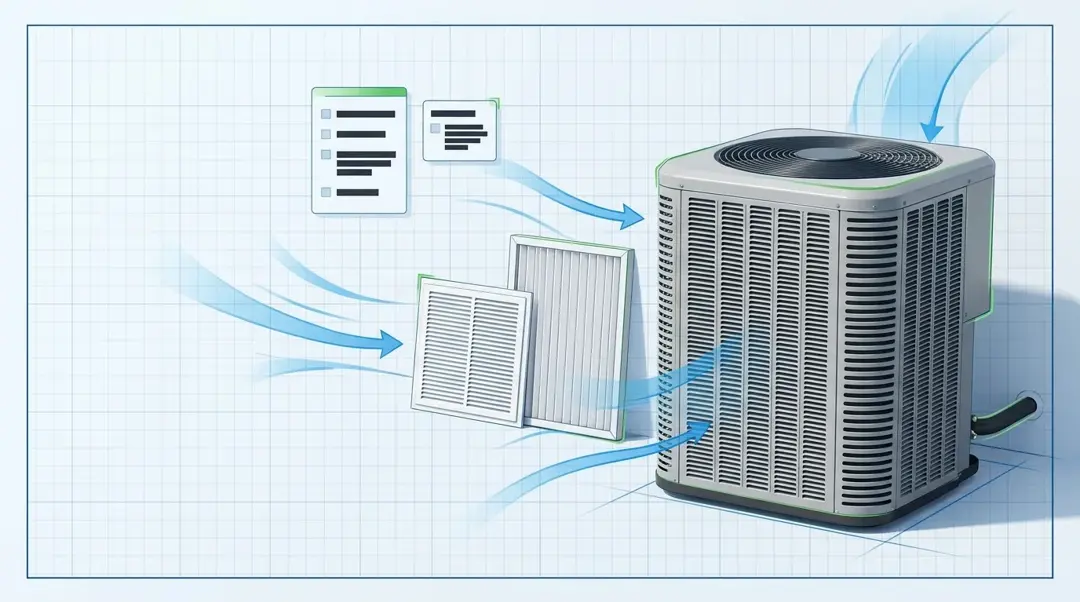
A whole-system visit considers more than whichever side is running today. We review accessible heating and cooling equipment, filter condition, thermostat response, electrical connections, drainage, and visible wear, then relate those findings to how rooms feel. Airflow is the movement of conditioned air from the equipment through the home and back again; a loaded filter or restricted return can affect comfort even when the equipment itself still starts. The U.S. Department of Energy notes that clean filters, coils, fins, and refrigerant lines support efficient air-conditioner performance (DOE maintenance guidance, 2026). Our team found that a simple description of what is accessible, what needs watching, and what needs separate diagnosis is more useful than a vague all-clear. For example, an uneven room may point to airflow, controls, or a system issue, so we avoid guessing from one symptom.
Filters deserve their own place in the conversation because they connect indoor conditions to equipment strain. A filter that loads quickly can reflect dust, pets, open-window use, or smoky conditions, while the correct replacement interval depends on the system and the filter installed. We do not treat a stronger filter as an automatic answer; restrictive choices can affect airflow if they are not suited to the equipment. Instead, we review what is in place and what the homeowner has noticed between visits. Accessible drain paths and thermostat controls matter for the same reason: both can change what the system does without announcing a major equipment failure. This whole-home view is intentionally broad. It does not replace focused duct, thermostat, or repair work when those specialties are needed, but it helps identify which question belongs with which next step.