
Herald rural service area
HVAC Herald CA: rural-property service clarity
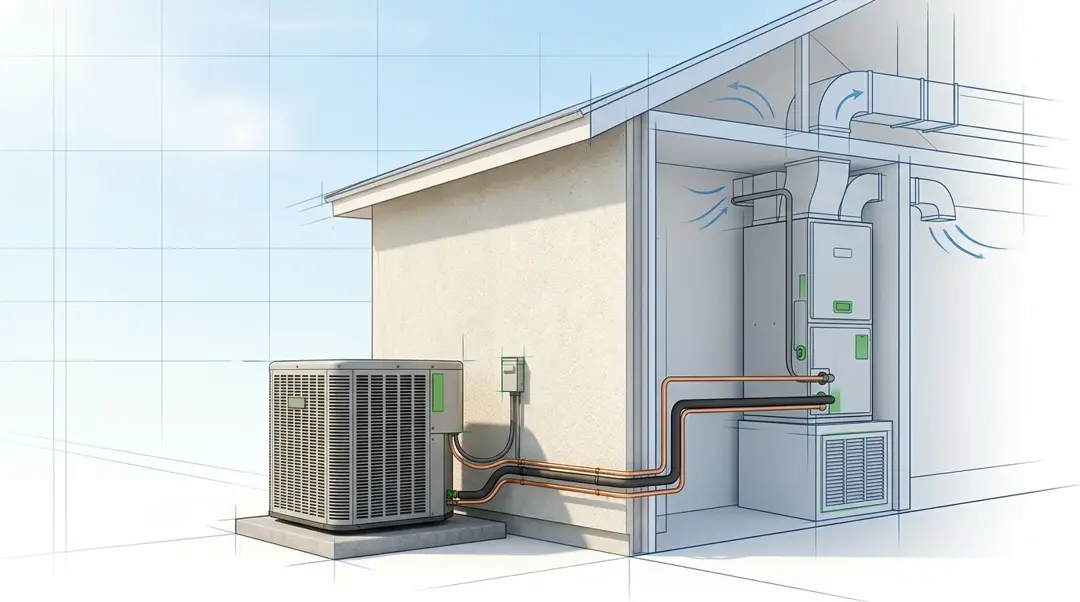
At a glance — rural-home HVAC guidance
HVAC Herald CA service from A-CLASS Heating and Air means clear help with home heating, cooling, ducts, and controls. We are a family-owned, Rancho Cordova-based company serving Sacramento County since 2016, rather than a Herald storefront. Call (916) 342-9108 with the concern, equipment location, and gate or driveway details. The wider service-area directory explains where we work.
HVAC Herald CA calls start with the property details
Herald sits in far southeastern Sacramento County, where homes can be separated by ranch land and long rural roads. A home may have a main system, an older addition, or equipment placed well away from the driveway. That changes the useful questions before a visit. Tell us what is failing, where it is located, and whether access involves a gate, animals, or a long drive. An HVAC system is the connected equipment that heats, cools, and moves air through a building. That definition matters because a home system is different from equipment in a barn or well house. We found that a clear location description prevents the wrong scope from being assumed. For instance, a separate workshop unit needs its own details before anyone can say whether the request fits.
Rural homes often show a mix of building eras and past changes. A farmhouse may have one duct layout while a later room addition has another. The first symptom can still be simple: a room does not cool, airflow feels weak, or a thermostat does not respond. Restricted airflow, for example, can begin with a dirty filter but it can also point to a duct, blower, or return-air concern. The U.S. Department of Energy notes that clogged filters reduce airflow and efficiency in air conditioners (U.S. Department of Energy, 2026). Our team found that describing the symptom and when it began gives a technician a better starting point than guessing at a part. A diagnosis still has to happen at the equipment.
Start with safety when a system acts in an unusual way. Turn the system off if there is a burning smell, visible smoke, damaged wiring, or water near electrical parts. Then call for the proper next step. A tripped breaker can be a clue, but it is not a repair instruction. Do not keep resetting it to force the equipment to run. If the problem is less severe, a short record helps. Note whether the thermostat display is on, whether the outdoor unit is running, and whether air from the registers is warm, cool, or still. Those details can make the first conversation clearer. They also help separate a comfort complaint from a possible safety concern. For a home with more than one system, identify which one serves the affected rooms before calling.
Heat, dust, and utility questions deserve a measured answer
Summer heat can keep a cooling system running for long periods, while cool winter nights reveal heating problems that stayed hidden in mild weather. Dust near open land can also make filter checks more important. Static pressure means the resistance air meets as it moves through the system. It is one reason a filter, duct restriction, or closed register can affect comfort. In our experience, a homeowner gets more useful help by noting whether every room changed or only one did. Consider a system that cools the living room but leaves a back room warm. That pattern can point toward airflow or duct distribution, yet it does not prove the cause from a phone call alone.
Older Herald copy called the area SMUD territory. Published service-territory information is useful for a starting point, but electric service is address-specific, so confirm it with your utility before making equipment or program decisions. The California Energy Commission explains the state's building energy standards and their role in new construction and alterations (California Energy Commission, 2026). A heat pump is equipment that moves heat rather than creating it through combustion, so its fit depends on the home, electrical setup, and existing system. A-CLASS offers free estimates for any service; a heat-pump recommendation takes the property details into account.
Maintenance is a useful chance to notice small changes before a season puts more demand on the system. Homeowners can keep the area around outdoor equipment clear of loose debris and follow the manufacturer's filter guidance. A technician can inspect the parts that need training and tools. That may include electrical connections, controls, refrigerant-related concerns, and airflow. What does a maintenance visit solve? It can identify a condition that needs attention, but it cannot promise that every part will last through the season. The result should be a plain explanation of what was observed and what choices remain. If no repair is needed, that is useful information too. If replacement is worth considering, the conversation can move to the home's actual needs.
Choose a service path from the symptom
The right path depends on what the system is doing and what an inspection finds. A unit that will not start needs a different process from one that runs but cannot keep rooms even. A seasonal check can be useful before heavy weather, whereas a sudden failure calls for a repair conversation. The bottom line is that a rural address does not change the need for an honest diagnosis. It does make access notes more important. Use the table to choose a useful starting route, then call to discuss the equipment and current availability.
Keep the first call simple. Say if the home feels hot, cold, or damp. Say if the fan runs. Say if you hear a new sound. A buzz, a click, or a scrape can help frame the concern. Do not take panels off or reach into the unit. Do not add sealant or spray to a part. A clean path to the unit helps when a visit is set. Pets should be kept safe and away from the work area. Gates should be unlocked if that is safe to do. These small steps do not fix the system. They make the visit safer and more direct. They also leave room for a plain talk about what the system needs after it is checked.
A clear path also helps on the day of service. Put loose tools, bins, and lawn gear out of the way when you can. Keep the space near the indoor unit open. Make a note of the last filter change if you know it. If you do not know, that is fine. Say so. A technician can look at the filter and the system as a whole. This is also a good time to point out rooms that feel too warm or too cold. A short walk through the home can show where the change is felt. That gives the visit a real goal. It keeps the talk tied to the home, the system, and the comfort concern at hand.
| Home situation | Common concern | Useful next step |
|---|---|---|
| Older home with uneven rooms | Weak airflow or a hot room | Review duct-repair options |
| System stops or will not cool | Cooling failure | Start with AC repair |
| Equipment near end of service life | Replacement planning | Discuss system replacement |
- Note the system type and the rooms affected.
- Share gate, driveway, and equipment-location details.
- Say whether the concern is at the home or another building.
A-CLASS is licensed and insured under CSLB License #1090886. Learn about the company's approach on the A-CLASS Heating and Air about page or contact our team to discuss a Herald request. Reviewed by Serghei Poleanschii, Founder & Manager, A-CLASS Heating and Air.
What an HVAC repair costs in Herald
A-CLASS Heating and Air publishes this repair guidance: many straightforward HVAC repairs are framed around $150 to $750, depending on the issue, the parts, access to the equipment, and the condition of the system. That range is guidance, not a quote and not a final invoice amount. Exact repair pricing is reviewed after an on-site diagnosis and before any approved work begins, and a repair can cost more when there are multiple failures, hard-to-source parts, refrigerant work, electrical issues, or safety concerns. Replacement is a separate conversation: you can request a free estimate, and a final replacement scope and price may need an in-home review. Call (916) 342-9108 to describe the problem and arrange a diagnostic visit.
Herald HVAC questions
Do you provide HVAC service in Herald?
Yes. A-CLASS Heating and Air serves Herald homes from Rancho Cordova for heating, cooling, duct, and thermostat concerns. Call with the system issue and property-access details so current scheduling can be discussed.
How much does an HVAC repair cost in Herald?
A-CLASS Heating and Air publishes this guidance: many straightforward HVAC repairs are framed around $150 to $750, depending on the issue, the parts, access to the equipment, and the condition of the system. That range is guidance, not a quote and not a final invoice amount. Exact pricing is reviewed after an on-site diagnosis and before any approved work begins. A system replacement is a separate conversation: you can request a free estimate, and a final replacement scope and price may need an in-home review of the home and equipment.
What should I share when scheduling HVAC help for a rural property?
Share the equipment type, the symptom, its location, and any gate or long-driveway details. That information helps set a clear scope before a visit is considered.
Can you inspect an HVAC system that has weak airflow?
Yes. Weak airflow can come from a filter, duct issue, blower concern, or control problem. An on-site diagnosis is needed to identify the cause and the appropriate repair path.
Do you offer estimates for a new HVAC system?
Yes. Free estimates are available for any service, including a system replacement after the home and equipment needs are reviewed. Repair needs require diagnosis before options can be explained.
Do you service barns, wells, or agricultural equipment?
No, not as a general promise. A-CLASS works on residential and light-commercial building comfort systems; please call with the building and equipment details to confirm whether the request fits our scope.
Is urgent HVAC support available in Herald?
Urgent HVAC support may be available. Call (916) 342-9108 to discuss the problem and current scheduling; availability and timing depend on the request.
Talk through your Herald HVAC concern
Share the system issue, property-access details, and the building involved. We can discuss the right service path and current scheduling availability.
Call (916) 342-9108