The bottom line
What an AC tune-up should actually examine
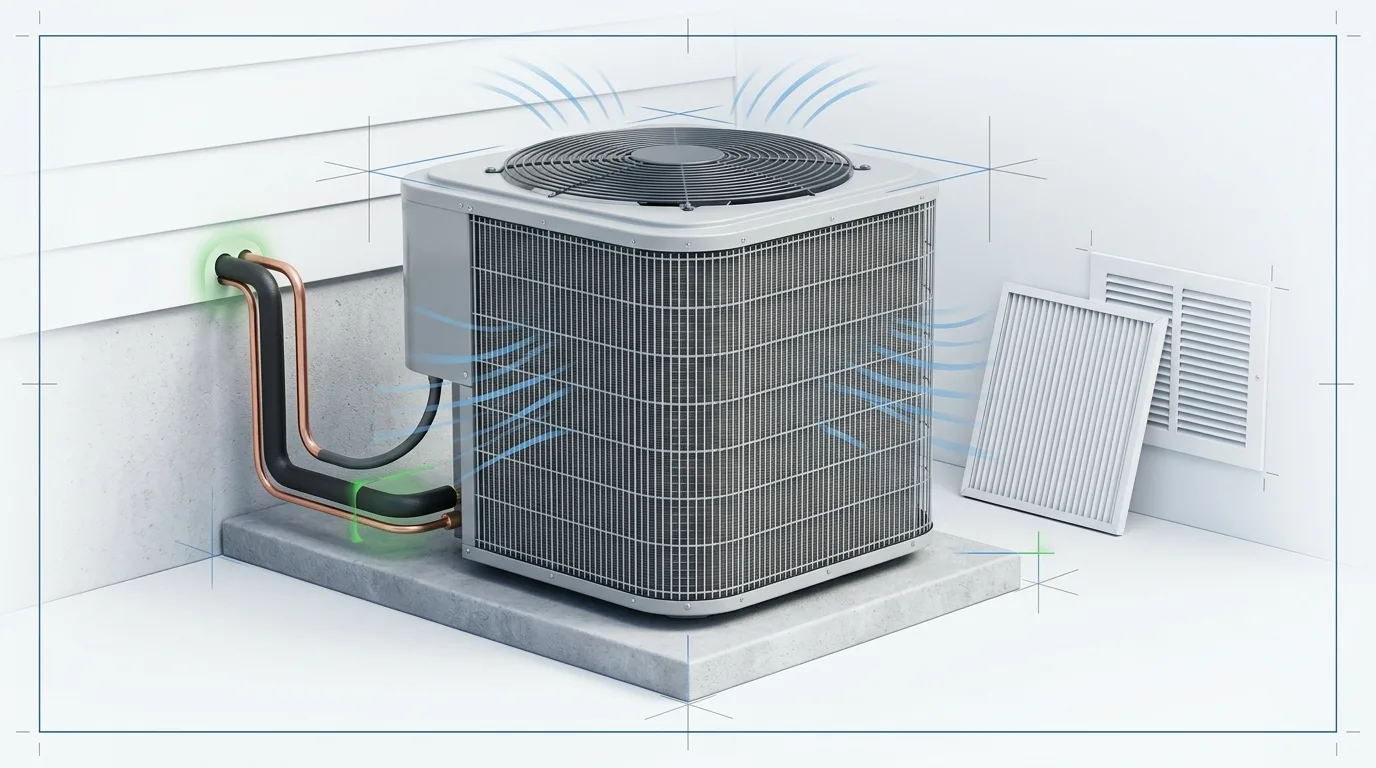
A useful tune-up does more than confirm that cool air is leaving a vent. The technician starts with the parts that carry heat and air, then follows the controls and drainage path that keep the cooling cycle steady. A condenser coil is the outdoor surface that releases heat from your home, so dirt and debris can make the system work harder. A capacitor is an electrical component that helps motors start and run, which makes a condition check relevant before hot afternoons expose weakness. We found that homeowners get better decisions when observations are named plainly rather than folded into a vague checklist. The U.S. Department of Energy also identifies filter care, coil care, and drain maintenance as key air-conditioner maintenance tasks in its air-conditioner maintenance guidance (U.S. Department of Energy, 2026).
A clear visit also separates observations from conclusions. A cleanable coil, a loaded filter, and a normal operating cycle are maintenance notes; a performance concern may call for diagnosis before anyone decides on repair. That distinction matters because refrigerant is not a routine top-off item, and an electrical part should be evaluated in the context of how the system starts and runs. Ask for the findings in plain language and for an explanation of what each one means for comfort, reliability, or the next step. The goal is not to create worry from a checklist. It is to leave with a usable record of the cooling side of your system as Sacramento summer approaches.
- Inspect accessible indoor and outdoor coils for dirt or restrictions that can reduce heat transfer.
- Check refrigerant performance indicators and separate a possible repair concern from routine upkeep.
- Test capacitors, electrical connections, thermostat response, and normal cooling cycles.
- Review condensate drainage and accessible components for signs that water is not moving as it should.
- Check filter condition, return airflow, and blower-area access that can affect comfort.
The checklist works best when each item has a plain purpose. Coil checks, for instance, show whether accessible dirt or yard debris may limit heat transfer. Electrical checks can reveal a loose connection or a weak part, but they do not name a repair without diagnosis. Drain checks matter because water must leave the indoor equipment during cooling. Airflow checks likewise connect the filter, return path, and blower area to the air you feel at each vent. The thermostat and cooling cycle then show whether the system responds and shuts off in a normal pattern. Notes from several checks, for example, can explain one comfort concern better than a single pass-or-fail result. Ask which items were observed, what changed since the last visit, and whether a separate diagnostic appointment is warranted. The written report should make that sequence easy to follow.