
Rio Linda service area
HVAC Rio Linda CA: straight answers for rural homes
At a glance
HVAC Rio Linda CA service from A-CLASS Heating and Air means scheduled help for heating, cooling, ducts, and controls at homes across the community. We are a family-owned, Rancho Cordova-based company serving this area since 2016, not a Rio Linda storefront. Call (916) 342-9108 and describe the system, property access, and what changed.
HVAC Rio Linda CA homes need a property-aware diagnosis
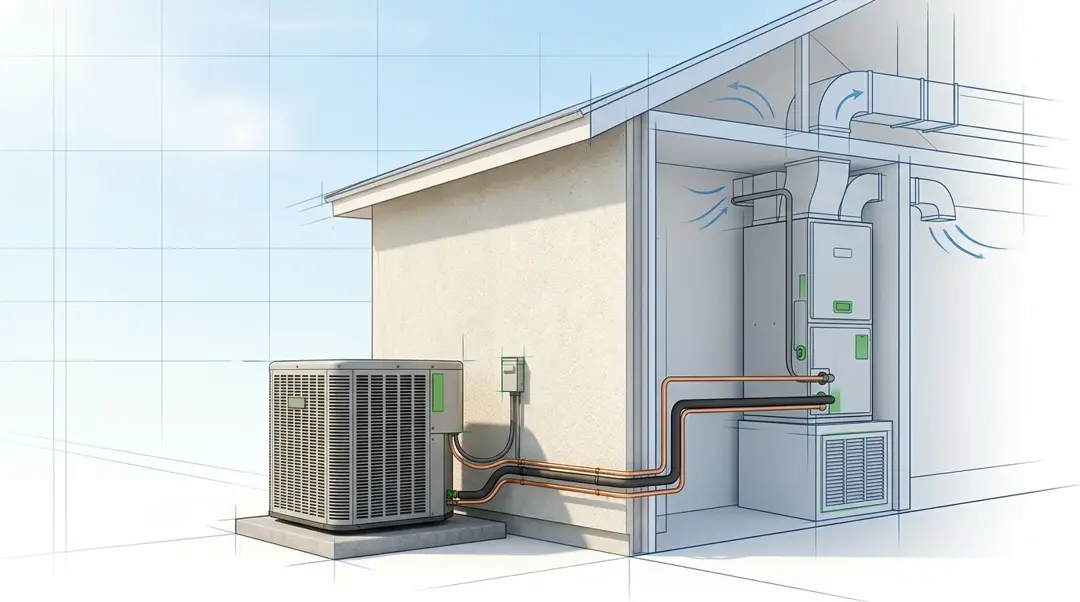
Rio Linda has a rural-residential feel, with larger lots, horse properties, older site-built homes, and manufactured homes in the mix. That variety matters before anyone guesses at a comfort fix. One home may have a familiar split system near the house, while a second property has a packaged unit or equipment in a less direct location. A split system is an indoor and outdoor heating-and-cooling arrangement joined by refrigerant lines and controls. It is common, but it does not describe every property. We need to know which building has the concern, where the equipment sits, and whether gates, animals, or long walks affect access. What feels like one household problem may involve separate equipment. That is why a clear call description helps set the right scope without pretending every outbuilding is included.
The same practical approach applies inside the main home. Older rooms may have changed use, and an addition or enclosed porch can change the load on the original system. A hot bedroom can start with a dirty filter, a blocked return, sun on the room, a duct path, or equipment that is not operating as it should. On these calls, in our experience, a room pattern is more useful than a quick label such as “the AC is bad.” Airflow means the movement of conditioned air through supply ducts and back through return paths. Restricted airflow, for example, can leave a distant room uncomfortable even when the thermostat appears normal. A visit for whole-system HVAC repair can begin with the reported pattern and accessible parts of the system. The findings should guide the next step, not a generic assumption based on the property size.
Summer heat, smoke, and SMUD service
Rio Linda sits in the Sacramento area, where long summer heat puts steady demand on cooling systems and Delta breezes can make evenings feel different from the afternoon. The right response is still not automatic. On similar calls, we found that a useful service conversation starts with the timing of the symptom: does cooling fade after several hours, stay weak in one room, or stop across the house? Those details help separate a control or airflow question from an equipment problem. Rio Linda is within SMUD's service territory; homeowners can review the utility's service-area information before making an energy-program decision (SMUD, 2026). We do not promise eligibility for any program. We can instead explain the HVAC findings and provide a free estimate for any service, including a system replacement when that is appropriate.
Smoke season adds another reason to look at the whole air path. The EPA's indoor-air guidance for wildfires advises people to keep indoor air cleaner by closing windows and doors and considering filtration that fits their system (EPA, 2026). A filter with a higher rating is not automatically right for every unit. During inspections, our team found that filter fit, return capacity, and the equipment's condition all deserve a check before a change is made. Consider the simple case of a filter that bows or leaves a gap: it can let air bypass the media and make the system work harder. Routine HVAC maintenance can identify basic restrictions and operating concerns before the next heavy-use period. It cannot promise a smoke-free home, but it can support a safer, more informed filtration discussion.
Cooling and heating questions can look simple from the driveway, yet the details often sit inside the house. A thermostat may call for cooling while a return grille is blocked by furniture. A heat pump may run while a room stays cool because a supply register is closed. For instance, a home with two people in a back bedroom all day may reveal a comfort pattern that never showed when that room was rarely used. These observations do not prove the cause. They give the diagnostic a better starting point. Before the visit, homeowners can note the thermostat setting, the rooms that feel different, any unusual sound, and whether the issue changes with the time of day. That plain record helps keep the discussion tied to the equipment and comfort concern instead of to a broad claim about every rural property.
Route the symptom to the right HVAC question
A rural lot does not change the basics of good diagnosis. A cooling system that will not keep up needs a review of operation, controls, airflow, and visible condition. A heater that will not start needs a safety-minded look at the equipment itself. Ducts also matter when one part of the house runs far from the equipment. A manufactured-home HVAC system is equipment and ductwork designed around a manufactured home's layout and access needs. Its details can differ from a site-built home, so we ask callers to confirm the equipment type before scheduling. That is a boundary, not a brush-off. If you are weighing a repair against a replacement, what changed and what has been checked already? The routes below help make the conversation concrete while leaving the diagnosis to the actual system and property.
The table below routes each symptom toward a sensible first step. A warm room may lead to cooling repair, duct review, or a basic maintenance check depending on what is found. A system that cycles often may need a different path than one that never starts. A replacement talk should come after a look at the current equipment and what the home needs. We do not treat a long drive, a large lot, or a manufactured home as proof that one answer fits every system. Callers who share the model information, if it is available, can make the first conversation more useful. If it is not available, describe the equipment's location and the issue in plain terms. The aim is to confirm the right service scope and make an informed next step possible.
| Home or property pattern | HVAC question to check | Useful next route |
|---|---|---|
| Older site-built home with a warm room | Return path, filter, ducts, and equipment operation | AC repair assessment |
| Long duct run or uneven rooms | Visible duct condition and air delivery | Duct and vent repair |
| Heating system that will not start | Controls, ignition sequence, and safe operation | Heating repair guidance |
| Replacement discussion after diagnosis | Condition, needs, and system fit | AC installation planning |
- Note which building and rooms have the concern.
- Share the equipment type if you know it.
- Describe access details that could affect the visit.
- Tell us whether the problem is new, steady, or tied to weather.
What an HVAC repair costs in Rio Linda
A-CLASS Heating and Air publishes this repair guidance: many straightforward HVAC repairs are framed around $150 to $750, depending on the issue, the parts, access to the equipment, and the condition of the system. That range is guidance, not a quote and not a final invoice amount. Exact repair pricing is reviewed after an on-site diagnosis and before any approved work begins, and a repair can cost more when there are multiple failures, hard-to-source parts, refrigerant work, electrical issues, or safety concerns. Replacement is a separate conversation: you can request a free estimate, and a final replacement scope and price may need an in-home review. Call (916) 342-9108 to describe the problem and arrange a diagnostic visit.
Frequently asked questions
Do you serve Rio Linda from a local office?
No. A-CLASS Heating and Air is based in Rancho Cordova and serves Rio Linda as part of its Sacramento County service area. Call (916) 342-9108 to discuss the concern and current scheduling availability.
How much does an HVAC repair cost in Rio Linda?
A-CLASS Heating and Air publishes this guidance: many straightforward HVAC repairs are framed around $150 to $750, depending on the issue, the parts, access to the equipment, and the condition of the system. That range is guidance, not a quote and not a final invoice amount. Exact pricing is reviewed after an on-site diagnosis and before any approved work begins. A system replacement is a separate conversation: you can request a free estimate, and a final replacement scope and price may need an in-home review of the home and equipment.
Can you work on HVAC systems at rural Rio Linda properties?
Yes, A-CLASS can discuss residential HVAC concerns at Rio Linda properties. Please describe the home, equipment location, gate or access details, and the system issue when you call so scheduling can be considered accurately.
Do you service manufactured-home HVAC systems in Rio Linda?
Please call to confirm. Manufactured homes can use equipment, ducts, and access arrangements that differ from site-built homes, so A-CLASS needs the system details before confirming whether the work is within scope.
Why does one building feel different from the main house?
A separate building can have its own system, insulation, sun exposure, duct route, or wiring. A-CLASS can assess the HVAC equipment that is within the agreed service scope, but a separate building is not assumed to be included with the main-home visit.
Can maintenance help during smoke season?
Yes, maintenance can identify a dirty filter, poor filter fit, or restricted airflow. The EPA advises using filters that fit properly and checking whether a higher-efficiency filter is compatible with the system.
Do you repair tractors, trailers, or vehicle air conditioning?
No. A-CLASS Heating and Air works on residential and light-commercial building comfort systems. For vehicle, tractor, or trailer air conditioning, an auto or equipment shop is the right call.
A clear next step for Rio Linda
A-CLASS Heating and Air serves Rio Linda from Rancho Cordova with scheduled field service, licensed and insured under CSLB License #1090886. For an AC, heating, duct, or thermostat concern, contact our team with the property and system details. You can also learn about the company's approach on our about page. Free estimates are available for any service. Urgent HVAC support may be available when a heating or cooling failure needs prompt attention, but scheduling depends on current availability and the details of the request. The bottom line is simple: explain what the system is doing, which building is affected, and anything that changes access. That gives the team a better basis for an honest conversation, whether the concern began during a heat wave, a cool night, or an ordinary day at home.
Reviewed by Serghei Poleanschii, Founder & Manager, A-CLASS Heating and Air