Does A-CLASS Heating and Air serve Lincoln?
Yes. A-CLASS Heating and Air is based in Rancho Cordova and serves Lincoln as part of its Placer County service area. Call to discuss the HVAC concern and open times.

Family-owned since 2016
Family-owned and operated since 2016
The HVAC Lincoln CA service homeowners can call comes from A-CLASS Heating and Air, a family-owned, Rancho Cordova-based company that serves Lincoln. The company handles AC, heating, ductwork, ductless systems, and thermostats. Call (916) 342-9108 to discuss the problem and open times.
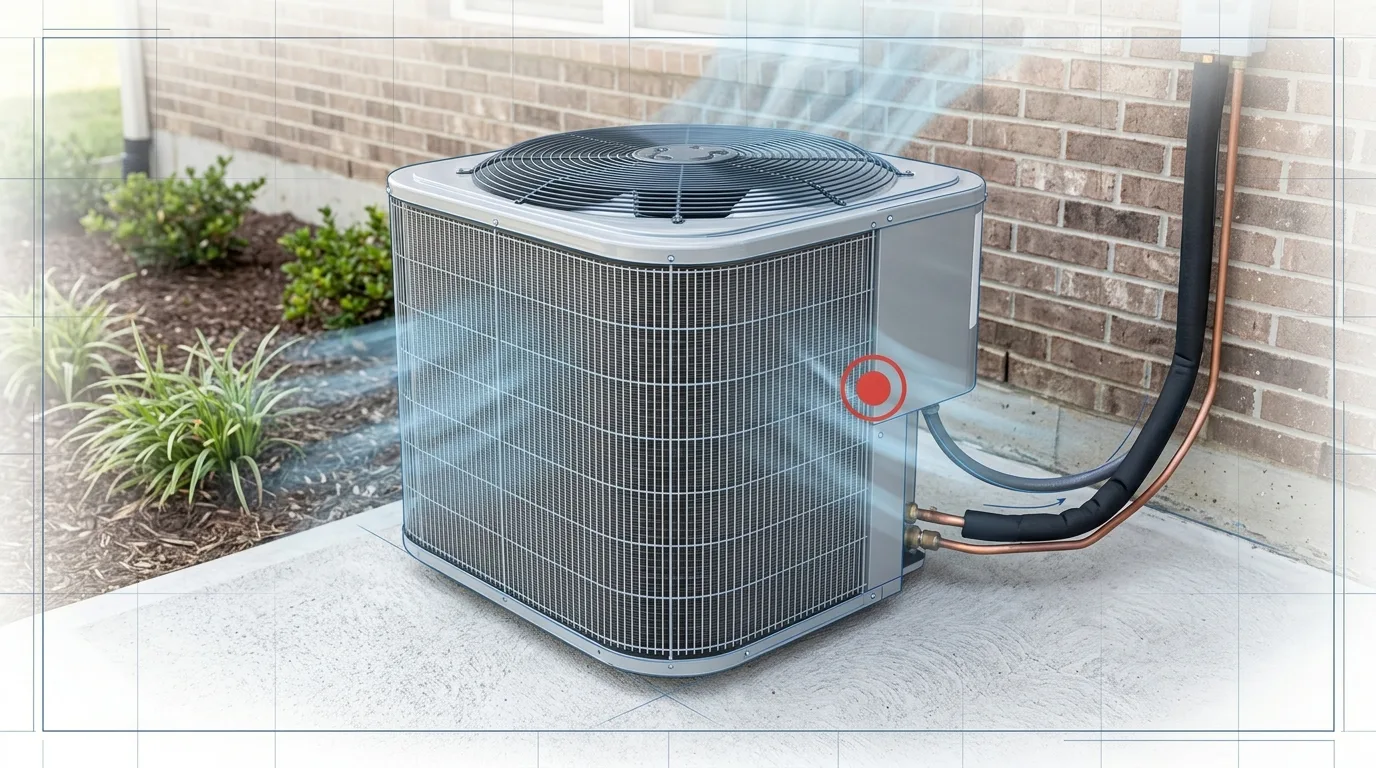
A-CLASS Heating and Air is based in Rancho Cordova and serves Lincoln; it does not claim a Lincoln storefront, office, or dispatch address. That distinction matters when a heating or cooling problem interrupts the day. The useful starting point is a clear description of the symptom, the system, and the home. A call can cover whether the concern is cooling, heat, airflow, or a control issue, then point to the right service path. HVAC means heating, ventilation, and air conditioning, so a comfort problem may involve several connected parts instead of one visible unit. In our experience, a room that feels different from the rest of the house is a reason to ask about airflow and return paths, not a reason to guess at a replacement. For company background, visit the A-CLASS Heating and Air story, or contact the team with the symptom and location.
Lincoln has both established areas and newer residential development. The City's specific-plan and development-plan index lists both Twelve Bridges and Lincoln Crossing. Its building department also lists HVAC units among permit work that requires energy documents (City of Lincoln, 2026). That context does not reveal how any one house was built. It does explain why a careful visit starts with the home's actual layout, unit, and duct routing rather than a subdivision label. Two-story homes, bonus rooms, and longer runs to distant rooms can make an airflow complaint worth tracing from supply register to return path. As a result, a subdivision name alone should not decide the service route. A return-air path is the route indoor air takes back to the central unit for heating or cooling again. We found that closed doors, blocked grilles, or a weak return path can matter as much as the thermostat setting. The U.S. Department of Energy notes that return paths help balance room pressure and can affect temperature differences between rooms (DOE Building Science Education, 2026).
Summer heat in the Sacramento region can make a cooling weakness obvious, especially in upper rooms or spaces with strong afternoon sun. A warm room alone does not identify the cause. Restricted airflow, for example, can resemble a unit problem, while a dirty filter, a duct issue, a control setting, and system state each call for different checks. Lincoln is in PG&E's electric service territory, not SMUD's; the power firm lists Lincoln under its Placer County electric service area (PG&E service area, 2026). That fact is useful for checking power-firm information, but it does not establish a rebate, unit fit, or expected bill. At the same time, wildfire smoke can change the questions homeowners ask about filters. The EPA explains that smoke can enter homes and affect indoor air, and its guidance discusses central-system filters and portable cleaners (EPA wildfire guidance, 2026).
The right next step depends on what changed. No cooling may involve units, controls, power, or airflow. No heat needs a heating-specific call. Repeated discomfort in one room may call for a broader review of delivery and return air. A heat pump is a unit that moves heat to cool or warm a home, while a furnace produces heat. Those systems can share ducts and controls, yet their service questions are not identical. Our team found that a plain symptom history is more useful than a broad claim that the whole system has failed. Consider when the issue appears: during the hottest hours, only after doors close, or in every room. The routing table below gives a focused page for the concern. It is not a diagnosis, and it does not substitute for an on-site check.
| Home or concern | Typical HVAC question | Best next step |
|---|---|---|
| Newer planned-home layout | Why is an upper or distant room less comfortable? | Review duct and vent repair options |
| Central AC will not cool | What should be checked before deciding on a repair? | Read AC repair guidance |
| Heating has stopped | Does the issue involve a furnace or heating mode? | Read heating repair guidance |
| Seasonal reliability question | What belongs in routine system care? | Explore HVAC maintenance |
Not every Lincoln HVAC question begins with a breakdown. A system that still runs can show early changes through longer cycles, a new noise, weaker airflow, or rooms that no longer match. Seasonal care is a chance to ask about those changes before they become the only topic of a hot-day call. It also gives the homeowner a better record of filter changes and recurring concerns. A maintenance visit does not guarantee that a system will avoid every failure, and it should not be presented as a substitute for diagnosis when a unit stops working. Even so, it creates a setting to discuss operation, airflow, and unit state in plain terms. The HVAC services directory can help when the question involves a different service category or when the right path is still unclear.
A short set of details helps keep the first call grounded. Note whether the system is heating, cooling, cycling, making a new sound, or leaving one area uncomfortable. If possible, note the thermostat setting, the filter state, and whether air is moving from the registers. However, do not remove panels or work around electrical parts to chase an answer. A-CLASS Heating and Air can discuss open times and offers free estimates for any service. The business does not publish a Lincoln response-time promise because scheduling depends on the concern and current workload. For instance, a no-cooling call and a long-running comfort concern may need different questions before an appointment is discussed. The bottom line is simple: share the observable change, the location in Lincoln, and the system type, then get a clear route rather than a sweeping promise.
A call does not need a long report — the three notes above cover most of it. A photo of the thermostat screen and the equipment make, when they are easy to capture safely, round out the picture, and none of it requires opening a unit or touching wiring. Those facts give the first conversation a clear base and help sort a quick repair question from a replacement plan.
A-CLASS Heating and Air is family-owned and operated since 2016, licensed and insured under CSLB License #1090886. The work stays within HVAC: heating, air conditioning, ductwork, ductless systems, and thermostats. That means a plumbing leak, general electrical repair, or appliance problem needs a different provider. Clear limits are part of useful guidance, particularly when an online search combines several trades under one phrase. A new-system decision should also follow a check of the home and current unit, not an assumption tied to a neighborhood or power-firm territory. City permit guidance confirms that HVAC unit work can require energy documents, so permit and code questions deserve attention when the work calls for them (City of Lincoln residential permits, 2026). The reviewed information below is meant to help Lincoln homeowners ask better questions before they call.
Reviewed by Serghei Poleanschii, Founder & Manager, A-CLASS Heating and Air
A-CLASS Heating and Air publishes this repair guidance: many straightforward HVAC repairs are framed around $150 to $750, depending on the issue, the parts, access to the equipment, and the condition of the system. That range is guidance, not a quote and not a final invoice amount. Exact repair pricing is reviewed after an on-site diagnosis and before any approved work begins, and a repair can cost more when there are multiple failures, hard-to-source parts, refrigerant work, electrical issues, or safety concerns. Replacement is a separate conversation: you can request a free estimate, and a final replacement scope and price may need an in-home review. Call (916) 342-9108 to describe the problem and arrange a diagnostic visit.
Yes. A-CLASS Heating and Air is based in Rancho Cordova and serves Lincoln as part of its Placer County service area. Call to discuss the HVAC concern and open times.
A-CLASS Heating and Air publishes this guidance: many straightforward HVAC repairs are framed around $150 to $750, depending on the issue, the parts, access to the equipment, and the condition of the system. That range is guidance, not a quote and not a final invoice amount. Exact pricing is reviewed after an on-site diagnosis and before any approved work begins. A system replacement is a separate conversation: you can request a free estimate, and a final replacement scope and price may need an in-home review of the home and equipment.
Start with the symptom, when it began, and whether every room is affected. The system age, thermostat setting, and any airflow change can also guide the call.
Yes. Uneven temperatures can involve duct delivery, return-air paths, thermostat placement, unit state, or more than one issue. A check separates those possibilities before a repair decision.
Yes. A-CLASS Heating and Air offers free estimates for any service by phone, SMS, online form, or in-person visit. A replacement recommendation follows a review of the home, current unit, and comfort goals.
No. A-CLASS Heating and Air is an HVAC-only company. The team handles heating, air conditioning, ductwork, ductless systems, and thermostats, not plumbing or general electrical repairs.
A-CLASS Heating and Air serves Lincoln from its Rancho Cordova base. Call to discuss the symptom, system, and open times.
Call (916) 342-9108