What thermostat problems can be repaired?
Thermostat repair can address a blank display, weak batteries, loose low-voltage wiring, incorrect settings, a bad room reading, or a control that does not send the expected heating or cooling call.

Family-owned since 2016
Sacramento HVAC controls
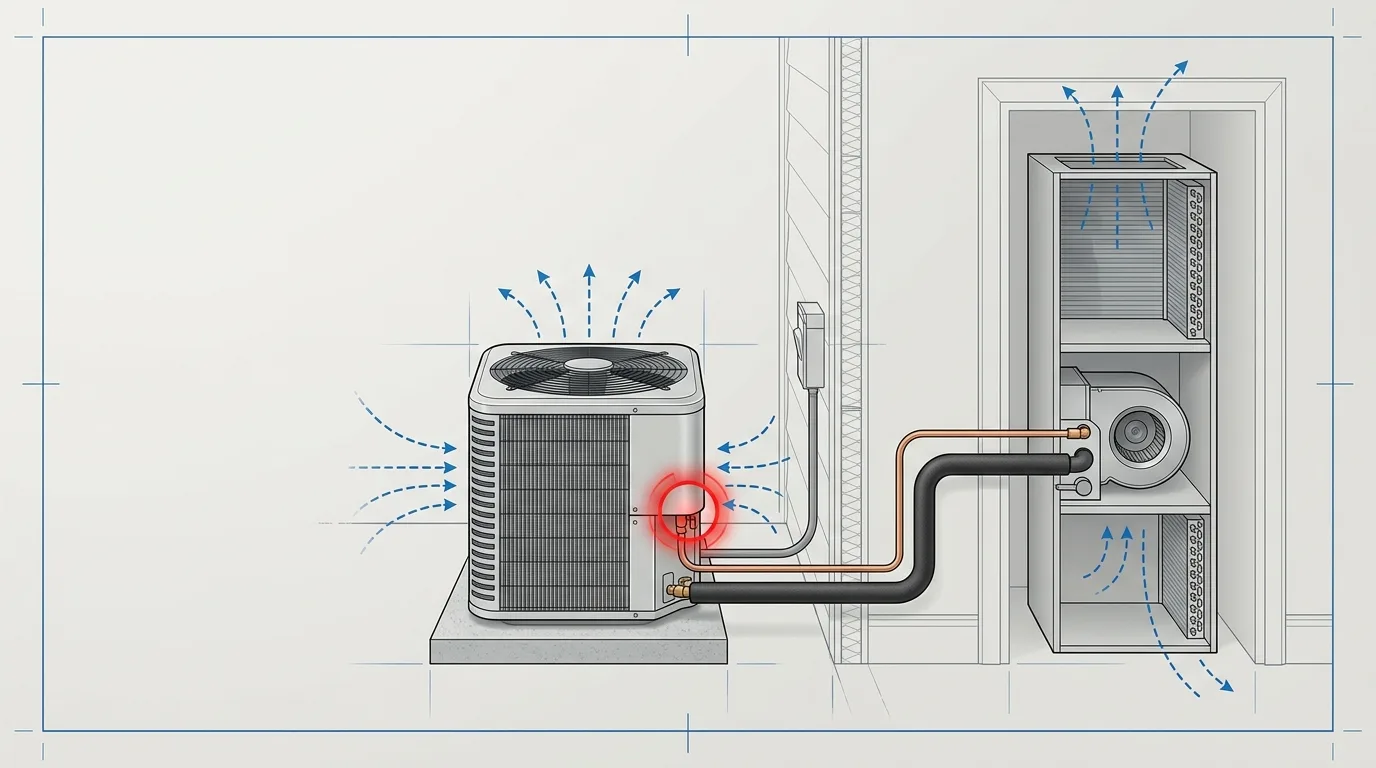
A thermostat is the small control that asks your HVAC equipment to heat, cool, or move air. A blank screen, a room that feels unlike the number on the display, or a system that ignores a setting can each point to a different fault. A control signal is the low-voltage request sent from the thermostat to the heating or cooling equipment. That request may be right even when the equipment cannot respond. In our experience, a homeowner who notes the mode, set point, and what the system did next gives a technician a clearer starting point. Sacramento summer heat can make a small control issue feel urgent, especially when a home warms quickly after the system stops. Restricted airflow, for example, can also make a working thermostat seem inaccurate because the room never receives enough conditioned air. The bottom line is simple: diagnose the path before choosing a part.
A few observations are safe and useful before service. Check whether the thermostat has fresh batteries, is set to the intended mode, and has a set point that calls for heating or cooling. You can also look for a tripped breaker without removing a panel. Do not handle wiring or open equipment cabinets. A common wire is a low-voltage wire that provides steady power to many smart controls. Its presence or condition is a diagnostic detail, not a reason to experiment inside the wall. We found that a simple photo of the display often shows a schedule, alert, or mode setting worth discussing. For example, a thermostat set to “fan on” can sound like a cooling call even when no cooling was requested. The Department of Energy notes that thermostat location can affect readings, especially near sun, drafts, doors, and windows; see its thermostat operation guidance (U.S. Department of Energy, 2026).
Sacramento homes add a few local wrinkles to control problems. In long 100°F stretches, a thermostat mounted on a wall that takes afternoon sun can read several degrees above the room average, so the system appears to ignore its own set point. During foggy winter mornings, a heat pump in defrost can look like a control fault when the thermostat is doing exactly what it should. Older midtown and Land Park houses often carry legacy two-wire setups that limit which controls can be installed without new wiring, a detail worth mentioning when you call (California Energy Commission, 2026). Noting the wall, the weather, and the wiring age turns a vague complaint into a solvable question, and it usually shortens the visit.
The thermostat sits at the end of a chain, so its display can be the messenger rather than the cause. A correct cooling call with no cool air points to power, a safety switch, the outdoor unit, or airflow. A correct heating call with no heat points to the heating side of the system. Short cycling means the equipment starts and stops more often than normal without completing a useful heating or cooling run. It can follow a thermostat issue, and it also signals an equipment or airflow problem. Our team found that repeated cycling deserves a full look at the response, not a fast control swap. Meanwhile, a warm room reading often reflects sun, a nearby supply vent, or a dead-air spot. If cooling equipment is not responding, use our air-conditioning repair guidance. If heat is missing, our heating diagnosis page is the better route.
Repair makes sense when a setting, battery issue, loose connection, placement problem, or configuration error can be corrected. Replacement makes sense when the control has failed or cannot work with the system. Those are different decisions from replacing heating or cooling equipment. Compatibility must come before a new device is selected, particularly with multi-stage equipment and smart features. The table below keeps the repair conversation separate from an upgrade conversation. Instead of treating every blank display as a purchase decision, we first check what the control and equipment are doing. The U.S. Environmental Protection Agency explains that smart thermostats can offer Wi-Fi control and scheduling, while product fit still depends on the heating and cooling system; see ENERGY STAR’s smart thermostat guide (ENERGY STAR, 2026).
| What we find | Likely next step | Where that decision belongs |
|---|---|---|
| Battery, setting, placement, or correctable wiring concern | Correct the control issue and confirm system response | Thermostat repair diagnosis |
| Failed or incompatible standard control | Plan a compatible replacement | Standard control replacement planning |
| A homeowner wants app access or a smart-control upgrade | Review wiring, features, and system fit | Smart-control setup planning |
A smart thermostat can add schedules, remote access, and alerts, but those features do not cure every comfort problem. That work belongs on the installation pages. Some systems need a specific control strategy, power solution, or different wiring before a device can operate as intended. Identifying the existing equipment before choosing a control protects compatibility. A device that works with one setup may not offer every feature on another. Separate a Wi-Fi issue from an HVAC issue. A network-connected screen can still have a wiring, sensing, or equipment-response problem. A service visit can review the control path in plain language.
A-CLASS Heating and Air is family-owned and operated since 2016. We are based in Rancho Cordova and serve Sacramento County plus parts of Placer and El Dorado counties. Clear observations make a service conversation calmer: note the display, the room temperature, the system response, and any recent setting change. However, no photo or online checklist can confirm a wiring or equipment fault from a distance. We inspect the practical causes and explain the next step without high-pressure sales tactics. Learn about the people behind that approach on our A-CLASS company page, or use our thermostat service contact form when you want to share the symptom before calling. For a thermostat that is blank, inaccurate, or not calling the system, call (916) 342-9108. CSLB License #1090886, licensed & insured.
Reviewed by Serghei Poleanschii, Founder & Manager, A-CLASS Heating and Air
Thermostat repair can address a blank display, weak batteries, loose low-voltage wiring, incorrect settings, a bad room reading, or a control that does not send the expected heating or cooling call.
Yes. You can safely check fresh batteries, the mode and set point, a tripped breaker, and whether the display is asking for heat or cooling. Do not open equipment panels or handle low-voltage wiring.
A diagnosis separates the control from the equipment response. If the thermostat makes the correct call but the system does not respond, the fault may be in the HVAC equipment, power circuit, safety control, or airflow path.
Yes. Incorrect placement, poor sensing, setup errors, or wiring faults can cause rapid starts and stops. Short cycling can also come from an equipment or airflow fault, so the whole control path needs checking.
Replacement is reasonable when the device has failed, cannot work with the HVAC system, or no longer provides the control you need. A compatible standard or smart control should be chosen after the system and wiring are reviewed.
No. A-CLASS Heating and Air repairs residential and light commercial HVAC thermostat controls, not automotive cooling systems. An automotive repair shop is the right resource for a vehicle thermostat issue.
For thermostat repair in Sacramento, tell us what the display and HVAC system are doing. We will start with the facts and discuss the appropriate repair path.
Call (916) 342-9108Professional service in Sacramento
Professional service in Elk Grove
Professional service in Citrus Heights
Professional service in Folsom
Professional service in Rancho Cordova
Professional service in Carmichael
Straight answers on cost, timing and what actually needs fixing — written by our Sacramento technicians.