Does A-CLASS Heating and Air serve Freeport?
Yes. A-CLASS Heating and Air is based in Rancho Cordova and serves Freeport as part of its Sacramento County service area. Call (916) 342-9108 to describe the HVAC issue and discuss current availability.

Family-owned since 2016
Serving Freeport from Rancho Cordova
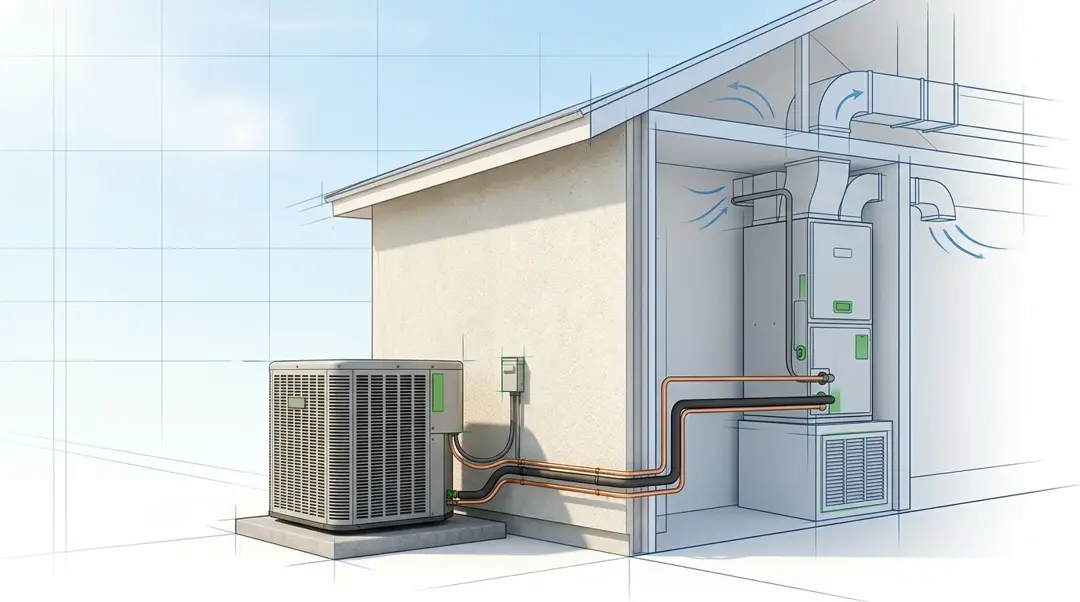
HVAC Freeport CA homeowners need can start with a room that will not cool, a heater that will not start, or airflow that has changed. A-CLASS Heating and Air is a family-owned company based in Rancho Cordova that serves this small Sacramento River community. Call (916) 342-9108 to discuss urgent support availability or a planned heating and cooling need.
Freeport is a small Sacramento River community just south of Sacramento, with older homes and a rural river-town setting. A house may have had window, room, or equipment updates over many years. That history can leave the outdoor unit newer than the return path or supply runs that serve the rooms. Ductwork is the network of passages that carries conditioned air between HVAC equipment and rooms. Start with the basics. Note the room. Note the mode. Note the time. We found that a better starting point is the pattern: which room changes first, whether the issue is heating or cooling, and what the thermostat shows. Those details can help separate a distribution question from an equipment or control problem. When an accessible duct or vent may be part of the issue, the duct and vent repair guide explains the service path.
River proximity can make foggy winter mornings feel damp, while Sacramento Valley heat can keep cooling equipment working hard in summer. Neither condition proves why one home feels uneven. For example, a shaded room and a room with long afternoon sun can behave differently even when the equipment runs. Filters, registers, return-air paths, thermostat settings, and the condition of the system all deserve a look. A service visit should connect what you notice with accessible parts of the HVAC system. It should also account for what has changed in the house, such as a remodeled room or a closed interior door. Is the entire home warm, or only one side? Has the system always made the sound you hear? Those simple questions can keep the diagnosis grounded in the actual concern. Those checks are simple. They are still useful. They give a visit a starting point. A good note can help. It can show a change. It can also rule out a guess. Write it down. Keep the note short. Bring it to the call. That helps.
Freeport is within SMUD's published service territory, although account details should be confirmed for a specific address. The SMUD territory map is the right place to check that context (SMUD, 2026). Utility information may frame research, yet it cannot identify a cooling fault. A heat pump is equipment that moves heat to provide both cooling and heating. It can be part of a replacement conversation, but its fit depends on the home, existing ducts, electrical setup, and comfort goals. In our experience, a utility question is most helpful after the present system and the household's needs have been discussed, rather than before a diagnosis. Check the account first. Then check the equipment. The map shows a boundary. It does not show a system fault.
Wildfire smoke can raise valid questions about filters and indoor air. The EPA's wildfire indoor-air guidance describes ways to reduce smoke indoors (EPA, 2026). Follow public-health and evacuation directions first. A filter has to fit the system, and a denser option may affect airflow. If airflow drops after a filter change, note the filter size and what changed before the visit. Turn the system off and arrange diagnosis if it smells burnt, trips a breaker, leaks heavily, or freezes. Meanwhile, a routine check can identify a dirty filter, visible drain issue, or accessible airflow restriction before peak weather adds strain. That work does not promise a bill result or a utility incentive; SMUD sets its own terms. Keep the notes close. They can save time. Do not force a new filter. Ask if it fits.
A location page can explain setting and housing patterns, but it cannot diagnose a system from a distance. A unit that blows warm air, cycles oddly, leaks, or has weak airflow belongs with air-conditioning repair guidance. No heat, repeated shutdowns, or a heating-mode issue has its own path through heating repair information. Static pressure is the resistance air meets as it moves through a system and its ducts. High or low readings can help explain why airflow needs attention, though the reading is only one part of diagnosis. Our team found that it helps to write down the symptom before calling: when it began, what mode the thermostat is set to, and whether every room is affected. A good check has steps. It also has limits. A short note helps. So does a photo of the thermostat.
Repair may fit a limited fault, while a broader pattern may lead to a replacement discussion. Age alone does not settle that choice. Consider two homes with weak cooling: one may have a defined equipment issue, while another may have several comfort problems tied to system condition and distribution. The California Energy Commission provides statewide context on its building energy-efficiency standards page (California Energy Commission, 2026). That resource does not decide what one Freeport home needs. A-CLASS offers free estimates for any service. Ask what was inspected, what was found, and how the next step addresses the reported problem. That is a more useful basis for a decision than a general rule about older equipment. A plan needs facts. It needs time too. Take time to compare the two paths. A fast guess can miss the cause. In some homes, one bad part is all it takes. In others, small issues add up. Keep the facts simple. Start with what changed. Then share what you saw.
| Home pattern | Typical concern | Useful next step |
|---|---|---|
| Older home with changed room use | Uneven airflow or comfort | Review HVAC maintenance |
| Cooling system blows warm air | Cooling or control fault | Start with AC repair |
| Repeated concerns across seasons | Repair or replacement decision | Plan a system replacement discussion |
A-CLASS Heating and Air is family-owned and operated since 2016, with CSLB License #1090886. The company is based in Rancho Cordova and serves Freeport; it does not claim an office, showroom, or storefront in this community. For an urgent heating or cooling concern, call (916) 342-9108 to discuss the issue and current availability. Share the system type if you know it and the rooms affected. Mention a breaker trip, burning smell, water near equipment, or safety alarm so the call can begin with the right immediate guidance.
The bottom line is simple: begin with the symptom and the home's actual setup. No high-pressure sales tactics means the conversation stays tied to the equipment and the evidence in front of you. Learn about the company on the A-CLASS Heating and Air about page, or contact the HVAC team with the details you have. For instance, a system that starts but moves too little air may need diagnosis before any discussion of equipment size. That approach leaves room for repair, planned maintenance, or a replacement estimate when the findings support it.
Reviewed by Serghei Poleanschii, Founder & Manager, A-CLASS Heating and Air
A-CLASS Heating and Air publishes this repair guidance: many straightforward HVAC repairs are framed around $150 to $750, depending on the issue, the parts, access to the equipment, and the condition of the system. That range is guidance, not a quote and not a final invoice amount. Exact repair pricing is reviewed after an on-site diagnosis and before any approved work begins, and a repair can cost more when there are multiple failures, hard-to-source parts, refrigerant work, electrical issues, or safety concerns. Replacement is a separate conversation: you can request a free estimate, and a final replacement scope and price may need an in-home review. Call (916) 342-9108 to describe the problem and arrange a diagnostic visit.
Yes. A-CLASS Heating and Air is based in Rancho Cordova and serves Freeport as part of its Sacramento County service area. Call (916) 342-9108 to describe the HVAC issue and discuss current availability.
A-CLASS Heating and Air publishes this guidance: many straightforward HVAC repairs are framed around $150 to $750, depending on the issue, the parts, access to the equipment, and the condition of the system. That range is guidance, not a quote and not a final invoice amount. Exact pricing is reviewed after an on-site diagnosis and before any approved work begins. A system replacement is a separate conversation: you can request a free estimate, and a final replacement scope and price may need an in-home review of the home and equipment.
Uneven temperatures can involve duct condition, return-air paths, filters, controls, sun exposure, or equipment performance. Older construction may add variables, but an inspection should identify the actual cause instead of assuming one from the home's age.
Yes. Urgent HVAC support is available. Call (916) 342-9108 with the system behavior and any safety concern to ask about current availability; no response time is promised.
Yes. Free estimates are available for any service. Repair and maintenance needs require an on-site diagnosis first, so the recommendation can match the equipment and reported problem.
No. Utility service is one part of an equipment conversation, but it does not choose the right system. Confirm account details and current programs directly with SMUD before making a replacement decision.
No. A-CLASS works on building heating and air conditioning systems, including HVAC repair, maintenance, installation, ducts, vents, ductless systems, and thermostats. Plumbing, vehicle air conditioning, and general electrical work are outside that service scope.