
Family-owned since 2016
Residential replacement planning
Furnace Installation Sacramento: Plan With Clarity
At a glance
Furnace installation Sacramento homeowners can trust starts with the home, not a preset equipment choice. A-CLASS Heating and Air compares a furnace, a heat pump, and the work each option may need. We look at sizing, ducts, venting, electrical capacity, and permits before recommending a path. You receive a free estimate on a system replacement and time to weigh it without high-pressure sales.
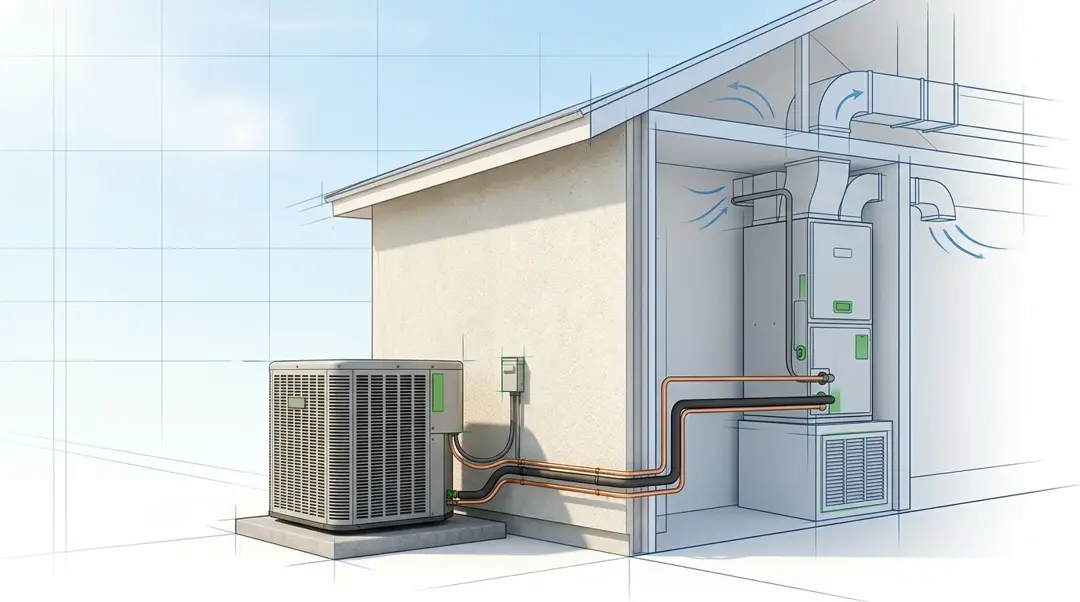
Furnace installation Sacramento decisions begin with the whole home
Replacing heat is a home decision, not just an equipment purchase. A Sacramento house built decades ago may have aging ducts, a tight equipment closet, or venting that needs a closer look. Newer homes can have comfort gaps caused by return airflow or thermostat placement. We begin with the system's condition and how rooms feel during cold mornings. Right-sizing means matching heating capacity to the house, its insulation, windows, ductwork, and layout. It does not mean choosing the biggest unit that fits the space. The U.S. Department of Energy notes that air sealing can reduce heating demand (U.S. Department of Energy, 2026). In our experience, comfort problems that seem like a weak furnace can begin with airflow limits instead. What changes if new equipment makes heat but the ducts cannot carry it well? That is why our team found a clear scope is more useful than a quick equipment-only answer.
- How the present system heats, cools, and moves air through the home
- Whether ducts, venting, controls, or electrical capacity affect the replacement
- Which option fits the home's comfort goals and future cooling needs
The bottom line is simple: a replacement plan should explain trade-offs before equipment is ordered. If the concern is a current no-heat symptom, start with a heating diagnosis rather than a replacement discussion. That visit focuses on finding the fault. For a replacement discussion, our free estimate lets you compare the scope in plain language.
Repair or replace: the judgment comes before the quote
A repair can be sensible when one problem has a clear fix and the system otherwise serves the home well. Replacement becomes a fair conversation when failures repeat, comfort stays uneven, or safe operation is in doubt. Those are starting points not automatic rules. Useful life is the period when equipment can serve the home reliably with reasonable repairs. It is not a deadline printed on a label. Findings and replacement choices should stay separate; in fact, we found homeowners make stronger decisions when they are. Consider a furnace with one repairable control issue, solid airflow, and no other concerns. That can lead to a repair conversation. A system with recurring trouble and a larger scope may deserve a replacement estimate. Which facts matter most in your house?
| What the review shows | Why it matters | Best next step |
|---|---|---|
| One defined fault and otherwise steady comfort | A focused repair may restore normal operation | Arrange a heating diagnosis |
| Repeat failures, uneven heat, or a broader condition concern | The full system condition deserves a planned comparison | Request a replacement estimate |
| A replacement also raises a heating-and-cooling choice | A heat pump may change the project scope | Discuss a heat-pump option |
Sizing, venting, and permitted heating work
Installation details decide whether a new system works as intended. A gas-furnace project can involve venting, combustion air, gas connections, ducts, controls, and the equipment location. A heat-pump project may need electrical planning, an outdoor unit, condensate handling, and cooling-side work. Venting is the route that carries combustion byproducts safely outside. It deserves inspection during replacement; specifically, the old arrangement may not fit new equipment. Permits can apply depending on the property and scope. California's Building Energy Efficiency Standards provide the state framework for residential energy work (California Energy Commission, 2026). Those details guide equipment selection, labor planning, and the written scope. We coordinate the scope around applicable requirements and do not treat code as an afterthought.
Our team found that access shapes the conversation early. An attic run, a narrow closet, or older ducts can affect the plan. An installation may need duct corrections before a correctly sized unit can deliver even heat. That is not a reason to inflate the scope. It is a reason to state what the home needs and why. The conditions matter; as a result, a written estimate should make them clear enough for useful questions.
Furnace or heat pump: an honest Sacramento comparison
A gas furnace makes heat through combustion and works with many homes that have gas service and compatible ducts. A heat pump works differently. A heat pump is an electric system that moves heat and can provide heating and cooling. The U.S. Department of Energy explains that heat pumps transfer heat rather than generate it through combustion; in fact, that approach differs from a furnace (U.S. Department of Energy, 2026). Sacramento's mild winter weather makes the question worth asking. It does not make a heat pump right for every home. Electrical capacity, duct condition, cooling plans, sound preferences, and layout all matter. In our experience, a good recommendation names disadvantages as plainly as benefits. The choice also affects heating and cooling across the year.
A furnace can remain the better fit when its fuel source, duct arrangement, and home goals line up well. A heat pump can make sense when a household wants one system for heating and cooling. If part of the house has no practical duct path, a room-by-room comfort option may be worth discussing separately. It should not replace an evaluation of the central system. We explain each path, including what must change around it, so the decision stays with you.
What a free replacement estimate should clarify
A free replacement estimate is a planning conversation, not a promise that every home needs new equipment. We review the present system, listen to the comfort problem, and explain equipment paths that fit observed conditions. The estimate should identify the system type, sizing basis, duct or venting work, control needs, access limits, and permit considerations. It should leave room to compare a repair path when that remains reasonable. A meaningful scope depends on the home, so we explain the factors behind the estimate. It should explain observed conditions and what needs confirmation before work begins. That detail helps you compare options without assuming every home needs the same work. One home may need a straightforward swap while another needs duct or venting work first — the estimate should say which is true for yours.
A-CLASS Heating and Air is family-owned and operated since 2016, licensed and insured under CSLB License #1090886. Reviewed by Serghei Poleanschii, Founder & Manager, A-CLASS Heating and Air. If you want to compare replacement options, tell our team about your home or call (916) 342-9108. We will discuss the information needed for a clear next step, without pressure to choose on the spot.
Plan your heating replacement with clear facts
Compare the system options, installation details, and home conditions before you decide.
Furnace installation Sacramento FAQs
When should I replace a furnace instead of repairing it?
Replacement is worth discussing when the system has repeat failures, unsafe conditions, poor comfort, difficult-to-source parts, or a repair that does not fit the equipment's overall condition. A diagnosis should come first, then you can compare the repair scope with a replacement plan.
How much does furnace installation in Sacramento cost?
The total depends on the equipment choice, home size, duct condition, venting, electrical work, access, permits, and thermostat needs. A-CLASS Heating and Air provides free estimates on system replacements after reviewing the home, so the scope can be specific rather than guessed.
Can I replace my furnace with a heat pump?
Many Sacramento homes can consider a heat pump, but fit depends on the home's electrical capacity, ductwork, cooling needs, comfort goals, and installation details. A heat pump and a furnace have different trade-offs, so the choice should follow an on-site review rather than a generic recommendation.
Do heating system replacements need permits in Sacramento?
Permits can be required for heating-system replacement work, especially when the project includes equipment, venting, gas, electrical, or duct changes. The applicable requirements depend on the property and scope, and permitted work should be planned before installation begins.
What does a heating replacement estimate include?
A replacement estimate should explain the proposed system, the home conditions that affect the work, and any needed duct, venting, electrical, thermostat, or permit considerations. It should also leave room to compare options and ask questions without pressure.
Do you install commercial heating systems?
No. This page is for residential heating replacement planning. For a business property, use our commercial HVAC service page so the request reaches the right service path.
More Heating Installation Service Areas and Related HVAC Pages
Related HVAC Services
Available in These Sacramento County Cities
Heating System Installation in Sacramento
Professional service in Sacramento
Heating System Installation in Elk Grove
Professional service in Elk Grove
Heating System Installation in Citrus Heights
Professional service in Citrus Heights
Heating System Installation in Folsom
Professional service in Folsom
Heating System Installation in Rancho Cordova
Professional service in Rancho Cordova
Heating System Installation in Carmichael
Professional service in Carmichael
Heating Installation: answers before you book
Straight answers on cost, timing and what actually needs fixing — written by our Sacramento technicians.
- Heating System Installation: A Sacramento Homeowner's GuideHeating system installation in Sacramento costs $6,000 to $20,000 depending on system type. This guide compares gas furnaces, heat pumps, and dual-fuel systems, explains Title 24 permits, and shows how SMUD rebates lower your net cost in 2026.
- Furnace Replacement Cost in Sacramento (2026)Furnace replacement in Sacramento costs $4,500 to $11,000 installed in 2026, depending on efficiency, size, and venting. Real cost ranges by AFUE tier, brand, and install factors — no fluff.
- Is It Worth Replacing a 30-Year-Old Furnace?A 30-year-old furnace burns 40 cents of every gas dollar as waste. Learn what that costs Sacramento homeowners in efficiency, safety, and reliability — and when replacement is the clear call.
- Should I Replace My 25-Year-Old HVAC System?A 25-year-old HVAC system has outlived its expected lifespan by a decade. Here is why age alone — R-22 costs, safety risks, part scarcity, and efficiency loss — tips almost every old system toward replacement.