What should I do if I smell gas or a carbon monoxide alarm sounds?
Leave the home, move to fresh air, and call 911 or your gas utility before calling for HVAC service. Do not restart the equipment or search for the source yourself.

Family-owned since 2016
Generally available 24/7, call-first
When comfort or safety changes fast, start with the facts. A-CLASS Heating and Air is generally available 24 hours a day, 7 days a week, so call (916) 342-9108 at any hour to describe the symptom and confirm arrival timing; a gas smell, a carbon monoxide alarm, sparks, or water near wiring calls for leaving the area and contacting 911 or the utility first.
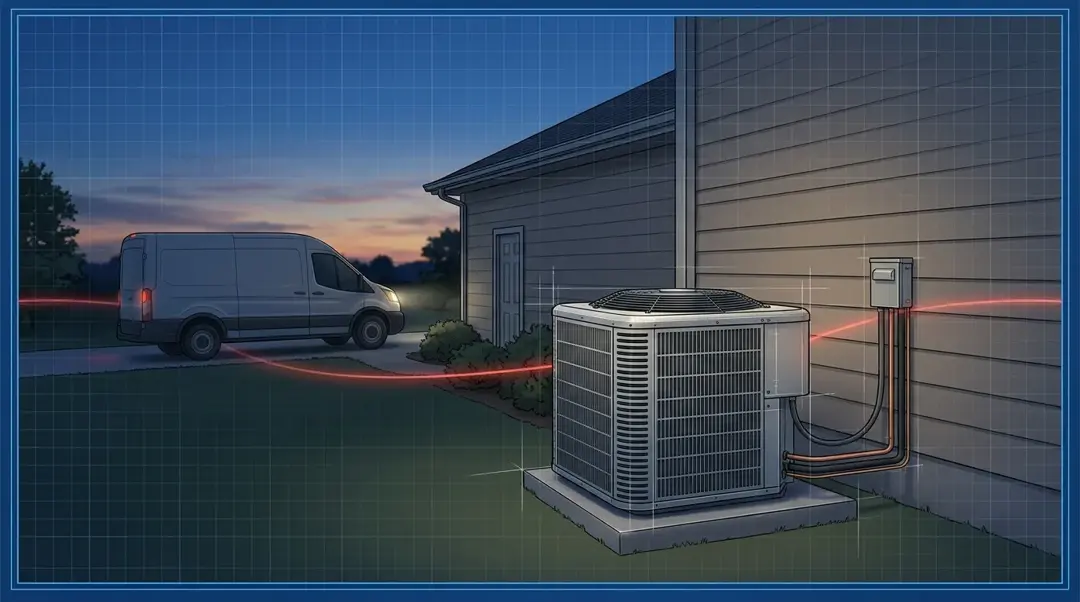
Safety comes first
Do not restart equipment after a gas smell, carbon monoxide alarm, sparks, or a burning odor.
A-CLASS Heating and Air takes urgent heating and cooling calls across Sacramento County and parts of Placer and El Dorado counties. It is a family-owned, HVAC-only contractor based in Rancho Cordova, operating since 2016 and licensed and insured under CSLB License #1090886. A-CLASS Heating and Air is generally available 24 hours a day, 7 days a week, and accepts urgent heating or cooling requests at any hour. It is worth being plain about what that does and does not mean: it is general availability to reach the business, not a guarantee of dispatch, arrival time, an onsite appointment, or same-day completion. Arrival timing, parts access, and service-area coverage depend on current demand and are confirmed on the call, rather than promised by a website in advance. The price of a diagnostic visit is quoted on that same call, based on the complexity of the problem you describe; there is no single flat diagnostic fee published. For a gas smell, a carbon monoxide alarm, sparks, or water near live wiring, leave the area and call 911 or the utility first, then call A-CLASS at (916) 342-9108.
Emergency HVAC Sacramento calls need triage before a repair plan. A-CLASS Heating and Air serves Sacramento County and parts of Placer and El Dorado counties from its Rancho Cordova base, and, calling first lets us ask about the system, the people in the home, and any safety signs. The bottom line: leave first for a gas smell, carbon monoxide alarm, sparking, or water near live wiring; then call 911 or the utility. For a loss of cooling or heat without a clear hazard, tell us the indoor conditions and symptoms so we can discuss availability honestly. Our HVAC service guide is useful for planned work, while this page stays focused on the decision that cannot wait. It also avoids guessing from a web form when conditions are changing. That clarity keeps households focused on safety instead of random equipment resets at home.
Reviewed by Serghei Poleanschii, Founder & Manager, A-CLASS Heating and Air
A comfort failure can feel alarming; however, not every failure presents the same risk. If you smell gas, hear a carbon monoxide alarm, see sparks, or find water near electrical equipment, get people outside or to fresh air and contact 911 or the utility before an HVAC call. Carbon monoxide is an odorless, colorless gas that can make people sick or worse, which is why an alarm or related symptoms are not a troubleshooting project. The EPA's carbon monoxide guidance says to get fresh air immediately when exposure is suspected, while the CPSC recommends annual inspection of home heating systems and warns against using ovens for heat (U.S. Consumer Product Safety Commission, 2026). We found that clear safety questions make a tense call calmer because they establish what must happen before equipment diagnosis.
A cooling failure during a July or August spell above 100°F deserves a practical plan — especially when an infant, older adult, pregnant person, or someone with a health condition is in the home. Move vulnerable people to the coolest safe room, close blinds on sun-facing windows, drink water as appropriate, and consider a cooled public place or a trusted nearby home if indoor heat becomes unsafe. This follows Ready.gov's extreme-heat guidance for finding air-conditioned places when your home is too hot (Ready.gov, 2026). Heat stress is the body's response when it cannot cool itself well enough. The people affected matter as much as the thermostat reading. Call before resetting breakers or repeatedly cycling the system; our team found that the sequence of noises, airflow changes, and thermostat behavior often helps separate a simple control issue from a system that should stay off. If the problem is limited to cooling and there is no immediate safety sign, our cooling diagnosis guidance explains the system-specific path without turning this triage page into a repair manual.
The difference is safety, indoor conditions, and who is affected—not a dramatic label. A burning odor with a tripped breaker, for example, needs the system left off and a call; a minor rattle from an otherwise safe system may be able to wait after phone triage. Short cycling means the system starts and stops more often than normal, and it can come from several causes rather than one automatic emergency. In our experience, this comparison keeps the decision useful: it tells you when to protect people and property first, and when a focused diagnosis can follow. For a whole-system problem that is not urgent, use our general system-repair overview after the immediate situation is stable. That judgment leaves room for calm questions instead of panic.
| What you notice | Safer first action | Destination |
|---|---|---|
| Gas smell, CO alarm, sparks, or water by wiring | Leave or shut down only when safe; call 911 or the utility first. | Tell our team after safety is addressed |
| No cooling during extreme heat | Protect vulnerable people, reduce indoor heat, then call first. | Review cooling-system symptoms |
| No heat without a gas or CO sign | Keep the home safely warm and describe the symptom by phone. | Review heating-system symptoms |
The business is generally available around the clock, but when a technician can arrive depends on the concern, the location, and who is available, so a website cannot responsibly state that in advance. When you call, we ask what the system is doing, whether there is a safety concern, whether the home has cooling or heat, and whether someone vulnerable is present. Consider writing down the thermostat setting, any alarm, and what changed before the failure; those details help make the conversation clearer. We do not promise a repair from a symptom alone, because equipment, controls, airflow, and visible safety conditions need an on-site diagnosis. A-CLASS Heating and Air is family-owned and operated since 2016, licensed and insured under CSLB License #1090886, and built around no high-pressure sales. Learn more about the people behind A-CLASS, then call (916) 342-9108 or send the symptom details to our team when the situation is safe to discuss.
Before the call, note whether the system is completely off, running without changing the temperature, making a new sound, or showing an alert on the thermostat. It also helps to say whether the issue began after a power interruption, a filter change, a hot afternoon, or a cold and foggy morning. Do not remove panels or reach around wiring to collect those details. A simple account from a safe distance is enough; for example, note where the equipment is, what the vents are doing, whether a breaker tripped, and whether anyone has felt unwell. Those observations do not diagnose a failure, but they give the call a useful starting point. Is the home still safe to occupy? Is anyone who needs a cooler or warmer space at risk? The answers help separate immediate safety action from a comfort problem that can be discussed in a calmer way.
A-CLASS Heating and Air publishes this repair guidance: many straightforward HVAC repairs are framed around $150 to $750, depending on the issue, the parts, access to the equipment, and the condition of the system. That range is guidance, not a quote and not a final invoice amount. Exact repair pricing is reviewed after an on-site diagnosis and before any approved work begins, and a repair can cost more when there are multiple failures, hard-to-source parts, refrigerant work, electrical issues, or safety concerns. Replacement is a separate conversation: you can request a free estimate, and a final replacement scope and price may need an in-home review. Call (916) 342-9108 to describe the problem and arrange a diagnostic visit.
The diagnostic visit is priced separately, and A-CLASS quotes that price on the phone rather than publishing a flat fee. The figure depends on the complexity of the problem you describe, so describe the symptom when you call (916) 342-9108 and you will have the number before anything is scheduled.
Sacramento homes also vary in ways that matter during an urgent comfort problem. A shaded older house may hold a different indoor temperature than a newer Elk Grove or Rocklin build; in contrast, a Delta breeze can make an evening feel less severe without fixing the equipment. Smoke outdoors can, however, add another reason to keep windows closed when it is safe to do so, while a winter tule-fog morning can make a loss of heat feel more immediate. None of those local conditions proves the cause of an HVAC failure. They simply give the household a better frame for deciding what to do right now. Keep pets, children, and anyone sensitive to heat or cold in the safest available space, and avoid improvised heating with an oven, grill, or outdoor appliance. Safety guidance comes before a service conversation and stays that way.
Leave the home, move to fresh air, and call 911 or your gas utility before calling for HVAC service. Do not restart the equipment or search for the source yourself.
No cooling can be urgent during Sacramento heat, especially when an infant, older adult, pregnant person, or someone with a medical condition is in the home. Call first so we can discuss current availability and the safest next step.
Turn the system off if you notice a burning smell, sparks, loud mechanical noise, water near electrical parts, or repeated breaker trips. If the concern is weak cooling or heating without those signs, call and describe the symptom before changing anything else.
A possible gas, carbon monoxide, electrical, or water-and-wiring hazard is urgent. A total loss of cooling or heat may also be urgent when weather or a household member makes the indoor conditions unsafe; routine noise or a comfort issue without those factors can often be scheduled after a phone triage.
Yes. A-CLASS Heating and Air is generally available 24 hours a day, 7 days a week and accepts urgent heating and cooling requests at any hour. That is general availability to reach the business, not a guarantee of dispatch, arrival time, an onsite appointment, or same-day completion. Arrival timing, parts access, and service-area coverage depend on current demand and are confirmed on the call.
A-CLASS quotes the price of a diagnostic visit on the phone, based on the complexity of the problem you describe. There is no single flat diagnostic fee published, because the figure depends on the system, the symptom, and the access involved. Call (916) 342-9108, describe what the system is doing, and you will have that figure before anything is scheduled.
A-CLASS publishes this guidance: many straightforward HVAC repairs are framed around $150 to $750, depending on the issue, the parts, access to the equipment, and the condition of the system. That range is guidance, not a quote and not a final invoice amount. A repair can cost more when there are multiple failures, hard-to-source parts, refrigerant work, electrical issues, or safety concerns, and exact pricing is reviewed after an on-site diagnosis and before any approved work begins.
No. A-CLASS Heating and Air handles heating and air-conditioning equipment; contact the appropriate emergency provider for plumbing, general electrical, or other non-HVAC hazards.
A-CLASS Heating and Air is generally available 24 hours a day, 7 days a week. Call at any hour to describe the situation and confirm arrival timing for urgent HVAC help in Sacramento. For gas odor, a carbon monoxide alarm, or an immediate electrical danger, contact 911 or the utility first.
Call (916) 342-9108