HVAC Elverta CA service starts with the property
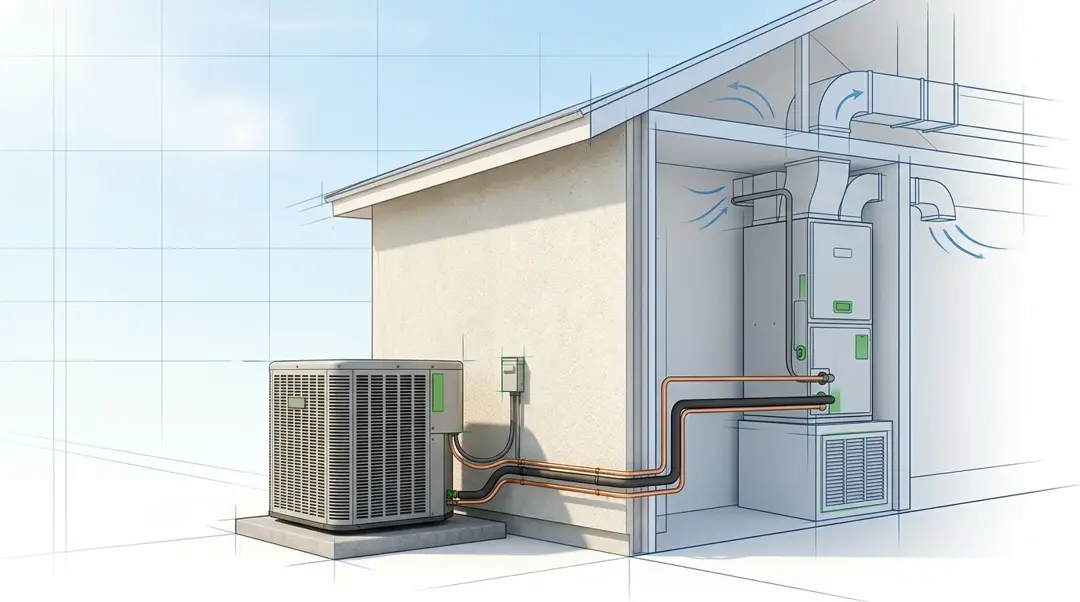
Elverta is a small rural community north of Rio Linda, near the Placer County line. Homes sit on a mix of larger lots, with housing from more than one era. That matters when a system stops keeping up. An outdoor unit may sit far from the living space. Ducts may run through an attic, crawlspace, or a later addition. Airflow is the amount of conditioned air moving through the system and rooms. Restricted airflow, for example, can make a sound air conditioner feel weak at a distant bedroom. Before anyone assumes a major part has failed, it helps to look at the full path: filter, return, ducts, registers, thermostat, and equipment. We found that a clear description of the property layout often makes the first conversation more useful than a guess based on one symptom.
Rural properties also call for plain scheduling talk. A-CLASS is based in Rancho Cordova and serves Elverta as part of its Sacramento County service area. We do not claim an Elverta office, and we do not promise a set arrival time before checking current availability. Tell us about gates, pets, a long driveway, or an equipment pad behind another structure when you call. Those details help plan access.
Heat, dust, and the SMUD service area
Elverta is in SMUD electric territory, so an energy question may begin with the utility as well as the equipment. SMUD’s rebates and savings information describes current programs and energy-saving steps; program terms can change, so the utility is the place to confirm them (SMUD, 2026). Hot Sacramento Valley afternoons put long demand on cooling systems. Dust from open rural surroundings can also show up quickly at filters and outdoor coils. In our experience, the useful response is not to blame every comfort issue on the weather. Is one room warm while the rest of the home cools? Is the system running but not reaching the set temperature? Those clues point the diagnostic work in different directions. Consider a basic maintenance visit before peak use if the system has been noisy, cycling often, or struggling to hold a steady setting.
The federal central air conditioning guide explains the role of supply and return ducts in home cooling (U.S. Department of Energy, 2026). That is why replacing equipment alone does not answer every question. Duct leakage is air escaping from or entering ducts before it reaches the intended room. It can leave a far room uncomfortable even when the thermostat is set correctly. Our team found that homeowners get better repair conversations when they note when the problem began, which rooms are affected, and whether the issue is cooling, heating, noise, or uneven airflow. Those observations do not replace a diagnosis, yet they help separate a simple control concern from a problem that needs closer inspection. Here are practical details worth having ready before you call:
- The system type, if you know it, and whether it heats, cools, or both.
- The rooms affected and whether the issue changes during the day.
- Access notes such as gates, pets, or a unit located by a separate building.
- Any new sound, odor, breaker trip, or thermostat message.
- Whether you want repair help, seasonal maintenance, or a replacement evaluation.
Match the symptom to the next HVAC step
A short list can make the next step clearer without pretending to diagnose from a webpage. Start with the simplest safe checks, such as a thermostat setting and a filter. Do not open electrical panels or take apart equipment. If the concern persists, HVAC and AC repair guidance explains why a technician checks the system as connected parts, cooling included. Heating trouble belongs on the heating repair route. A system that works but feels uneven may need an airflow and duct conversation instead. For instance, a hot back room can come from duct condition, return-air limits, insulation, sun exposure, or equipment sizing. Treat the symptom as the first clue and let the diagnosis finish the story.
| Home setting | Typical HVAC concern | Routed next step |
|---|
| Older rural home or addition | Uneven rooms or an aging duct path | Review duct and vent repair options |
| Larger lot with a remote outdoor unit | Cooling loss, noise, or a system that cycles | Same AC repair route as above |
| Any home before seasonal demand | Filter, control, or visible wear concerns | Plan HVAC maintenance |
A rural setting does not automatically mean an unusual HVAC problem, but it can change what should be checked first. An older house may have a newer condenser connected to older ducts. A remodeled room may have more sun or a longer supply run than the original plan allowed. At the same time, a new-looking thermostat cannot fix a return-air path that is too limited for the room it serves. Note what changed before the issue appeared: a remodel, a blocked register, a filter change, a breaker trip, or a new noise. That timeline helps. A technician can then test the equipment and inspect the parts that influence comfort instead of replacing a part by guesswork. It also gives a homeowner a clearer basis for deciding whether to repair, maintain, or explore a replacement.
Repair, maintenance, or a replacement conversation
Repair is appropriate when a diagnosis identifies a serviceable problem and the system still fits the home’s needs. Maintenance is a sensible route when there is no active failure but you want filters, controls, airflow, and visible wear reviewed before a hard season. Replacement deserves a separate conversation when a system repeatedly falls short, has reached an advanced age, or no longer suits the home. Equipment choice belongs in that conversation too: a heat pump is a system that moves heat for both cooling and heating rather than making heat with a furnace alone, and the U.S. Department of Energy explains where its efficiency comes from in its heat pump guide (U.S. Department of Energy, 2026). However, no online checklist can tell you which choice is right for a specific property. We can discuss the symptoms by phone and confirm scheduling, then evaluate the equipment on site. Whether the path is repair, maintenance, or replacement, A-CLASS offers a free estimate for any service. For help choosing the right request, use the HVAC services overview or contact our team with the details you have.
The service boundary stays simple: we serve Elverta from Rancho Cordova with HVAC work that fits our listed scope. We do not make claims about every separate structure, rural outbuilding, or manufactured-home setup before reviewing the request. Call (916) 342-9108, explain the building and equipment, and we will confirm whether it fits. If your main question is who is behind the advice, the page about Serghei and A-CLASS Heating and Air explains the company’s family-owned approach since 2016. On a rural property with its own access and layout, that careful review is what keeps the advice trustworthy.