Does A-CLASS Heating and Air serve Clay, CA?
Yes. A-CLASS Heating and Air serves Clay, CA from its Rancho Cordova dispatch base for heating, cooling, HVAC maintenance, duct and vent repair, thermostat work, and system replacement planning.

Family-owned since 2016
Serving a rural Sacramento County community
A-CLASS Heating and Air serves Clay from Rancho Cordova with practical help for heating, cooling, ducts, and thermostats. Call (916) 342-9108 to describe the problem and confirm current scheduling.
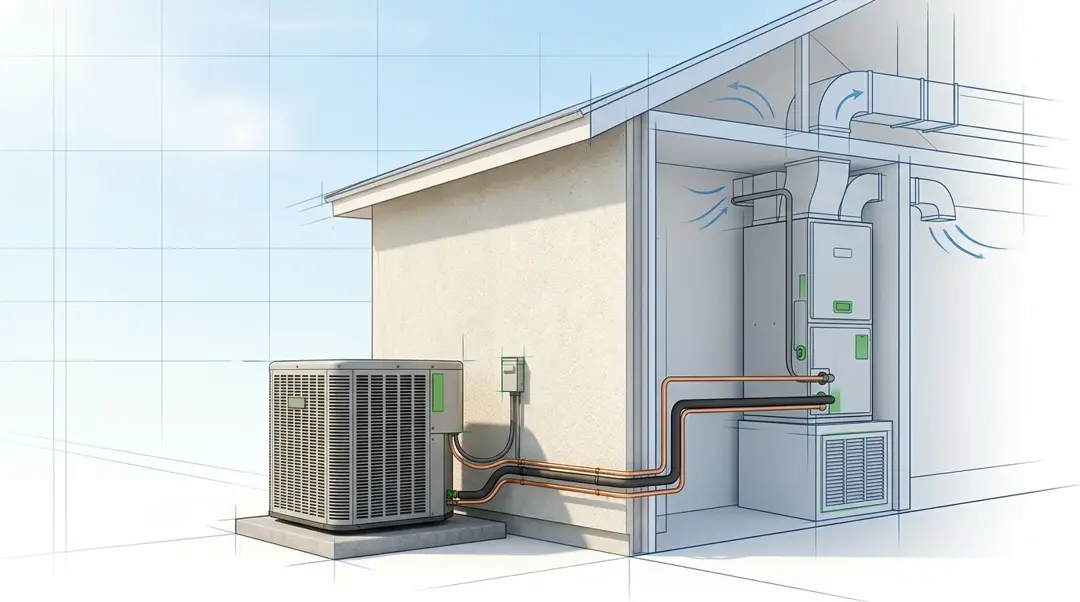
Searching for HVAC Clay CA should get you a direct answer, so here it is. A-CLASS Heating and Air is a Rancho Cordova-based, family-owned company that serves Clay for repair, maintenance, duct and vent work, thermostat help, and replacement planning. The company has operated since 2016 and is licensed and insured with CSLB License #1090886. Rural homes may have a long driveway, a gate, animals, or several buildings, so those details belong in the first call. Much of what we check comes back to one word: airflow is the movement of conditioned air through the return, equipment, ducts, and rooms. A room that feels different can point to a filter, a return path, a duct restriction, a thermostat setting, or equipment operation. The bottom line: share what changed, then call (916) 342-9108 for a grounded next step. A note about access helps, too.
Clay is a small rural community east of Galt and south of Wilton, where larger parcels and varied home ages make a generic answer less helpful. One house may have a conventional split system, while another has equipment added during a remodel or a separate conditioned space. It is sensible to ask about dust, hot rooms, cycling, and a filter that loads quickly. We found something simple on rural calls: the useful ones start with ordinary observations — does the system run, did the pattern begin after a thermostat change, and is one part of the house different? For example, a warm bedroom can come from sun exposure, a closed door, a return-air issue, or a duct problem. The service path begins with that pattern, then moves to a diagnosis instead of guessing from the property type alone.
Sacramento County heat can put a cooling system under long demand in July and August. When outdoor conditions stay hot, a small airflow issue becomes easier to feel indoors. Wildfire smoke can also change how a household thinks about filters and outdoor air. The EPA's wildfire indoor-air guidance explains ways to reduce smoke exposure indoors (EPA, 2026). Technicians track one number here: static pressure means the resistance air meets as it moves through HVAC equipment and ducts. High resistance affects comfort and equipment operation, and it takes a gauge to read, not an online verdict. Clay utility territory should be confirmed by the account holder with the serving provider before an equipment decision. The California Energy Commission's building standards information is a better starting point for statewide efficiency context (California Energy Commission, 2026).
A system that will not cool, heat, or respond to the thermostat needs a diagnosis before anyone can say what work fits. Start with HVAC system repair when the equipment has changed behavior or stopped working. A cooling-only problem can be directed to air-conditioning repair, while a heater problem belongs with heating system repair. Our team found early on that separating a whole-house failure from a single-room issue saves everyone a wrong turn. The distribution side matters as much as the equipment: ductwork is the network of supply and return passages that carries conditioned air through a home. Consider duct and vent repair when the equipment runs but a room has poor delivery, visible damage, or a changed airflow pattern. A filter, access, controls, and the equipment itself still deserve attention before settling on one cause.
Rural lots add a few practical notes worth sharing on the call. Many Clay homes run on well and septic systems, and the HVAC equipment may sit far from the road. A long gravel drive, a locked gate, or dogs on the property are all normal here. They are easy to plan around when we know in advance. Dust from dirt roads and dry fields loads filters faster than city living does. A filter check every month during heavy use is cheap insurance. Propane heat is common on parcels without gas service, and its equipment ages differently than electric systems. None of that changes the basics. It only changes what to mention when you call, so the visit fits the property on the first trip.
The table is a starting point, not a remote diagnosis. In our experience, the most helpful description identifies when the problem appears, what the thermostat shows, and whether the condition is limited to one room. That information lets the first conversation stay focused on the equipment and home at hand. For instance, a replacement discussion should follow a clear scope, not a single hot afternoon. Free estimates are available for any service; repair work needs an on-site diagnosis. If the problem is urgent, call to ask about current support and scheduling. It also helps to say whether the equipment is at the house or in a separate conditioned area, because the work scope may differ.
| What you notice | What to share | A useful next step |
|---|---|---|
| Cooling runs but one room stays warm | Room, time of day, filter, and airflow changes | Duct and vent repair |
| Thermostat does not seem to control the system | Display message, settings, and equipment response | Thermostat repair |
| Equipment is aging and reliability is the question | System age, recurring symptoms, and comfort goals | Replacement estimate request |
A replacement conversation should begin with how the home is used, which rooms matter most, and what the present system does during the hottest or coldest periods. Equipment size, duct condition, return-air paths, electrical setup, and thermostat location can all affect the result. A large parcel does not automatically mean a larger unit, and a newer unit does not erase a delivery problem. Households can bring past service notes, filter information, and a list of rooms that feel different. That gives the on-site evaluation a fuller picture. The California Energy Commission explains that building standards set statewide requirements, while a particular home still needs its own assessment. Ask about the proposed scope, the conditions checked, and which questions should go to the utility. That keeps a replacement decision connected to the home instead of a generic sales pitch.
Rural does not mean every request has the same scope. A home HVAC call is different from an assumption about a barn, a well house, or another outbuilding. Explain what is conditioned, the equipment type if known, and any access limitation so the team can confirm what it can take on. The company does not claim a Clay office; it serves the community from Rancho Cordova. If you are weighing a system replacement, ask for a free estimate and bring your utility questions to the provider that serves the address. For help with the next step, contact A-CLASS Heating and Air by phone or online. The goal is a useful diagnosis and an honest scope, with no high-pressure sales tactics.
Reviewed by Serghei Poleanschii, Founder & Manager, A-CLASS Heating and Air
A-CLASS Heating and Air publishes this repair guidance: many straightforward HVAC repairs are framed around $150 to $750, depending on the issue, the parts, access to the equipment, and the condition of the system. That range is guidance, not a quote and not a final invoice amount. Exact repair pricing is reviewed after an on-site diagnosis and before any approved work begins, and a repair can cost more when there are multiple failures, hard-to-source parts, refrigerant work, electrical issues, or safety concerns. Replacement is a separate conversation: you can request a free estimate, and a final replacement scope and price may need an in-home review. Call (916) 342-9108 to describe the problem and arrange a diagnostic visit.
Yes. A-CLASS Heating and Air serves Clay, CA from its Rancho Cordova dispatch base for heating, cooling, HVAC maintenance, duct and vent repair, thermostat work, and system replacement planning.
A-CLASS Heating and Air publishes this guidance: many straightforward HVAC repairs are framed around $150 to $750, depending on the issue, the parts, access to the equipment, and the condition of the system. That range is guidance, not a quote and not a final invoice amount. Exact pricing is reviewed after an on-site diagnosis and before any approved work begins. A system replacement is a separate conversation: you can request a free estimate, and a final replacement scope and price may need an in-home review of the home and equipment.
Start with the symptom, the rooms affected, whether the system runs, and any new sounds or thermostat changes. Also mention a gate, driveway, pets, or other access detail that affects a visit.
No assumption should be made about outbuildings or livestock areas. Call with the equipment type, building use, and access details so A-CLASS Heating and Air can confirm whether the requested HVAC scope is available.
Yes. Free estimates are available for any service. Repair needs require an on-site diagnosis before the team can explain the appropriate next step.
No. A-CLASS Heating and Air does not promise a response time. Urgent HVAC support is available, and current scheduling is confirmed by phone.