Do you serve homes and apartments near Arden Fair?
Yes. A-CLASS Heating and Air serves nearby homes and can discuss HVAC needs in apartments. Renters should contact the property manager or owner for approval before work is scheduled.

Family-owned since 2016
At a glance — mixed-use service area
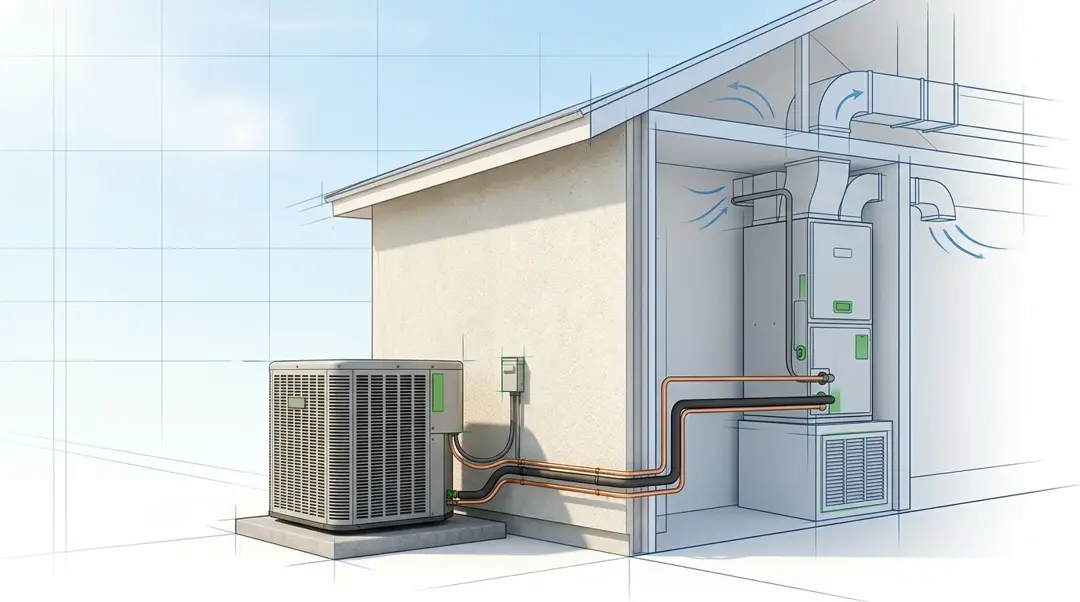
HVAC Arden Fair Sacramento service can fit nearby homes, apartments, small shops, and offices. A-CLASS Heating and Air is family-owned, based in Rancho Cordova, and has served the Sacramento area since 2016. Call (916) 342-9108 to discuss a planned need or urgent HVAC support availability. Large retail and institutional systems need a provider set up for that scale.
Around Arden Fair and Point West, Sacramento mixes retail, offices, apartments, and quiet residential streets within a few blocks of one another. Space type matters because a house, a rented apartment, and a small office do not follow the same path. Homeowners can describe a system concern and arrange a visit. Renters usually need the owner or property manager to sign off before anyone schedules work. Small businesses may need to coordinate with a lease contact or building manager. We found that a call goes better when the person calling names the space, the system behavior, and who can approve the work. That is a practical start, and it does not assume every building has the same equipment or rules. For a home with a cooling issue, the AC repair guide explains what a diagnosis can cover.
Mixed-use areas also bring different comfort patterns. Sunny apartments may gain heat through windows, while an office can feel warm because of people, lights, or a blocked return path. Heat that shows up only in late afternoon may not point to one failed part. Airflow balance means the system delivers and returns air in a way that supports steady comfort across the space. Filters, vents, supply runs, controls, and the room itself can affect that balance. For example, a closed interior door can change how a small room feels even when the equipment runs. Ductwork adds a constraint of its own. Static pressure is the resistance air meets as it moves through ducts and equipment. A high reading takes gauges and inspection to confirm, not a glance at a vent. Before naming a cause, a technician still needs the approved work area and time with the equipment itself.
Sacramento summers can put a lot of demand on cooling equipment. The U.S. Department of Energy offers seasonal advice on maintaining cooling systems and using settings that support efficient operation on its air-conditioner maintenance page (U.S. Department of Energy, 2026). Guidance at that level does not diagnose one home or apartment. It does support a basic first check: note the thermostat setting, check the filter if you are allowed to do so, and look for safe, visible changes such as weak airflow. In our experience, it also helps to write down when the concern begins. Is it only after a hot afternoon? Does it occur in one room or all rooms? A note that reads "upstairs bedroom, weak airflow after 4 p.m." says more on a first call than "the AC stopped working."
Wildfire smoke can make indoor-air questions more urgent. The EPA's indoor-air guidance for wildfires explains that smoke particles can enter a building through openings and ventilation (EPA, 2026). Follow public safety directions first. A tenant should not alter equipment or filtration beyond the lease or building rules. Property managers, building owners, and HOAs set their own approval process. A-CLASS can discuss the HVAC scope after those parties have approved both access and the work itself.
The right next step depends on the kind of system and the reported symptom. If a home blows warm air, a cooling diagnosis usually comes first. When a small office runs hot in one corner and cold in another, the concern may sit with controls, airflow, or the equipment itself. Apartment residents may need to start with their manager even when the symptom is obvious. Our team found that mixed-use buildings blur two questions worth keeping separate. In units that share a wall with a warmer neighbor, a thermostat can read high all afternoon while the equipment runs exactly as designed. One question covers what the HVAC system is doing. The other confirms who can authorize access, repairs, or a replacement decision. Consider sharing whether the system is noisy, cycles often, or serves only part of the space. A unit that short-cycles every few minutes points to a different problem than one that runs steadily without ever cooling the room.
A-CLASS serves residential systems and light-commercial needs for small shops and offices. The light-commercial HVAC page explains the small-business service boundary. It does not extend to mall-wide, anchor-store, institutional, or industrial-scale systems. Those properties should work with their facility team and approved large-scale HVAC provider. For residential concerns, service pages offer a more direct path than a location page can provide. Systems that will not cool belong with AC repair information. Heating concerns have their own heating repair route. This keeps the advice tied to a real concern while respecting the limits of a mixed-use service area.
| Space type | Typical HVAC question | Useful next step |
|---|---|---|
| Nearby home | Cooling system blows warm air | Review AC repair guidance |
| Apartment or condo | Uneven comfort or an equipment concern | Confirm approval and contact A-CLASS |
| Small shop or office | Light-commercial heating or cooling concern | Review light-commercial HVAC |
Routine care can help a homeowner understand a system before the hottest stretch of summer. The HVAC maintenance service page outlines planned maintenance for heating and cooling equipment. Before requesting service, a renter should ask the property manager how requests are handled. Condo owners may also need to review HOA rules for exterior equipment or shared systems. Business tenants should check the lease and building contacts. Those approvals belong to the owner, HOA, or property manager. They are not something an HVAC company can promise. The bottom line is that technical findings and building approval both matter. Good calls make room for each, especially when work could affect shared equipment or common areas.
When diagnosis points to a system replacement, A-CLASS offers free estimates for system replacements. That does not mean every repair call becomes a replacement discussion. Ask what was inspected, what condition was found, and why the recommendation fits the system. Equipment choice usually enters at this stage. A heat pump is an electric system that provides heating and cooling by moving heat, and it is one of the options a replacement estimate can weigh. The California Energy Commission publishes statewide information about building energy standards on its standards page (California Energy Commission, 2026). Sources like that provide context, while an on-site review addresses a specific system. If you are weighing a repair, planned maintenance, or a replacement estimate, the HVAC services directory can help match the concern to a specific service.
A-CLASS Heating and Air is family-owned and operated since 2016, with CSLB License #1090886. The company is based in Rancho Cordova and serves Arden Fair; it does not claim an office, storefront, or showroom in this area. Call (916) 342-9108 to discuss an urgent heating or cooling concern and current availability. Mention a breaker trip, burning smell, water near equipment, or a safety alarm at the start of the call. Details like these can help identify safe next steps. Large retail, institutional, and industrial-scale HVAC work remains outside the service scope described here.
Before a visit, a short set of notes can help, and none of them require touching the equipment. Start with timing: when does the unit turn on and off, and which room feels too hot or too cold?
Have the name of the owner or manager at hand, and add the make and age of the unit if either is easy to find. Nobody expects a model number from memory. For a shop or office, note the hours when heat or cold is worst. A sales floor that bakes from 2 to 6 p.m. raises different questions than a back room that never warms up in winter.
No high-pressure sales tactics means the conversation should stay connected to the equipment and the facts available. You can read about the company's approach on the A-CLASS Heating and Air about page. To share the property type, approval situation, and system symptoms, contact the HVAC team. What kind of space is it, and who can authorize work? Those two questions help shape an honest plan. They also keep a location page from claiming that it can diagnose a system or bypass building rules from a distance.
Reviewed by Serghei Poleanschii, Founder & Manager, A-CLASS Heating and Air
Yes. A-CLASS Heating and Air serves nearby homes and can discuss HVAC needs in apartments. Renters should contact the property manager or owner for approval before work is scheduled.
Yes. A-CLASS can discuss light-commercial HVAC needs for small shops and offices. The commercial HVAC service page explains that scope. The details of the space should be confirmed by phone.
No. Arden Fair Mall and similar large retail systems are outside A-CLASS service scope for residential and light-commercial work. Those systems need a large-scale HVAC provider. Building operators can use their facility-approved provider.
Uneven comfort can come from sun exposure, filter condition, return-air paths, duct issues, controls, or equipment performance. A technician needs to inspect the system. The approved work area also matters before naming a cause.
Free estimates are available for system replacements. Repair and maintenance needs require diagnosis first. The symptom and equipment condition guide the next step.
Share whether the issue is cooling, heating, airflow, a leak, a breaker trip, or an unusual smell. For a renter or managed building, also share who can approve access and work. That person may need to take the call.