Older core homes and newer Davis layouts
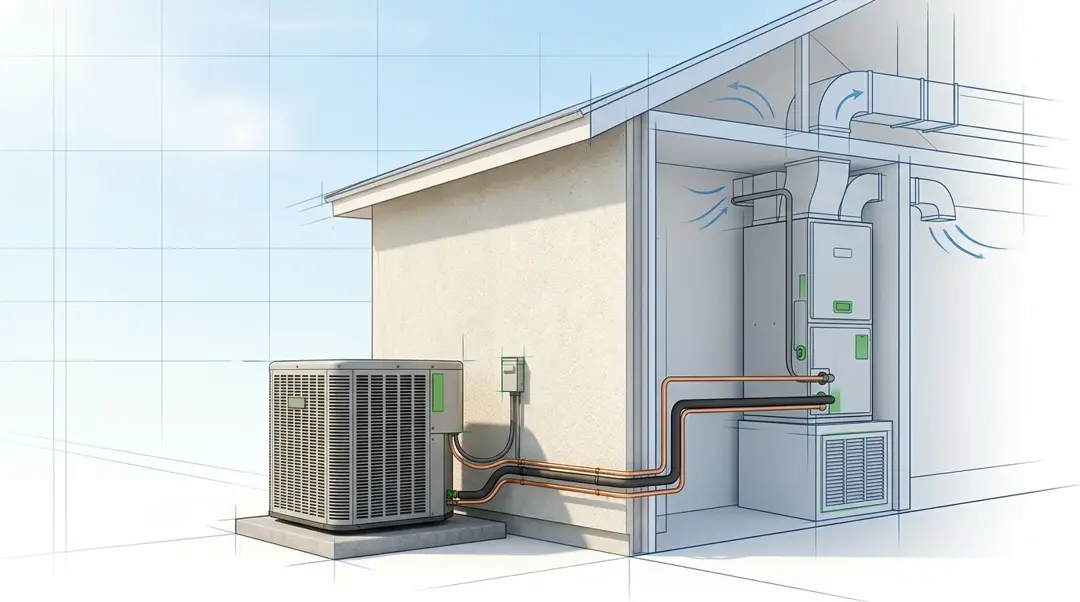
Davis includes established residential areas near the campus and a mix of newer development toward East Davis. That contrast can change how a technician should investigate a heating or cooling concern. An older home may have equipment in a tight attic, a later addition, or duct paths that need careful access planning. A newer home may still have an uncomfortable room because a return path, thermostat location, solar exposure, or closed interior door changes air movement. Across both home patterns, we found that the useful first question is not which part to replace. Start with what changed in the room, at the thermostat, and at the equipment. Consider a bedroom that stays warm after the rest of the home cools: heat gain, supply delivery, a return-air restriction, or system capacity may each be relevant. A neighborhood label cannot choose among them.
The home itself supplies better clues than a broad claim about every Davis property. Note whether the problem began suddenly or has built over several seasons. Note whether it affects one room, one floor, or the full house. Those details help separate a likely control issue from an airflow concern or a larger equipment problem. A return path is the route air takes back from living spaces to the HVAC equipment. A blocked or limited return path can affect comfort even when supply vents feel open. Room-by-room notes turn a vague comfort complaint into observations someone can check; in our experience, that makes a later HVAC discussion more useful. They also avoid treating an older home as a diagnosis by itself.
Davis also has homes with shaded lots, solar exposure, and room layouts that change how heat moves through the day. An afternoon problem can start in a west-facing room, while a second-floor room may hold heat longer after sunset. Those patterns are useful clues, not a diagnosis. They help a caller describe the timing, the rooms, and the conditions around the symptom. If coverage can be confirmed, that information can guide a focused evaluation of ducts, return paths, thermostat placement, and equipment performance at the address. A shaded yard or a recently changed room use can add useful context. The address and the observed pattern still matter more than a broad label for the neighborhood.