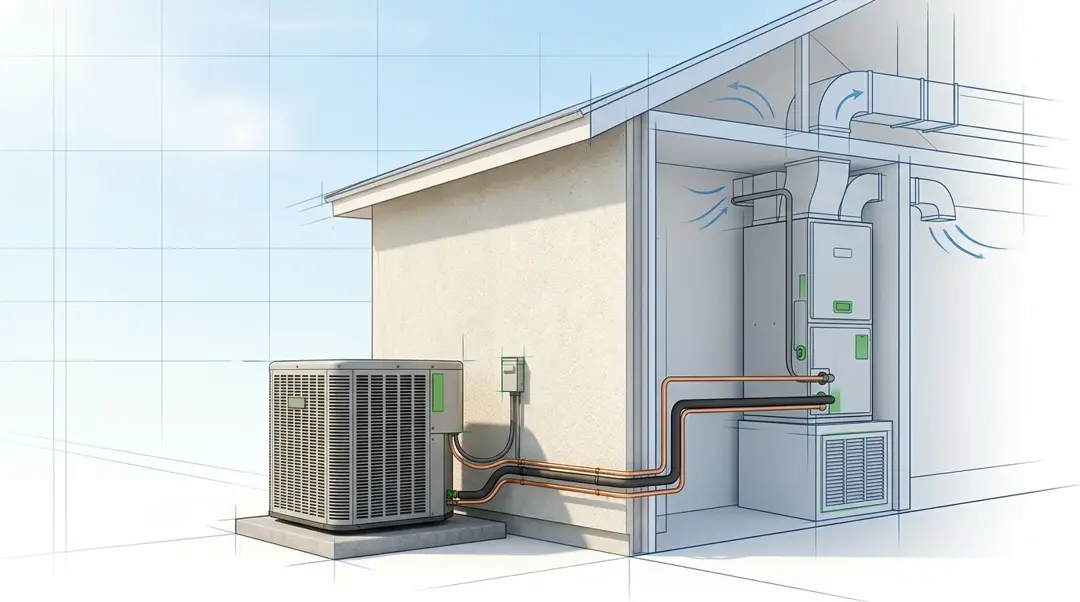
Downtown Sacramento HVAC starts with building context
Downtown homes do not all present the same kind of HVAC question. Condos may have equipment on a balcony, roof, or shared mechanical area. Lofts may have exposed structure and limited space for ducts. Converted buildings may have rules that affect where equipment can sit and how crews reach it. Before choosing a replacement, it helps to know the system type, the comfort problem, where the thermostat sits, and which building contact can explain the approval process. If the make and model are readable, along with the room that feels wrong and when the issue began, those details give the first HVAC conversation a more useful starting point.
Sacramento summers can put long afternoon demand on a west-facing unit, while winter fog brings a different heating pattern. Downtown is in SMUD's electric-service area, and SMUD posts current rebate and electric-upgrade details for customers to read (SMUD, 2026). System performance still depends on the home itself, including sun, doors, filters, and the path air takes through the unit. A technician compares what can be reached: filters, vents, returns, how the unit runs, and how warm each room feels. Filters matter more than most owners expect; the EPA's home air-filter guidance explains what they can and cannot fix (EPA, 2026). Static pressure means the resistance air meets as it moves through ducts and equipment. Restricted airflow, for example, can make a bedroom feel off even when the thermostat says the system is running normally. Keep the thermostat at its usual setting for a visit and mention unusual sounds or a room's time-of-day pattern.
A practical path for condos, lofts, and small businesses
On the first call, distinguish a repair symptom from a system-planning question. When a system will not cool, the next step may be a visit focused on diagnosis and air-conditioning repair. Where duct paths are not workable, a conversation about ductless heating and AC can make sense. When replacement options are under discussion,A heat pump is a system that moves heat for both cooling and heating, which may suit a unit that needs year-round comfort without separate heating and cooling equipment. We found that Downtown calls get easier once owners split the unit's mechanical problem from the building's approval steps. Old service notes, rental status, and any door or elevator notice rules help the technician start with the right question: what changed, where is the equipment, and what is safe to access during a scheduled visit?
Outdoor units, roof gear, elevators, loading access, and work-hour rules all belong to the building. A-CLASS can set up HVAC scheduling by phone and explain what access details help. It cannot grant HOA or building-management approval. Consider a rooftop packaged unit serving a small office: the equipment may be familiar, yet safe access and the building's process still shape the visit. A packaged unit is an HVAC system with its main heating and cooling components in one outdoor cabinet. In a small workplace, the HVAC services overview explains the service boundary and when to call to confirm scope.
The owner, tenant, or manager should check the building's rules first when work touches a roof, an elevator, or a shared area. Roof rules, lift timing, loading-zone access, and who must be on site differ from building to building. Share those facts when setting up the visit, so access-dependent work goes on the calendar with the right people informed. A-CLASS cannot grant those approvals.
Common Downtown settings and the next HVAC conversation| Setting | What to check first | Routed next step |
|---|
| Condo with a shared exterior area | Current equipment location and the manager's access rules | Plan a system replacement |
| Loft with limited duct paths | Room loads, wall locations, and the existing distribution system | Assess ductless options |
| Small office or retail suite | Equipment type, occupant comfort issue, and building access contact | Review HVAC service scope |
What a thoughtful HVAC decision looks like
Repair and replacement are different questions, and neither can be answered from a building type alone. Age matters. So do the care history, the symptom, and what shape the unit is in. Our team found that a short description of what changed—one hot room, new noise, uneven airflow, or a system that stops—helps start the right conversation. The U.S. Department of Energy notes that upkeep and correct settings change how well a system heats and cools. That is why an inspection should start with the actual equipment rather than a generic upgrade list (U.S. Department of Energy, 2026).
Free estimates are available for any service. Repairs need a diagnosis first. A written recommendation should identify the equipment and work being considered, so an owner can match it to the building's rules. Ask what the check found. Ask which part or system issue led to the recommendation. Keeping that note with past work gives an owner a firmer basis for the next step.
- Share the unit number, the system type if known, and the room or symptom that prompted the call.
- Ask the HOA or building manager about exterior equipment, roof, elevator access, and any required point of contact.
- Keep prior maintenance records or recommendations available.
- For a workplace, describe the equipment and confirm that it serves a light-commercial space within the requested scope.
- For an urgent no-cooling or no-heating problem, call to review scheduling.
Indoor comfort also involves the people who live or work around the system. In our experience, a concise building contact and an accurate access plan prevent many avoidable handoffs. The bottom line: the right Downtown plan combines a real equipment assessment with the owner's own building requirements. A resident can describe the symptom, a manager can explain access, and a technician can evaluate the HVAC equipment using those details. That keeps each party responsible for the information it can actually confirm before a visit begins. Residents and building teams seeking HVAC Downtown Sacramento can learn more about the company's service approach on the A-CLASS Heating and Air about page, or contact A-CLASS Heating and Air to discuss a residential or light-commercial HVAC need.
Reviewed by Serghei Poleanschii, Founder & Manager, A-CLASS Heating and Air