
Family-owned since 2016
Repair-first, whole-system guidance
HVAC Repair Sacramento: Clear Answers for a System Problem
At a glance
HVAC repair in Sacramento usually starts with a symptom, not a clear cause: rooms that will not cool, a heater that stops, or air that barely moves. A-CLASS Heating and Air checks the whole home system, then explains the findings and the options without high-pressure sales. We serve Sacramento County and parts of Placer and El Dorado counties from Rancho Cordova, with urgent, call-first availability when the situation cannot wait. Call (916) 342-9108 to describe what changed and discuss current availability.
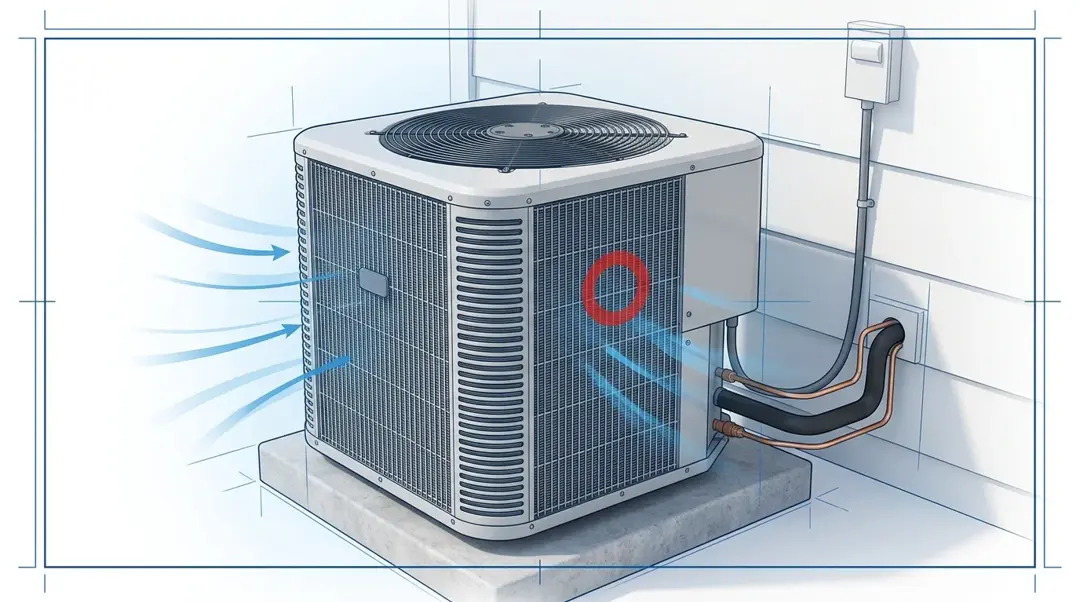
HVAC Repair Sacramento: a diagnosis that starts with the system
A comfort complaint can come from more than the box outside or the unit in a closet. A thermostat can call correctly while airflow is restricted, or equipment can run while controls fail to complete the sequence. HVAC means heating, ventilation, and air conditioning, so a useful repair visit looks at how those pieces interact. We begin with what you noticed, when it changed, and whether heating, cooling, or both are affected. Then we check the response at the thermostat, visible filter condition, airflow, power, controls, and the equipment sequence that fits the symptom. A repair diagnosis is not a guess based on one sound. Consider a system that starts and stops: a dirty filter, a control fault, or another condition can create a similar pattern. That is why the bottom line is simple: a clear cause comes before a recommendation.
What an AC or HVAC repair costs in Sacramento
A-CLASS Heating and Air publishes this repair guidance: many straightforward HVAC repairs are framed around $150 to $750, depending on the issue, the parts, access to the equipment, and the condition of the system. That range is guidance, not a quote and not a final invoice amount. Exact repair pricing is reviewed after an on-site diagnosis and before any approved work begins, and a repair can cost more when there are multiple failures, hard-to-source parts, refrigerant work, electrical issues, or safety concerns. Replacement is a separate conversation and needs an in-home estimate. Call (916) 342-9108 to describe the problem and arrange a diagnostic visit.
How a cooling diagnosis gets specific
A working thermostat does not prove that the air conditioner is healthy. Airflow is how cooled air moves through the filter, coil, blower, ducts, and supply vents. A blockage at any point can look like a bigger equipment failure. A warm room can, in fact, have more than one cause, so we do not treat a noisy outdoor unit or a dirty filter as the full answer.
A cooling diagnosis checks:
- the cooling call and the electrical links
- the indoor and outdoor parts, the coils, and the air path
- the drain and the space around the equipment
A system that cools briefly and then stops, for example, may need a control or airflow check, so we ask when the change began and which rooms feel different. A heat wave, a smoke-loaded filter, and a system that will not start each point somewhere different. If you see ice, turn the unit off until our technician can assess the cause safely before suggesting a needed repair.
What an honest diagnostic visit should give you
People researching repair often worry that a vague symptom will turn into pressure for a bigger job. A useful visit should make the path clearer instead. We listen for the timing of the issue, inspect the relevant system functions, and explain what the findings do and do not show. Short cycling means equipment starts and stops more often than normal, and it is a pattern to investigate rather than a diagnosis by itself. In our experience, explaining that difference helps homeowners ask better questions about the inspection. You should be able to hear what was checked, why it matters, and what work is being suggested. Our team found that a calm explanation is especially useful when a system still runs but no longer keeps rooms comfortable. For example, a weak vent can involve a filter, blower, duct path, or control issue. We keep the recommendation tied to the condition in front of us.
- Tell us whether the issue affects heating, cooling, or both.
- Note when the symptom began and whether it comes and goes.
- Share new sounds, odors, water, or changes at the thermostat.
- Keep any recent service notes handy if you have them.
Route the symptom to the right repair path
This page covers the whole-system repair process, but one symptom can need a more focused next step. A cooling-only problem belongs with the equipment and airflow checks that matter in warm weather. No heat needs heating-specific sequence and safety guidance. A gas smell, a carbon monoxide alarm, or another immediate safety concern needs action before a repair discussion. A diagnostic is the process of testing a symptom against the system's actual operation, not merely naming a part that might be involved. Our team found that a visit goes faster when a homeowner can say when the symptom began, which rooms changed, and whether the thermostat, breaker, or filter was touched along the way. Sacramento summers can reach well above 100°F, while tule fog can sharpen a winter no-heat concern. Which path fits what your home is doing right now? The comparison below separates those decisions without burying them in a long service list.
| Symptom family | Best next page | When to use urgent help |
|---|---|---|
| Cooling is weak, warm, noisy, or stops | Cooling-specific diagnosis | Use urgent help if a safety concern or severe heat makes waiting unsafe. |
| The home will not heat or heat stops | Heating repair steps | Use urgent help for safety signs or a no-heat situation that cannot wait. |
| Gas smell, carbon monoxide alarm, or immediate safety concern | Urgent safety triage | Leave the area and follow the safety guidance before calling about service. |
Local conditions can reveal a weak link
Sacramento weather does not diagnose an HVAC system, but it can expose a fault that stayed quiet in a milder week. Long July and August heat can reveal airflow limits, electrical wear, or a cooling system that cannot keep up. Wildfire smoke can also load a filter faster than expected. In older homes, duct paths and room balance can add another layer to the complaint. Airflow — the movement of conditioned air through equipment, ducts, and registers — affects both comfort and how hard the system works. We found that homeowners often notice the room symptom first, such as one bedroom that lags behind. That observation matters, even though it cannot identify the cause on its own. The U.S. Department of Energy explains that maintenance tasks such as filter attention support air-conditioner operation on its air-conditioner maintenance guidance (U.S. Department of Energy, 2026).
Safety, options, and the next conversation
Some problems need a safety response, not troubleshooting at the thermostat. If you smell gas or a carbon monoxide alarm sounds, leave the area and call your gas utility and 911 first; the Consumer Product Safety Commission's carbon monoxide guidance explains those precautions (CPSC, 2026). For other repair concerns, we explain the diagnosis in plain language and leave room for your questions. If a system's overall condition makes replacement relevant, free estimates are available on system replacements. A-CLASS Heating and Air is family-owned and operated since 2016, licensed and insured under CSLB License #1090886. Learn more about the people behind A-CLASS Heating and Air, or share your HVAC symptoms with our team before you call. A contractor-license search is also available through the California CSLB (CSLB, 2026).
Reviewed by Serghei Poleanschii, Founder & Manager, A-CLASS Heating and Air
HVAC Repair Sacramento FAQs
What does HVAC repair in Sacramento include?
HVAC repair starts with diagnosing how the heating, cooling, controls, and airflow work together. A-CLASS then explains the condition and the practical repair path for the equipment in the home.
How do you diagnose an HVAC problem?
A diagnosis begins with the symptom and follows the system through thermostat response, power, controls, airflow, and the equipment sequence. The goal is to identify the cause rather than replace parts based on a symptom alone.
Do you offer urgent HVAC help?
Yes, with one distinction. For a safety situation such as a gas smell or a carbon monoxide alarm, follow the steps on our urgent HVAC triage page first — safety comes before scheduling. For a breakdown that cannot wait but poses no hazard, call (916) 342-9108 to describe the situation and confirm current call-first availability.
What should I do when my AC blows warm air?
Turn the system off if it is icing up or leaking, check that the filter is not blocked, and call for a diagnostic rather than guessing at the cause. Warm air can come from airflow, controls, electrical parts, coils, or refrigerant-related issues.
Can an AC that short cycles be repaired?
Often, yes. Short cycling can stem from airflow restrictions, thermostat or control problems, electrical components, or other system faults. A diagnostic identifies the cause before a repair or replacement conversation begins.
Will you recommend replacement before checking for a repair?
No. A-CLASS explains the diagnosed condition first and discusses a replacement only when it is relevant to the system's overall condition. Free estimates are available on system replacements.
Do you repair car air conditioning or automotive heaters?
No. A-CLASS works on home HVAC equipment, so an automotive repair shop is the right resource for a vehicle heating or air-conditioning concern.
Start with the symptom, then get a clear next step
Call A-CLASS Heating and Air to discuss your Sacramento-area heating or cooling problem and current availability.
Call (916) 342-9108Related HVAC Repair Services & Locations
Related HVAC Services
Available in These Sacramento County Cities
Repair HVAC in Sacramento
Professional service in Sacramento
Repair HVAC in Elk Grove
Professional service in Elk Grove
Repair HVAC in Citrus Heights
Professional service in Citrus Heights
Repair HVAC in Folsom
Professional service in Folsom
Repair HVAC in Rancho Cordova
Professional service in Rancho Cordova
Repair HVAC in Carmichael
Professional service in Carmichael
HVAC Repair: answers before you book
Straight answers on cost, timing and what actually needs fixing — written by our Sacramento technicians.
- Should You Repair or Replace Your AC? The Real MathRepair or replace your AC? Learn how age, repair frequency, R-22 refrigerant, and SEER2 efficiency all factor into the real math Sacramento homeowners need.
- How Much Does AC Repair Cost in Sacramento? (2026)AC repair in Sacramento runs $150–$3,500 depending on the part. See real 2026 price ranges for capacitors, refrigerant, coils, and compressors.
- AC Compressor Repair: Cost, Signs & When to ReplaceAC compressor repair costs $800-$2,300 on average. Learn the warning signs, when repair makes sense, and when to replace the whole unit.
- Sacramento HVAC Cost Guide (2026): Repairs, Installs & Service CallsReal Sacramento HVAC cost ranges for 2026: AC repairs $200-$1,500, new system installs $10K-$19K, service calls $75-$250. Honest numbers, no upsell.