
Gas Furnace Not Working? Troubleshooting & When to Call a Pro
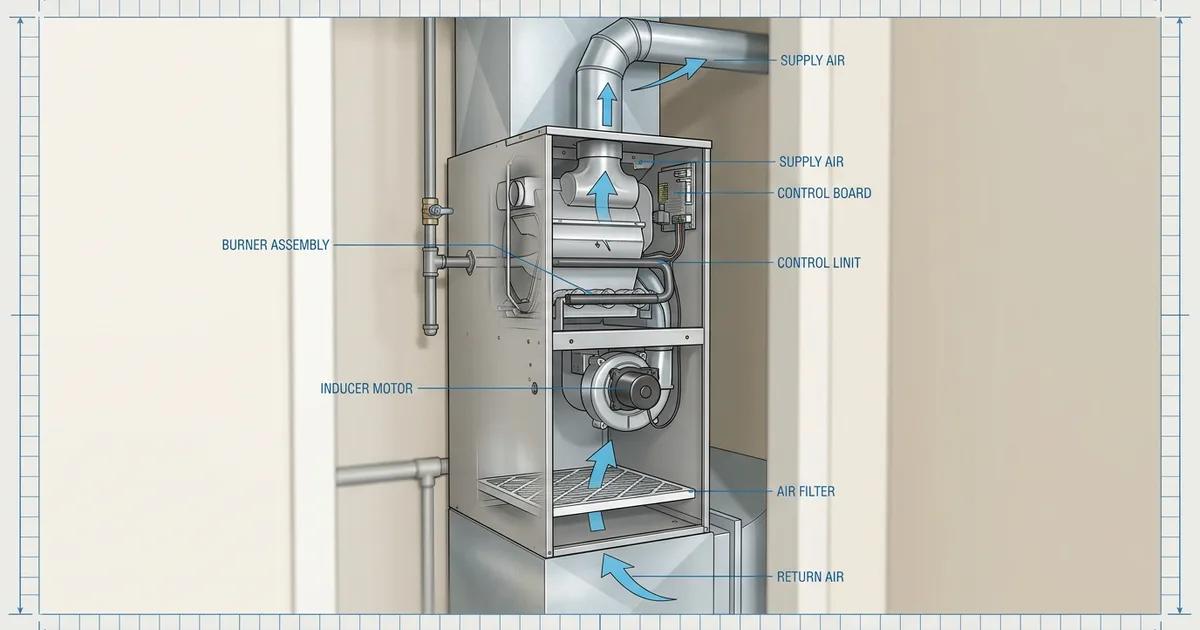
Your furnace picked the worst night possible. Temperatures outside are dropping toward 38°F and you've turned the heat on for the first time since last winter — nothing. No ignition sound, no warm air, just the blower running cold or complete silence. A gas furnace not working on the first cold night of the season is one of the most common service calls in Sacramento every November.
Before you call anyone, there's a good chance you can get heat back yourself in under ten minutes. Sacramento's heating season runs roughly late November through February, and gas furnaces often fail on the very first cold night after sitting idle all summer and fall — usually from causes that are easy to diagnose and sometimes easy to fix. This guide walks through eight common reasons a gas furnace stops working, a troubleshooting table you can use right now, and a clear line between what's safe to handle yourself and what needs a licensed technician.
One topic can't wait until the end: if you smell gas, stop reading and go outside now.
Key Takeaways
- A dirty air filter is the single most common reason a gas furnace won't heat — manufacturers including Trane and Carrier list it first on every troubleshooting guide.
- Dead thermostat batteries and a tripped circuit breaker are two free five-minute checks that fix the problem more often than homeowners expect.
- The CPSC reports more than 200 Americans die every year from CO produced by consumer products including furnaces — a working CO detector on every floor is non-negotiable (CPSC, CO Information Center).
- A gas smell means leave the building immediately — no exceptions, no troubleshooting first.
- Gas furnaces last 15 to 20 years with regular maintenance (Carrier); if yours is older and failing repeatedly, replacement is worth pricing out.
Quick Troubleshooting Table
Run through this before reading anything else. Match your symptom, check the cause, and follow the action column.
| Symptom | Most Likely Cause | DIY or Pro? |
|---|---|---|
| Furnace won't start at all; thermostat screen blank or dim | Dead thermostat batteries | DIY — replace AA or AAA batteries |
| Furnace won't start; breaker in OFF or TRIPPED position | Tripped circuit breaker | DIY — reset once; if it trips again, call a pro |
| Furnace runs but only blows cold air | Clogged filter causing limit switch shutoff | DIY — replace filter; reset furnace |
| Furnace ignites for 3–10 seconds then shuts off; repeats 3× then locks out | Dirty flame sensor | Pro — sensor cleaning or replacement |
| Furnace clicks repeatedly but never ignites | Failed hot surface igniter | Pro — igniter replacement |
| Furnace dead; other gas appliances also off | Gas supply interruption or valve closed | Check main gas valve; call utility if outage |
| High-efficiency furnace (90%+ AFUE) shuts off; condensate backed up | Clogged condensate drain | DIY — flush drain; Pro if line is blocked solid |
| Furnace short-cycles; limit switch trips repeatedly | Overheating from blocked airflow or failing blower | Pro — repeated trips risk cracking heat exchanger |
| Strong rotten-egg smell near furnace | Possible gas leak | **Leave building NOW. Call 911 or gas utility from outside.** |
| CO detector alarming | Possible CO leak from furnace | **Leave building NOW. Call 911.** |
Check the Four Free Things First
The four checks below cost nothing and fix the furnace more often than most homeowners realize. Go through them in order before assuming you need a repair.
1. Thermostat setting. Confirm the mode is set to HEAT (not COOL or FAN ONLY) and that the set temperature is at least two degrees above the current room temperature. It sounds obvious, but a bumped switch is a genuine call driver for Sacramento HVAC companies every November.
2. Thermostat batteries. Dead batteries are "one of the most common — and easiest to fix — reasons a furnace won't start," according to AmeriTech HVAC. Even partially drained batteries can cause intermittent failures: the voltage drops just low enough that the furnace control board never receives a reliable call-for-heat signal. Replace both batteries — new ones, not from a drawer of unknowns — before doing anything else.
3. Circuit breaker. Gas furnaces need electricity to run the blower, ignition system, and control board. A tripped breaker cuts all of that. Find the breaker labeled FURNACE or HVAC and confirm it's in the ON position. If it tripped, reset it once. If it trips again within a day or two, stop — a breaker that won't hold points to a wiring or motor problem that needs a licensed technician.
4. Power switch on the furnace. Most furnaces have a standard light-switch-style power switch on the unit itself or on the wall nearby. It's easy to flip accidentally when reaching past the furnace for storage. Make sure it's ON.
Why Does a Dirty Air Filter Cause a Furnace Not to Work?
A clogged air filter is the most cited cause of gas furnace failure across every major manufacturer's troubleshooting guide — Trane, Carrier, and Bryant all list it first. Here's why: when a filter is packed with dust and debris, airflow through the heat exchanger drops. The heat exchanger warms up but can't transfer that heat to moving air fast enough. The furnace's high-limit safety switch detects temperatures climbing past the safe threshold and shuts the burner off before anything is damaged.
The result looks like a furnace that's "not working" even though every mechanical component is fine. The system is doing exactly what it's supposed to do — protecting itself.
ENERGY STAR recommends checking your filter every month during heavy-use periods and replacing it at least every three months. Carrier's guidance is more granular: 1-inch fiberglass filters every 30 days, 4-inch media filters every 6 to 12 months depending on household conditions like pets and dust levels (Carrier, Air Filter Guide). In Sacramento, where valley dust and wildfire smoke are real factors in fall and winter, don't push past 60 days on a 1-inch filter.
What to do: Slide the filter out and hold it up to a light source. If you can't see light through it, replace it. After you install a clean filter, reset the furnace by switching it off at the power switch, waiting 30 seconds, and switching it back on. Give it one full heating cycle to confirm it's running properly.
What Does a Dirty Flame Sensor Do?
A dirty flame sensor is the single most common cause of furnace lockout. The flame sensor is a thin metal rod — about the size of a pencil — that sits in the burner flame. It conducts a tiny electrical current through the flame to confirm that combustion actually happened. When the sensor rod gets coated with residue over time, it can no longer confirm the flame reliably. The furnace control board interprets this as a failed ignition, shuts the gas valve immediately for safety, and tries again. After three failed attempts, the furnace enters lockout mode and stops trying until it's reset.
The symptom is distinctive: the furnace fires up, you hear the burner ignite, and then it shuts off after five to ten seconds. This cycle repeats three times, and then the furnace goes quiet completely. If that matches what you're seeing, a dirty flame sensor is the most likely cause.
This is a pro repair. Cleaning involves pulling the sensor, lightly abrading the rod with fine steel wool or emery cloth, and reinstalling it — straightforward work but not something to attempt without experience near the gas valve and ignition components.
When Is a Tripped High Limit Switch a Warning Sign?
The furnace limit switch trips when the internal temperature rises past a safe threshold — typically 180°F to 200°F depending on the unit. A single trip usually means a restricted airflow problem (dirty filter, blocked return vent, closed supply registers). You replace the filter, clear the blockage, and the furnace runs fine.
Repeated tripping is different. If the limit switch trips again within a few heating cycles after you've already replaced the filter and cleared all vents, that signals something more serious: a failing blower motor that isn't moving air fast enough, or — in the most concerning scenario — a cracked heat exchanger.
According to PICKHVAC's limit switch analysis, repeatedly overriding a tripping limit switch can eventually crack the heat exchanger. A cracked heat exchanger is serious: combustion gases, including carbon monoxide, can migrate from the heat exchanger into the air your family breathes. Don't keep resetting the furnace if the limit switch keeps tripping — that's a call for a technician.
What Causes a High-Efficiency Furnace to Shut Off From Condensate?
High-efficiency gas furnaces — those rated 90% AFUE or above — extract so much heat from combustion gases that the exhaust cools enough to condense into liquid water. A 90%+ furnace produces roughly 0.8 gallons of condensate per hour of operation, according to PICKHVAC's condensate drain guide. That water drains through a condensate line to a floor drain, utility sink, or condensate pump.
When the drain line clogs — typically from algae, slime, or debris — condensate backs up into the unit. A float switch detects the rising water level and shuts the furnace off as a safety measure. If you have a high-efficiency furnace and it's shutting down without obvious ignition or electrical causes, look for water pooling near the base of the unit or backing up in the drain line.
The condensate is mildly acidic (pH 3.0 to 5.0) from carbonic acid formed in the exhaust process, which promotes algae and biofilm growth in the drain line, according to The Furnace Outlet. Sacramento homeowners don't face the frozen-condensate-line problem that colder climates deal with (our lows rarely hit freezing, per Weather Spark NOAA data), but the algae clog is a real seasonal issue.
DIY option: If the line is accessible and only partially obstructed, flushing it with a mixture of warm water and a small amount of white vinegar can clear mild clogs. If the line is fully blocked or the condensate pump is involved, a technician should handle it.
Gas Smell Near Your Furnace: Leave First, Diagnose Never
If you smell something like rotten eggs or sulfur near your furnace — or anywhere in your home — treat it as a gas leak until proven otherwise. Natural gas is colorless and odorless on its own. Utility companies add mercaptan, a sulfur-based compound, so leaks are detectable (American Gas Association).
SAFETY — STOP AND ACT NOW IF YOU SMELL GAS:
- Leave immediately. Get everyone — people and pets — out of the building. Leave the door open as you go to help vent gas.
- Touch nothing. Do not flip light switches, use a flashlight, unplug anything, or start a car near the structure. Any spark can ignite gas.
- Do not use your phone inside. Walk away from the building first, then call 911 or your gas utility's emergency line.
- Do not go back inside until the utility company or fire department confirms it is safe.
CO detectors do NOT detect natural gas leaks. They are separate hazards requiring separate detectors.
One important nuance: "odor fade" is a documented phenomenon where mercaptan dissipates in soil or on new pipe, making an active leak difficult to smell (NW Natural Safety Guide). If you have any concern about a gas leak — smell or not — leave and call.
Carbon Monoxide: The Gas Furnace Risk That Has No Smell
Carbon monoxide is produced when fuel combustion is incomplete. A properly functioning gas furnace vents CO out of your home through the flue. A cracked heat exchanger, blocked flue, or incomplete combustion problem can allow CO to mix into your living spaces.
The CPSC reports more than 200 Americans die every year from CO produced by non-automotive consumer products including furnaces, ranges, water heaters, and generators (CPSC, Carbon Monoxide Information Center). Across the full population, 2022 CDC data show 624 accidental CO poisoning deaths in the US — the highest since 1999, an 85.7% increase from 2012 (USAFacts, citing CDC provisional mortality data). Critically, 84% of consumer-product CO deaths happen between September and April — the heating season (USAFacts / CPSC data).
CO has no color and no smell. You won't know it's there without a detector.
What to do:
- Install a CO detector on every floor of your home and inside or directly outside every sleeping area. Test them monthly.
- If your CO detector alarms, treat it as a real emergency: leave immediately, call 911, do not go back inside.
- Have a licensed technician inspect the heat exchanger during your annual furnace tune-up. A cracked heat exchanger is not visible during a normal service call without the right equipment — ask specifically for a heat exchanger inspection if your furnace is more than 10 years old.
When Should a Sacramento Homeowner Call a Pro?
Some furnace problems are genuinely safe for homeowners to handle. Others aren't — and the wrong call can mean CO exposure, a gas leak, or a voided warranty. Here's where the line sits:
Safe DIY:
- Replacing the air filter
- Replacing thermostat batteries
- Resetting a tripped circuit breaker (once)
- Clearing blocked return vents and supply registers
- Flushing a mildly clogged condensate drain on a high-efficiency furnace
Call a licensed technician:
- Igniter replacement
- Flame sensor cleaning or replacement
- Any gas-related diagnosis (valve, pressure, gas line)
- A limit switch that keeps tripping after filter replacement
- A heat exchanger inspection on a furnace older than 10 years
- Any CO alarm situation
- Any gas smell situation
Sacramento's heating season is concentrated in late November through February, with December and January the coldest months (average daily lows around 40°F, per NOAA data via Weather Spark). Because lows rarely dip hard below freezing and daytime temps climb back into the 50s, Sacramento homeowners sometimes underestimate how fast a furnace outage can become uncomfortable — especially for elderly residents, young children, or anyone with a health condition.
If you've worked through the four free checks and the simple DIY steps and the furnace still isn't heating, don't let it sit. A same-day diagnostic from a local HVAC technician costs far less than an emergency call at midnight.
If you're dealing with a furnace that's not heating — or you want a professional check before winter arrives — our heating system repair and service team is available across Sacramento. Call us at (916) 342-9108. We'll tell you honestly what's going on and what it will take to fix it.
How Long Should a Gas Furnace Last?
Gas furnaces typically last 15 to 20 years with regular maintenance and consistent filter changes, according to Carrier and Bryant. High-quality furnaces with diligent maintenance can push toward 25 to 30 years, though that's uncommon. Builder-grade units that miss regular service may fail in 8 to 12 years.
If your furnace is over 15 years old and you're calling for repairs multiple times in a single heating season, the math usually favors replacement over continued repair. A new high-efficiency furnace (96%+ AFUE) will also cut your heating costs compared to a 15-year-old unit running at 80% efficiency — and Sacramento's SMUD rebates and incentives can offset part of the installation cost.
One sign your furnace is nearing end of life: increasing frequency of small failures across multiple components. A single igniter replacement on a 12-year-old furnace makes sense. A third repair in two winters on a 17-year-old unit usually doesn't.
Frequently Asked Questions
Why is my furnace blowing cold air?
Cold air from a running furnace almost always means the burner ignited but got shut down by a safety switch before the heat exchanger came up to temperature. The most common cause is a clogged air filter restricting airflow across the heat exchanger, triggering the high-limit switch. Replace your filter first. If the furnace still blows cold after a filter change and a full restart cycle, a dirty flame sensor or a limit switch problem is the next most likely culprit — both need a technician.
Why won't my furnace turn on at all?
Start with the four free checks: thermostat set to HEAT, set point above room temperature, thermostat batteries fresh, circuit breaker ON, and furnace power switch ON. These simple checks resolve the problem in a significant share of no-heat calls. If all four check out and the furnace is still silent, the igniter, control board, or gas supply is the likely issue — time to call a licensed HVAC technician.
What is a flame sensor, and can I clean it myself?
A flame sensor is a small metal rod in the burner compartment that confirms combustion by conducting a microamp current through the flame. When it gets coated with residue, the furnace locks out after a few seconds of ignition. Cleaning it requires removing the sensor, lightly abrading the rod with fine steel wool, and reinstalling it near the gas valve and igniter. That proximity to gas components makes this a job for a licensed technician in most cases — the risk of a gas leak or improper reassembly isn't worth saving the service call.
Is it safe to run a furnace that smells like gas?
No — not under any circumstances. A gas smell near your furnace is an emergency. Leave the building without touching any switches, call 911 or your gas utility from outside, and don't return until emergency responders clear the building. Natural gas can ignite from a single spark. CO detectors won't help here — they detect carbon monoxide, not natural gas. You need separate gas leak detectors (residential methane detectors) for that purpose.
How often should I have my furnace serviced?
Once a year, before the heating season — ideally in October or early November in Sacramento. An annual tune-up covers cleaning the flame sensor, checking the heat exchanger for cracks, verifying the gas valve and pressure, testing the igniter, and inspecting the flue. Most of the failures described in this guide are prevented or caught during a routine service visit. The cost is typically $80 to $150 and pays for itself the first time it prevents an emergency call.
Sources cited:
- CPSC, Carbon Monoxide Information Center, https://www.cpsc.gov/Safety-Education/Safety-Education-Centers/Carbon-Monoxide-Information-Center/Home-Heating-Equipment
- CPSC, Non-Fire CO Deaths 2019 Annual Estimates (PDF), https://www.cpsc.gov/s3fs-public/NonFireCarbonMonoxideDeathsAssociatedwiththeUseofConsumerProducts2019AnnualEstimates.pdf
- USAFacts / CDC, Is Carbon Monoxide Still a Problem in the US?, https://usafacts.org/articles/is-carbon-monoxide-still-a-problem-in-the-us/
- American Gas Association, Using Natural Gas Safely, https://www.aga.org/natural-gas/safety/using-natural-gas-safely/
- NW Natural, Smell Natural Gas Safety Guide, https://www.nwnatural.com/safety/smell-natural-gas
- ENERGY STAR, Heat and Cool Efficiently, https://www.energystar.gov/saveathome/heating-cooling
- Carrier, How Often to Change Air Filter, https://www.carrier.com/residential/en/us/products/air-conditioners/air-conditioner-maintenance/how-often-to-change-air-filter/
- Carrier, How Long Does a Furnace Last, https://www.carrier.com/residential/en/us/products/furnaces/how-long-does-a-furnace-last/
- Trane, Gas Furnace Troubleshooting, https://www.trane.com/residential/en/resources/troubleshooting/gas-furnaces/
- Bryant, How Long Does a Furnace Last, https://www.bryant.com/en/us/products/gas-furnaces/how-long-does-a-furnace-last/
- PICKHVAC, High Limit Switch Keeps Tripping, https://www.pickhvac.com/furnace/troubleshoot/high-limit-switch-keeps-tripping/
- PICKHVAC, Condensate Drain on High-Efficiency Furnace, https://www.pickhvac.com/furnace/efficiency-rating/condensate-drain-on-high-efficiency-furnace/
- The Furnace Outlet, Condensate Drain Problems in High-Efficiency Furnaces, https://thefurnaceoutlet.com/blogs/news/condensate-drain-problems-in-high-efficiency-furnaces-stop-the-leaks
- AmeriTech HVAC, Will Furnace Run if Thermostat Batteries Are Dead, https://ameritechfl.com/blog/will-the-furnace-run-if-thermostat-batteries-are-dead
- Weather Spark / NOAA, Average Weather in Sacramento CA Year-Round, https://weatherspark.com/y/1157/Average-Weather-in-Sacramento-California-United-States-Year-Round
- DOE Energy Saver, Furnaces and Boilers, https://www.energy.gov/save
Frequently Asked Questions
Why is my furnace blowing cold air?
Cold air usually means the furnace ignited but the heat exchanger never got hot enough before a safety switch cut it off. The most common causes are a clogged air filter restricting airflow, a tripped high limit switch, or a dirty flame sensor that proves flame for only a few seconds before locking out. Replace your filter first, then call a tech if cold air continues.
Why won't my furnace turn on at all?
Start with the four free checks: thermostat set to HEAT with the set point above room temperature, thermostat batteries replaced, circuit breaker in the ON position, and the furnace power switch on. If all four check out and the furnace still won't start, the problem is likely an igniter, flame sensor, control board, or gas supply issue that requires a licensed technician.
What is a flame sensor on a gas furnace?
A flame sensor is a thin metal rod that sits in the burner flame. It passes a tiny electrical current through the flame to confirm combustion happened. When the rod gets coated with residue over time, it can no longer confirm the flame reliably, so the control board shuts the furnace off after a few seconds as a safety measure. Cleaning or replacing the sensor fixes this.
Is it safe to run a furnace that smells like gas?
No. If you smell gas near your furnace, do not run it, do not flip any light switches, and do not use your phone inside the building. Leave immediately, leave the door open as you go, then call your gas utility or 911 from outside or a neighbor's home. Do not return until the utility confirms it is safe. CO detectors do not detect natural gas leaks.