
SEER Ratings Explained: What Do You Actually Need?
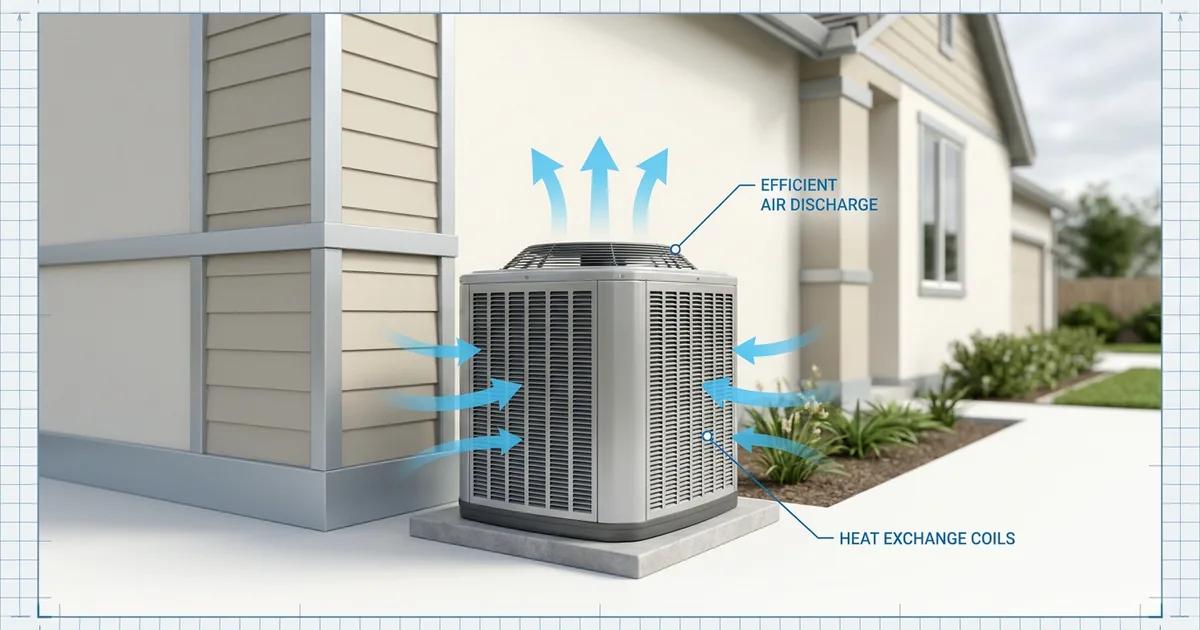
Shopping for a new air conditioner and suddenly staring at a tag that says "16 SEER2" — or maybe "14.3 SEER2" — with no clear idea what those numbers mean or whether they matter? You're not alone. The SEER rating system changed in 2023, the minimum standards tightened, and now there are two different numbers floating around: the old SEER and the new SEER2.
Here's the short version: SEER measures how efficiently your AC turns electricity into cooling. A higher SEER rating means lower electric bills. California law now requires a minimum of 14.3 SEER2 on any new installation. Whether you should go higher than that — and how much higher — depends on how long and how hard your system runs. In Sacramento, the answer almost always leans toward going higher.
This guide breaks down what SEER means, what changed with SEER2, what the minimum requirements actually are, and how to decide which rating makes financial sense for your home.
Key Takeaways
- California minimum (2023+): 14.3 SEER2 for all new split-system AC installations
- SEER2 vs. SEER: Same equipment, harder test — SEER2 ratings run about 4.5% lower than the old SEER number for the same unit
- ENERGY STAR threshold: 15.2 SEER2 (equivalent to the old 16 SEER)
- Sacramento advantage: 3.7 months of hot weather means efficiency upgrades pay back faster here than in cooler climates
- Sweet spot for most Sacramento homes: 16–18 SEER2 balances upfront cost against realistic energy savings
- Rebates available: SMUD offers rebates on qualifying high-efficiency systems that can shorten the payback period
What Does a SEER Rating Actually Mean?
A SEER rating — Seasonal Energy Efficiency Ratio — tells you how much cooling your AC delivers for every unit of electricity it consumes over an entire cooling season. Think of it like miles-per-gallon for your air conditioner. A 16 SEER2 system delivers 16 units of cooling for every unit of electricity used. A 10 SEER system delivers only 10 units.
The math behind it: SEER divides total cooling output (measured in BTUs) by total electrical energy consumed (measured in watt-hours) across a range of outdoor temperatures from 65°F to 104°F. According to the U.S. Department of Energy, a typical home's AC can use over 2,000 kilowatt-hours of electricity per year. A higher SEER rating means fewer of those kilowatt-hours burned to deliver the same amount of comfort.
How SEER Translates to Real Money
The relationship between SEER ratings and savings is a straight ratio. If a 14 SEER2 system costs you $800 a year to run, a 21 SEER2 system doing the same job uses exactly one-third less energy — saving you roughly $267 annually. The ratio holds because you're delivering the same cooling load; only the efficiency of delivery changes.
Sacramento's climate makes that math especially favorable. The city sits in a hot Mediterranean zone with summers that push above 90°F for weeks at a time. Unlike Seattle (which might use AC three weeks per year), Sacramento homeowners run their systems hard for months. More run-hours mean more savings from each additional efficiency point.
What Changed With SEER2 in 2023?
Starting January 1, 2023, the U.S. Department of Energy replaced the old SEER test with a new standard called SEER2, using the M1 testing procedure. The equipment itself didn't change — the lab conditions did.
The old SEER test measured efficiency with an external static pressure of 0.1 inches of water column. That's a nearly frictionless airflow condition that doesn't reflect how a real house works. Your actual ductwork, filters, registers, and air handler create resistance — measured static pressure closer to 0.5 inches of water column. SEER2 tests at that higher, more realistic pressure. Because the test is harder, the numbers come out lower.
The conversion formula is simple: SEER2 ≈ SEER ÷ 1.05
| Old SEER | Approximate SEER2 |
|---|---|
| 14 SEER | ~13.4 SEER2 |
| 15 SEER | ~14.3 SEER2 |
| 16 SEER | ~15.2 SEER2 |
| 18 SEER | ~17.1 SEER2 |
| 20 SEER | ~19.0 SEER2 |
| 22 SEER | ~21.0 SEER2 |
A unit that was labeled 16 SEER under the old test is now labeled about 15.2 SEER2 under the new one. The unit didn't get less efficient — the test got more honest.
What this means when you're getting quotes: If a contractor gives you an older quote with SEER numbers and a new quote with SEER2 numbers, don't compare them directly. Divide the old SEER by 1.05 to convert it before comparing. A "16 SEER" quote and a "15.2 SEER2" quote are for the same tier of equipment.
What SEER2 Rating Is Required in California?
California falls under the federal Southwest region, which carries the strictest efficiency standards in the country. Since January 1, 2023, any new split-system central air conditioner installed in California must meet a minimum of 14.3 SEER2 for units under 45,000 BTU — that's the equivalent of the old 15 SEER standard (SEER2.com, Southwest Region Standards).
A few specifics worth knowing:
- Installation date, not manufacture date: The minimum applies to when the unit is installed, not when it was built. A unit manufactured in December 2022 at 13 SEER cannot be legally installed in California in 2024.
- EER2 also required: California adds an additional energy efficiency ratio requirement (EER2 of 11.7 or higher at 14.3 SEER2) that most other regions don't have.
- Larger units have lower minimums: Units rated 45,000 BTU and above only need 13.8 SEER2.
- North region comparison: States like Michigan and Minnesota only require 13.4 SEER2 minimum. California's 14.3 SEER2 floor is meaningfully higher.
California's Title 24 building code adds installation requirements on top of federal minimums — proper duct sealing, insulation, and a Manual J load calculation to verify the system is correctly sized. These apply to new installations regardless of SEER2 rating.
Is a Higher SEER Rating Worth the Extra Cost in Sacramento?
For most Sacramento homeowners, yes — and the math is more favorable here than in almost any other California city. Sacramento sees 3.7 months of genuine hot weather (average July high: 93°F), with AC systems often running 8–10 hours per day during heat waves, per Weather Spark climate data for Sacramento. More cooling hours mean more savings from every efficiency point you add.
The Payback Math for Sacramento
SMUD, Sacramento's main electric utility, charges a residential rate of approximately 14.5 cents per kWh as of January 2025 (SMUD Rate Information, 2025). Peak summer rates (5–8 PM weekdays) hit 22 cents per kWh — the exact window when Sacramento ACs run hardest.
Here's how annual cooling costs compare for a typical 3-ton central AC running approximately 1,800 hours per year in Sacramento:
| SEER2 Rating | Tier | Annual Cooling Cost (est.) | vs. 14.3 SEER2 |
|---|---|---|---|
| 14.3 SEER2 | Code minimum | ~$850 | baseline |
| 15.2 SEER2 | ENERGY STAR minimum | ~$800 | save ~$50/yr |
| 16 SEER2 | High efficiency | ~$760 | save ~$90/yr |
| 18 SEER2 | Premium | ~$675 | save ~$175/yr |
| 20 SEER2 | Ultra-premium | ~$608 | save ~$242/yr |
| 22+ SEER2 | Top tier | ~$553 | save ~$297/yr |
Estimates based on: 3-ton (36,000 BTU) unit, 1,800 annual cooling hours, 14.5 cents/kWh (SMUD standard residential rate). Actual costs vary by home size, insulation, and usage patterns.
The upfront cost difference between a 14.3 SEER2 system and a 16 SEER2 system is typically $600–$1,200 in equipment cost. At $90 per year in savings, you break even in 7–13 years — roughly in line with the equipment lifespan. Going to 18 SEER2 usually costs $1,500–$2,500 more, but the payback window tightens to 9–14 years with better comfort along the way.
One thing many homeowners miss: SMUD offers rebates on qualifying heat pump systems that can cut those payback timelines significantly. Ask us about current incentive programs when you get an estimate.
The Sacramento-specific case for 16+ SEER2: The payback math shifts dramatically during heat waves. When the temperature hits 105°F for five straight days and your AC runs nearly around the clock, a 16 SEER2 system may save more in those two weeks alone than a code-minimum system saves in an entire mild month. High-efficiency systems also tend to run longer, quieter cycles — which keeps humidity better controlled and makes the house feel cooler at the same thermostat setting.
What About ENERGY STAR Certified Systems?
ENERGY STAR-certified central air conditioners must meet a minimum of 15.2 SEER2 — equivalent to the old 16 SEER. According to ENERGY STAR, upgrading from an older 10 SEER system to a 15 SEER+ model can cut cooling costs by 30–35% (ENERGY STAR, Central Air Conditioners).
The ENERGY STAR certification matters for two practical reasons:
- Rebate eligibility. Many utility rebates, including some SMUD programs, require ENERGY STAR certification as a baseline. A system at exactly the 14.3 SEER2 code minimum won't qualify.
- Federal tax credit. The Inflation Reduction Act's 25C tax credit allows up to $600 on qualifying central AC equipment. The equipment typically needs to meet ENERGY STAR's "most efficient" tier or specified SEER2 thresholds — confirm current requirements with your tax advisor.
ENERGY STAR certification isn't a magic number, but it's a reasonable proxy for "above average efficiency with verified testing."
How High Is Too High? Understanding Diminishing Returns
Going from a 10 SEER system to a 14.3 SEER2 system is a massive leap. Going from a 20 SEER2 to a 22 SEER2 is a small one — and the price difference at the high end can be substantial.
The diminishing-returns curve works like this: each additional SEER point saves you the same percentage reduction in remaining energy use, but that percentage applies to an ever-smaller base. Moving from 14 to 16 SEER2 saves about 12.5% of your cooling energy. Moving from 20 to 22 SEER2 saves about 9%. But the 20-to-22 step often costs more in equipment than the 14-to-16 step.
Where the curve matters most for Sacramento homeowners
- 14.3 → 16 SEER2: Good value. Saves meaningful energy, cost premium is modest, qualifies for ENERGY STAR.
- 16 → 18 SEER2: Still worthwhile for homes that run AC heavily or have high summer electricity bills.
- 18 → 20 SEER2: Pay-off depends on your specific usage. Make the contractor show you the numbers before committing.
- 20+ SEER2: Typically found in variable-speed systems that also bring superior comfort, humidity control, and quieter operation — but the payback on energy alone is long.
What we see most often: The families we work with in the Sacramento foothills and Elk Grove — homes that run AC from June through September — tend to find the best balance at 16–18 SEER2. Homes over 2,500 square feet or those with poor duct insulation benefit most from higher-efficiency equipment because their baseline energy use is already elevated.
For a deeper look at what a system replacement actually costs in Sacramento — including equipment, labor, and what different efficiency tiers run installed — see our AC installation cost guide for California.
How to Choose the Right SEER2 Rating for Your Sacramento Home
Start with these four questions:
1. How old is your current system?
If your existing AC is 10+ years old and rated 10–13 SEER, almost any modern system will save you meaningful money. The jump to 14.3 SEER2 (code minimum) alone can reduce cooling costs by 25–35% versus a decade-old unit.
2. How hot does your home get?
A poorly insulated 1970s ranch house in Rancho Cordova bakes differently than a well-sealed newer build in Folsom. Homes with poor insulation, lots of south-facing windows, or vaulted ceilings benefit more from higher SEER2 ratings because the cooling load is higher.
3. How long are you staying?
Payback periods for premium-efficiency equipment run 8–14 years. If you're planning to sell in five years, code minimum or ENERGY STAR-baseline (15.2 SEER2) makes more sense than a 20 SEER2 unit. If you're staying 15 years, go higher.
4. What rebates are on the table?
SMUD rebates and federal tax credits can shift the math. A 17 SEER2 system that qualifies for a $600 rebate may payback faster than a 15.2 SEER2 unit that doesn't.
A properly sized, well-installed 16 SEER2 system will outperform an oversized 20 SEER2 system installed with leaky ducts. Efficiency rating matters — but so does installation quality. That's the part no label can tell you.
Ready to see what a properly sized high-efficiency system would cost for your Sacramento home? Our team at A-CLASS Heating and Air provides honest estimates with no pressure. Call us at (916) 342-9108 — we've been doing this in Sacramento since 2016.
Frequently Asked Questions
What is a good SEER rating for an air conditioner?
For a Sacramento home, a 16 SEER2 rating is a solid target. It clears the California 14.3 SEER2 legal minimum, qualifies for ENERGY STAR, and delivers real savings without the steep premium of ultra-high-efficiency units. Homes with heavy summer usage or higher electricity bills benefit from 18 SEER2 or above.
What SEER rating do I need in California?
California law requires a minimum of 14.3 SEER2 on all new split-system central AC installations in the state. This is the Southwest regional standard that took effect January 1, 2023. Your contractor must install equipment that meets this minimum; there's no legal way to install a lower-efficiency unit, regardless of cost. California also requires an EER2 rating of at least 11.7 for units at the minimum efficiency tier.
Is a higher SEER rating worth the extra money?
In Sacramento it usually is — especially if you're comparing against an older 10–13 SEER system. Upgrading from 10 SEER to a modern 15+ SEER2 unit can cut cooling costs by 30–35%, per ENERGY STAR. Even going from the 14.3 SEER2 minimum to 18 SEER2 trims cooling energy by about 21%. With Sacramento's long, hot summers, those savings compound over many years of heavy use.
What is SEER2 and how is it different from the old SEER?
SEER2 is the updated efficiency testing standard that replaced SEER on January 1, 2023. The test now runs at five times the external static pressure of the old SEER test, making results closer to real-world duct conditions. SEER2 ratings run about 4.5% lower than old SEER ratings for the same equipment. A unit that was 16 SEER is now labeled 15.2 SEER2. The equipment didn't change — the measurement became more honest.
Does SEER2 rating affect which rebates I qualify for?
Yes. SMUD rebates and the federal 25C tax credit both have efficiency thresholds. Most rebate programs require ENERGY STAR certification, which starts at 15.2 SEER2. Some enhanced rebate tiers require higher ratings. Always confirm current rebate eligibility before purchasing — the thresholds and dollar amounts change periodically.
A-CLASS Heating and Air has served Sacramento-area homeowners since 2016. Call us at (916) 342-9108 for a straightforward estimate with no sales pressure.
Frequently Asked Questions
What is a good SEER rating for an air conditioner?
A good SEER rating for a Sacramento home is 16 SEER2 (about 16.8 old SEER). That puts you comfortably above the 14.3 SEER2 California minimum and qualifies for ENERGY STAR certification at 15.2 SEER2. Higher ratings like 18-20 SEER2 pay off fastest in homes that run AC heavily all summer.
What SEER rating do I need in California?
California falls in the federal Southwest region, so all new split-system AC installations since January 1, 2023 must meet a minimum of 14.3 SEER2 — equivalent to the old 15 SEER. Units under 45,000 BTU also need a minimum EER2 rating. Your contractor is required to install compliant equipment; you cannot legally install a lower-efficiency unit.
Is a higher SEER rating worth the extra cost?
In Sacramento it often is. With 3.7 months of hot weather and AC sometimes running 8-10 hours a day, upgrading from 14.3 SEER2 to 18 SEER2 can cut cooling energy use by about 21%. At SMUD rates of roughly 14.5 cents per kWh, that can translate to $150-$300 in annual savings on a typical 3-ton system.
What is SEER2 and how is it different from SEER?
SEER2 is the updated efficiency rating system that took effect January 1, 2023. The equipment did not change — the lab test did. SEER2 uses five times the external static pressure as the old test, making results more realistic. Because the test is harder, SEER2 numbers run about 4.5% lower than the equivalent old SEER number.
What is the minimum SEER2 for a new AC in Sacramento?
The minimum is 14.3 SEER2 for split-system central air conditioners under 45,000 BTU in California. This is the Southwest regional standard that took effect January 1, 2023. Budget systems at exactly the minimum are legal but offer the least efficiency. Most reputable contractors recommend at least 15.2-16 SEER2 for Sacramento homes.