
Indoor Air Quality in Sacramento Homes: A Practical Guide
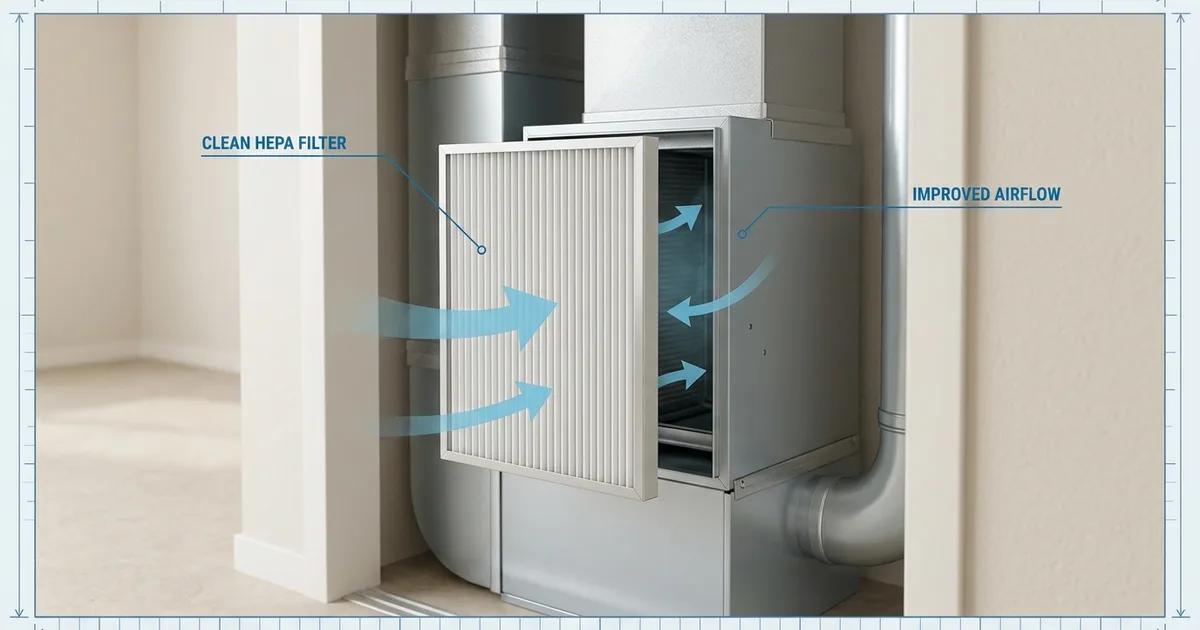
Indoor air quality in Sacramento homes is often worse than the air outside — and not by a small margin. The U.S. EPA has measured indoor pollutant concentrations at 2 to 5 times higher than typical outdoor concentrations (EPA, Report on the Environment). For Sacramento homeowners, that baseline problem gets pushed harder by wildfire smoke season, Central Valley pollen, summer ozone, and the tight construction of modern energy-efficient homes that seal pollutants in.
This guide covers what's actually in your indoor air, why Sacramento makes things harder, and the practical steps — starting with your HVAC system — that move the needle on your family's health.
Key Takeaways
- Indoor pollutant concentrations are 2–5x higher than outdoor air on average (EPA).
- Sacramento ranked 7th worst in the U.S. for both ozone days and year-round particle pollution (ALA, State of the Air 2024).
- The EPA recommends a minimum MERV 13 filter for residential HVAC (EPA, updated January 2026).
- Nearly 1 in 5 Sacramento County adults has been diagnosed with asthma — higher than both the California and U.S. averages (Be Healthy Sacramento / CHIS, 2024).
- Three practical fixes — MERV 13 filter, air sealing, and a HEPA purifier — cover most of what makes indoor air dangerous.
What's Actually Polluting the Air Inside Your Home?
Americans spend roughly 90 percent of their time indoors, which makes what's in that air matter more than most people realize (EPA, "The Inside Story: A Guide to Indoor Air Quality"). The pollutants found in Sacramento homes fall into four main categories, each with different sources and different health effects.
Particulate matter (PM2.5 and PM10). These are tiny airborne particles — dust, smoke, pollen fragments, pet dander, and mold spores. PM2.5 particles are less than 2.5 microns wide, which means they bypass your nose and throat and travel directly into your lungs. Wildfire smoke is almost entirely PM2.5, which is why smoke events are particularly dangerous.
Volatile organic compounds (VOCs). Paints, cleaning products, furniture, and building materials off-gas VOCs continuously. The EPA notes that VOC concentrations indoors are consistently up to ten times higher than outdoors, and during activities like stripping paint they can spike 1,000 times above background outdoor levels (EPA, "Volatile Organic Compounds' Impact on Indoor Air Quality"). Benzene — a known human carcinogen — is among the VOCs commonly detected in household air.
Carbon monoxide (CO). Gas furnaces, water heaters, and attached garages are all potential CO sources. CO is colorless and odorless, which is why working CO detectors on every floor aren't optional. Most HVAC-related CO problems come from cracked heat exchangers or blocked flues — both things a trained technician will catch during a routine tune-up.
Biological pollutants. Mold, dust mites, pet dander, and pollen that drifts in through doors and windows. Sacramento's high grass and weed pollen counts mean these are seasonal spikes more than constant background noise.
Why Sacramento Indoor Air Quality Is Harder to Manage
Sacramento has geography working against it. The Sacramento Valley sits in a bowl-shaped basin that traps pollutants under temperature inversions, especially in summer. In 2024, the American Lung Association ranked the Sacramento-Roseville metro 7th worst in the nation for high ozone days and 7th worst for year-round particle pollution (ALA, State of the Air 2024). That outdoor baseline is what leaks into your home every time you open a window or door.
Wildfire smoke. This is the biggest wild card. California's 2020 wildfire season saw statewide smoke plumes blanket every county for at least 46 days, with the worst-hit counties experiencing more than 120 smoke days — nearly one in every three days that year (OEHHA, EPIC 2022 Wildfire Smoke Report). Smoke events push Sacramento's AQI into "Very Unhealthy" or "Hazardous" territory within hours, and that outdoor PM2.5 infiltrates homes through every gap it can find.
Pollen season. Sacramento's mild winters and warm springs create a pollen season that runs nearly year-round. The AAFA ranked Sacramento 23rd worst in the country for seasonal allergies in 2025, up sharply from 94th the year before, driven by an explosion of grass and weed pollen following a wet 2024 (AAFA, 2025 Allergy Capitals Report). Sacramento now averages 20 more freeze-free days per year than in 1970, stretching the pollen calendar at both ends.
Central Valley ozone. Summer heat bakes vehicle and industrial emissions into ground-level ozone — a lung irritant that aggravates asthma and makes respiratory infections worse. The Sacramento Metropolitan Air Quality Management District (SMAQMD) regularly issues Spare the Air alerts on summer afternoons when ozone is forecast to exceed safe levels. Those same days are when people close windows and run AC, which is exactly when your HVAC filtration matters most.
The local health toll is measurable. Sacramento County's adult asthma lifetime prevalence is 19.6% — about 233,000 adults — which runs higher than both the California average (16.6%) and the U.S. average (16.2%) (Be Healthy Sacramento, CHIS 2024).
What MERV Rating Do You Actually Need in Sacramento?
The EPA recommends choosing an HVAC filter with at least a MERV 13 rating for residential use (EPA, "What is a MERV Rating?", updated January 2026). That recommendation was written with PM2.5 in mind — the same fine particles in wildfire smoke. MERV 13 captures particles down to 0.3 microns at 50-percent efficiency or better, which covers smoke, fine dust, most pollen, and mold spores.
Here's how the common filter ratings stack up against Sacramento's main pollutants:
| MERV Rating | Particle Size Targeted | Min. Efficiency | Best For |
|---|---|---|---|
| 1–4 | > 10 µm | < 20% | Basic dust only |
| 8 | 3.0–10.0 µm | ≥ 70% | Standard residential (not enough for Sacramento) |
| 11 | 1.0–3.0 µm | ≥ 85% | Better pollen capture; limited on PM2.5 |
| **13** | **0.3–1.0 µm** | **≥ 50%** | **EPA minimum recommendation; handles smoke PM2.5** |
| 16 | 0.3–1.0 µm | ≥ 95% | Near-hospital grade |
| HEPA | 0.3 µm | ≥ 99.97% | Portable purifiers; medical/cleanroom |
Source: EPA, "What is a MERV Rating?" (January 2026)
One important caveat: older HVAC systems weren't designed for MERV 13's tighter weave, which restricts airflow more than lower-rated filters. Running a filter your system can't handle strains the blower motor and can actually reduce how much air gets filtered. If your system was installed before 2010, check the equipment manual or have a technician verify it can support MERV 13 before you switch. Some systems need a slight motor upgrade or a wider filter slot — both are straightforward fixes.
For day-to-day filtration, change your MERV 13 filter every 60 to 90 days in Sacramento. During active wildfire smoke events, check the filter every two weeks — it can clog faster than the calendar suggests.
Do Air Purifiers Actually Help With Wildfire Smoke?
Yes, and they help a lot — but only if you pick the right type and size it correctly to the room. A portable air purifier with a true HEPA filter captures particles at 0.3 microns with 99.97% efficiency, which covers the fine PM2.5 particles in wildfire smoke. The key spec to look for on the box is CADR — Clean Air Delivery Rate. Match the CADR to your room size: as a rough rule, multiply the square footage by 1.5 to get the minimum CADR you need.
What air purifiers don't do: they don't address VOCs (unless the unit also has an activated carbon layer), they don't remove carbon monoxide, and a single bedroom unit doesn't protect the rest of the house. Think of a portable HEPA purifier as a targeted defense for the rooms where you sleep and spend the most time — not a whole-home solution on its own.
For whole-home protection during smoke events, your HVAC system is the first line. Keep it running through a MERV 13 filter on continuous fan mode so it's actively filtering air even when the compressor isn't running for cooling. Close off fresh-air intake dampers if your system has them — you don't want to pull smoke-laden outdoor air in during a "Hazardous" AQI day. The Sacramento Metropolitan Air Quality Management District publishes real-time AQI for Sacramento County; it's worth bookmarking for smoke season.
Our observation at A-CLASS: On the worst smoke days, we get calls about HVAC systems "smelling like smoke." Nine times out of ten the issue isn't the unit itself — it's a gap around the filter slot or a return air leak in the attic that's letting unfiltered outdoor air bypass the filter entirely. Sealing those bypasses often solves the smoke problem faster than upgrading the filter.
How Humidity and Ventilation Affect Indoor Air Quality
Most people focus on filtration, but two other factors — humidity and fresh air exchange — shape indoor air quality just as much.
Humidity. The EPA recommends keeping indoor relative humidity between 30 and 50 percent. Sacramento summers are dry (relative humidity can drop below 20% during heat waves), which dries out mucous membranes and makes people more susceptible to airborne particles. Dry air also worsens dust and can cause wood to crack and off-gas VOCs. In winter, Sacramento homes can get too humid — above 60% you start feeding mold and dust mites. A whole-home humidifier or dehumidifier, wired into your HVAC system, keeps humidity in the right range year-round without manual adjustment.
Ventilation. Tight, energy-efficient homes that seal out outdoor air also trap pollutants inside. The Department of Energy recommends mechanical ventilation for tightly built homes — typically a heat recovery ventilator (HRV) or energy recovery ventilator (ERV) that brings in fresh outdoor air while recovering the heating or cooling energy (DOE, "Ventilation"). On good air quality days, this dilutes indoor VOCs, CO2, and odors. On smoke days, you close the fresh-air intake and rely entirely on filtration and recirculation.
A note on CO specifically: no amount of filtration stops carbon monoxide because CO passes through any filter. The safeguard is working CO detectors and annual HVAC maintenance that catches cracked heat exchangers before they become dangerous.
Regular AC and furnace maintenance keeps your HVAC delivering filtered, conditioned air to every room efficiently. A system running with a dirty coil, clogged drain, or low refrigerant doesn't circulate air properly — which means your expensive MERV 13 filter isn't doing much good. Our HVAC system maintenance service covers the full inspection and cleaning that keeps your system moving air the way it's supposed to.
Practical IAQ Checklist for Sacramento Homeowners
You don't have to solve everything at once. Here's a prioritized list based on impact:
High impact — do these first:
- Upgrade to MERV 13 and set a phone reminder to check it every 60 days.
- Seal filter bypass gaps — check for light or feel for airflow around the filter slot and return air plenum.
- Install CO detectors on every floor, especially near sleeping areas and attached garages.
- Book an annual HVAC tune-up so a technician can catch cracked heat exchangers, clogged coils, and duct leaks.
Medium impact — add these next:
- Add a HEPA air purifier in the bedroom — sized to the room using CADR ratings.
- Bookmark airquality.org and check AQI before opening windows during summer and fall.
- Run bathroom and kitchen exhaust fans during and 15 minutes after cooking and bathing to remove moisture, combustion byproducts, and VOCs.
Lower priority but worthwhile:
- Switch to low-VOC paints and cleaning products — particularly if you have children or anyone with asthma at home.
- Test for radon — radon is the leading cause of lung cancer among non-smokers, responsible for about 21,000 deaths per year nationally (EPA, "Health Risk of Radon"). Sacramento sits in a moderate-radon zone and testing kits cost under $30.
- Consider an HRV or ERV if your home is tightly built and you notice stale air or persistent condensation on windows.
When to Call an HVAC Professional About Indoor Air Quality
Some IAQ problems you can fix yourself. Others need a trained technician. Here's the line:
Call a professional when:
- You smell gas, exhaust, or persistent burning odors inside.
- Your CO detector alarms — leave the home immediately, then call.
- You notice mold growth on or around HVAC vents, coils, or in the air handler.
- Your home has chronic condensation on windows or musty smells that don't clear.
- You're considering adding whole-home filtration, UV air treatment, an HRV/ERV, or a whole-home humidifier.
- Your HVAC system hasn't been serviced in more than a year.
A professional IAQ assessment can identify duct leaks that let attic air (which is hot, dusty, and sometimes full of insulation fibers) mix with your conditioned air, pinpoint where your biggest infiltration paths are, and recommend the right equipment upgrades for your specific home and system.
Frequently Asked Questions
How do I improve indoor air quality in my Sacramento home?
Start with your HVAC filter. Upgrade to MERV 13, change it every 60–90 days, and seal any gaps around the filter slot. Add a whole-home air purifier or portable HEPA unit for high-risk rooms. On high-smoke or high-pollen days keep windows closed and run your HVAC fan on continuous circulation mode.
What MERV filter should I use in Sacramento?
The EPA recommends at minimum a MERV 13 filter for residential use. That rating captures fine particles down to 0.3 microns at 50% efficiency or better, which covers wildfire PM2.5 and most pollen. Check your system manual first — some older units can't handle the airflow restriction above MERV 11 without a motor upgrade.
Do air purifiers help with wildfire smoke?
Yes. A portable air purifier with a true HEPA filter captures particles at 0.3 microns with 99.97% efficiency, which includes the fine PM2.5 in wildfire smoke. Size the unit to the room using the CADR rating on the box. For whole-home protection, upgrade your HVAC filter to MERV 13 and seal duct leaks so smoke can't bypass the filter.
How do I keep wildfire smoke out of my house?
Close all windows and doors when outdoor AQI exceeds 100. Switch your HVAC to recirculation or turn off fresh-air intake dampers if your system has them. Run your HVAC fan continuously through a MERV 13 filter. Seal visible gaps around doors with weatherstripping. On extreme smoke days a portable HEPA purifier in the bedroom adds a critical second layer of protection.
Getting your indoor air quality right in Sacramento isn't complicated, but it does require the right filter, a well-maintained HVAC system, and a smoke-season plan. If you're not sure where your home stands, the best starting point is a system check that catches the problems you can't see — filter bypasses, duct leaks, and equipment that's working harder than it should.
A-CLASS Heating and Air has served Sacramento homeowners since 2016. Call us at (916) 342-9108 or book online and we'll take a look.
Sources
- EPA, "Indoor Air Quality (IAQ)" — https://www.epa.gov/indoor-air-quality-iaq
- EPA, "The Inside Story: A Guide to Indoor Air Quality" — https://www.epa.gov/indoor-air-quality-iaq/inside-story-guide-indoor-air-quality
- EPA, "Indoor Air Quality" Report on the Environment — https://www.epa.gov/report-environment/indoor-air-quality
- EPA, "Volatile Organic Compounds' Impact on Indoor Air Quality" — https://www.epa.gov/indoor-air-quality-iaq/volatile-organic-compounds-impact-indoor-air-quality
- EPA, "What is a MERV Rating?" (updated January 14, 2026) — https://www.epa.gov/indoor-air-quality-iaq/what-merv-rating
- EPA, "Health Risk of Radon" — https://www.epa.gov/radon/health-risk-radon
- American Lung Association, State of the Air 2024 — https://www.lung.org/research/sota/city-rankings/states/california/sacramento
- AAFA, 2025 Allergy Capitals Report — https://aafa.org/wp-content/uploads/2025/03/aafa-2025-allergy-capitals-report.pdf
- Be Healthy Sacramento / CHIS, "Adults with Asthma" (2024) — https://www.behealthysacramento.org/indicators/index/view?indicatorId=78&localeId=271
- OEHHA, EPIC 2022 Wildfire Smoke Report — https://oehha.ca.gov/climate-change/epic-2022/impacts-human-health/wildfire-smoke
- Department of Energy, "Ventilation" — https://www.energy.gov/save
- Sacramento Metropolitan Air Quality Management District — https://www.airquality.org/
Frequently Asked Questions
How do I improve indoor air quality in my Sacramento home?
Start with your HVAC filter. Upgrade to MERV 13, change it every 60-90 days, and seal any gaps around the filter slot. Add a whole-home air purifier or portable HEPA unit for high-risk rooms. On high-smoke or high-pollen days keep windows closed and run your HVAC fan on continuous circulation mode.
What MERV filter should I use in Sacramento?
The EPA recommends at minimum a MERV 13 filter for residential use. That rating captures fine particles down to 0.3 microns at 50-percent efficiency or better, which covers wildfire PM2.5 and most pollen. Check your system manual first because some older units cannot handle the airflow restriction above MERV 11 without a motor upgrade.
Do air purifiers help with wildfire smoke?
Yes. A portable air purifier with a true HEPA filter captures particles at 0.3 microns with 99.97-percent efficiency, which includes the fine PM2.5 in wildfire smoke. Size the unit to the room using the CADR rating on the box. For whole-home protection upgrade your HVAC filter to MERV 13 and seal duct leaks so smoke cannot bypass the filter.
How do I keep wildfire smoke out of my house?
Close all windows and doors when outdoor AQI exceeds 100. Switch your HVAC to recirculation or turn off fresh-air intake dampers if your system has them. Run your HVAC fan continuously through a MERV 13 filter. Seal visible gaps around doors with weatherstripping. On extreme smoke days a portable HEPA purifier in the bedroom adds a critical second layer of protection.