
AC Condensate Drain Line: Clogs, Cleaning & Why It Matters
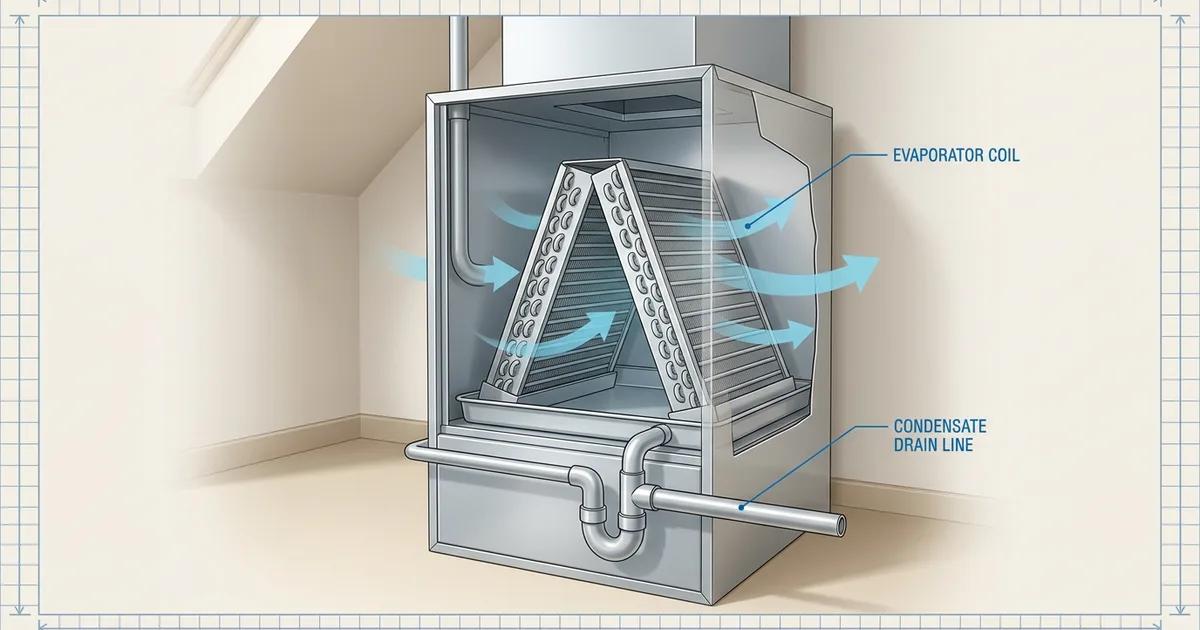
Your air conditioner removes heat from your home and — quietly, constantly — it also removes water. That moisture has to go somewhere: a small PVC pipe called the AC condensate drain line carries it outside or into a floor drain. Most of the time you never think about it. Then one July afternoon your AC stops running, or you spot water puddled on your utility room floor, and suddenly that little pipe becomes the most important thing in your house.
This guide explains what the AC condensate drain line does, why it clogs, how to clean it in about 30 minutes with a $3 bottle of vinegar, and how to spot the signs that point toward a bigger problem requiring a pro.
Key Takeaways
- A residential AC unit drains 5 to 20 gallons of water per day — that water must exit through a clear drain line (ACCA HVAC Blog)
- Algae, mold, and airborne debris are the primary clog causes, per Trane
- The U.S. EPA recommends keeping drain pans clean and lines unobstructed to prevent mold growth (EPA)
- A float switch shuts down your AC when the drain pan overflows — if yours doesn't have one, water damage can happen fast
- DIY cleaning takes 30 minutes and costs nothing; professional service runs $100 to $250 (Bryant)
What Does an AC Condensate Drain Line Actually Do?
The AC condensate drain line carries water out of your air conditioning system every time the unit runs. Warm, humid indoor air passes over the evaporator coil — a cold coil that lives inside your air handler or furnace. Moisture in that air condenses on the cold coil, exactly the way a cold glass sweats on a hot day. Those water droplets drip into a drain pan sitting below the coil, and the drain line carries them away.
According to the ACCA HVAC Blog, the Air Conditioning Contractors of America's trade publication, a functioning residential AC unit can drain anywhere from 5 to 20 gallons of water per day, depending on the system size, how many hours it runs, and how much moisture is in the air. For Sacramento homes, that typically falls toward the lower end of the range — our dry Mediterranean summers mean less humidity for the coil to wring out. But even 3 to 8 gallons per day adds up to a lot of water moving through a small pipe all summer long.
The drain line itself is usually white PVC, three-quarters of an inch in diameter, and runs from the drain pan to an exit point — often a drip near the outdoor condenser, a laundry drain, or a floor drain. Somewhere along that line, especially for indoor air handlers in closets or attics, there's a T-shaped fitting with a removable cap. That's the access port you'll use for cleaning.
The U.S. Department of Energy recommends clearing drain channels periodically to keep the system running efficiently and to prevent clogged drains from "reducing the unit's ability to remove condensed water from the system."
Why Does the AC Condensate Drain Line Clog?
The drain line clogs because it's a dark, constantly damp, slow-moving pipe — nearly ideal conditions for biological growth. Trane, reviewing the cause list on their troubleshooting page, identifies the main culprits as mold and mildew that form in standing water inside the drain pan, plus general dust, dirt, pet dander, and airborne debris that wash off the evaporator coil and settle in the line. Trane even notes that a spider building a web at the exterior drain exit can be enough to start a blockage.
Bryant breaks it down into four categories: debris buildup from particles in the air, algae and mold fostered by the dark damp environment, excess humidity that increases condensate volume, and mineral deposits that build up over time — especially if the system shares drain piping with a humidifier (Bryant).
Dirty air filters accelerate all of this. Lennox points out that when a filter is overloaded, particles bypass it and settle on the evaporator coil. Every time water drips off that coil, it carries those particles into the drain pan and down the line. Swapping your filter every three months — more often if you have pets — reduces the volume of debris that reaches the drain system.
One thing worth noting for Sacramento homeowners: the clog risk doesn't disappear just because our summers are dry. Your AC still runs long hours, the coil still drips, and biological growth doesn't need high outdoor humidity to thrive inside a PVC pipe.
What Are the Signs of a Clogged AC Condensate Drain Line?
The signs show up in a predictable order. Most homeowners notice one of these before they ever look at the drain line.
| Warning Sign | What It Means | How Urgent |
|---|---|---|
| Musty smell from vents | Standing water in drain pan; mold likely present | Address within a few days |
| AC shuts off unexpectedly | Float switch triggered by overflowing drain pan | Immediate — check drain before restarting |
| Water pooling near indoor unit | Drain pan overflowed or drain line disconnected | Immediate — risk of floor/ceiling damage |
| Rust stains on air handler base | Recurring water overflow; drain pan corroding | This week — pan may need replacement |
| Water stains on ceiling or wall | Attic/closet unit overflow has reached structure | Call a pro today — drywall damage likely |
| Rising humidity indoors | AC removing less moisture than normal | Monitor; clean drain and recheck |
Musty smell from vents. Standing water in the drain pan becomes a breeding ground for mold and bacteria. According to Trane, a musty odor when the AC is running is one of the primary signs of drain line trouble. This Old House confirms that standing water "becomes an ideal environment for mold and bacteria growth, spreading musty odors through the home."
The AC shuts off and won't restart. Many systems have a float switch — a small safety device that sits in the drain pan and monitors the water level. Trane's overflow switch page explains how it works: when water in the pan rises to a set level, the switch cuts power to the compressor, condenser fan, and supply fan. The goal is to stop overflow before it damages your home. If your AC suddenly stops on a hot afternoon and won't respond, check the drain pan first — you may have water sitting in it.
Not every system has a float switch. Trane notes that if yours doesn't, the AC will keep running while the pan overflows, potentially soaking insulation, damaging drywall, or — for attic-mounted units — causing ceiling damage.
Water pooling near the unit or ceiling stains. Once the pan overflows, water goes somewhere. Where it ends up depends on where your air handler is located. A closet unit typically spills onto the floor. An attic unit can drip through the ceiling into living space below. Either way, the damage potential ramps up fast.
How to Clean Your AC Condensate Drain Line Yourself
Most clogs respond to a two-part approach: vacuum out the blockage, then flush with vinegar to kill what's left. The whole job takes about 30 to 45 minutes and costs nothing if you already own a wet/dry vac.
What you'll need:
- Wet/dry vacuum (shop vac)
- Distilled white vinegar (1 cup)
- Small funnel (optional but helpful)
- Clean rag or paper towels
- Flashlight
Step-by-step cleaning process:
| Step | Action | Notes |
|---|---|---|
| 1 | Turn off the AC at the thermostat and the breaker | Don't skip this — live current near water is dangerous |
| 2 | Find the T-vent access port on the drain line | Near the indoor air handler; has a removable cap |
| 3 | Remove the cap and inspect with a flashlight | Look for sludge, mold, or visible debris |
| 4 | At the outdoor drain exit, press the wet/dry vac hose firmly against the pipe | Use a rag wrapped around the hose to seal the gap |
| 5 | Run the vac for 2 to 3 minutes to suction out the clog | You may pull out dark sludge — that's algae and debris |
| 6 | Return to the indoor access port and slowly pour 1 cup of distilled white vinegar | Use a funnel to avoid spills into the pan |
| 7 | Let the vinegar sit for 30 minutes | It kills algae and mold in the line |
| 8 | Flush with a cup of clean water | Confirm it drains freely at the outdoor exit |
| 9 | Replace the access port cap | Hand-tight is fine |
| 10 | Restore power and test the AC | Check for musty smell and confirm drain pan is dry |
Carrier's cleaning guide specifies exactly this process: 1 cup of distilled white vinegar, poured slowly into the access port, with a 30-minute dwell time. Trane agrees with the vinegar recommendation but suggests asking your technician to walk you through the first time if you've never located the access port before.
One safety note: never mix vinegar and bleach in the same session. Both work; mixing them produces toxic chlorine gas. Pick one and stick with it. Carrier's page recommends vinegar for routine maintenance. The DOE's common air conditioner problems page recommends a diluted bleach-and-water solution as an alternative. Either is effective — just not together.
If the wet/dry vac doesn't shift the blockage after a second try, stop. A clog that doesn't move with suction may be further up the line, may be a collapsed or disconnected pipe section, or may indicate the drain pan itself needs cleaning or replacement. That's a job for a technician.
How Often Should You Clean the AC Condensate Drain Line?
Energy Star, the EPA-administered efficiency program, recommends inspecting the condensate drain in your central air conditioner at least annually. The checklist notes that "a plugged drain can cause water damage in the house and affect indoor humidity levels."
Annual professional service covers this, but once-a-year inspection isn't the same as once-a-year prevention. A simple monthly habit during the cooling season keeps buildup from reaching clog stage:
- Monthly (May–October): Pour a quarter cup of distilled white vinegar into the access port. No need to vacuum — this is just maintenance dosing.
- Spring tune-up: Have a technician flush and inspect the full drain system before the first hot stretch. Scheduling an AC system maintenance visit before summer means a fresh drain line, calibrated float switch, and no surprises when temperatures hit triple digits in July.
- After any heavy-use period: If your AC ran continuously during a Sacramento heat dome, run a full vinegar flush-and-vacuum as a precaution.
- Filter changes: Replace your air filter every 90 days minimum. A cleaner filter means fewer particles reaching the drain system. If you have pets or anyone with allergies at home, every 60 days is better.
The EPA's mold guidance puts the principle plainly: "Keep air conditioning drip pans clean and the drain lines unobstructed and flowing properly." That's the whole maintenance goal in one sentence.
When Should You Call a Professional?
The vinegar-and-vacuum method handles the majority of residential clogs. But some situations need a technician — and waiting on those costs more in the long run.
Lennox identifies five conditions that warrant a professional call:
- Extensive water damage — flooding, rust, or visible leaking at the unit base
- Recurring clogs — if you're cleaning the drain every few weeks, the problem is deeper than debris buildup
- Persistent musty odors — smell that returns after cleaning suggests mold has colonized beyond the drain line
- Inaccessible clog — some installations require specialized tools or access to reach the blockage
- AC malfunction alongside a drain issue — unusual sounds, poor cooling, or short-cycling combined with drain problems may indicate a refrigerant leak or coil issue
Trane notes that DIY work on HVAC systems "could void your warranty" — so if your system is still under a manufacturer's coverage period, confirm what's DIY-permissible before you open anything beyond the access port cap.
Professional condensate drain service typically runs $100 to $250, per Bryant. If mold remediation is needed in the drain pan or air handler interior, costs can rise. Water damage to drywall or ceilings gets expensive quickly — a $150 service call looks like a bargain next to a $3,000 ceiling repair.
If your system is showing drain problems or you're not sure whether the DIY approach is appropriate for your setup, A-CLASS offers AC system repair including drain line diagnosis, clearing, and float switch inspection. We serve Sacramento and the surrounding area and can usually schedule same-week. Give us a call at (916) 342-9108.
Preventing Clogs Before They Start
Prevention is simpler than cleaning, and it's definitely simpler than water damage repair. The EPA is direct about the connection between moisture control and mold control: "Moisture Control is the Key to Mold Control." A clear drain line that flows freely keeps moisture moving out of the system rather than sitting in the pan.
A few habits that make a real difference:
Change your filter regularly. Lennox recommends every three months, more often for homes with pets or smokers. A loaded filter pushes debris past the media and onto the coil — from there it goes straight into the drain.
Keep the area around your indoor unit clear. Boxes, storage items, and debris near the air handler restrict airflow and can introduce particles into the system.
Check the outdoor drain exit twice a season. The pipe termination near your outdoor unit or foundation can get blocked by dirt, mulch, or insects. A quick look takes 30 seconds.
Don't ignore the smell. A faint musty odor from vents is the earliest warning sign the system gives you. Catch it early and a quarter cup of vinegar usually handles it. Ignore it for two months and you may be looking at a clogged drain, a moldy pan, and an AC that shuts off during the next Sacramento heat advisory.
Book annual AC service. Energy Star, the DOE, and every major manufacturer agree: professional inspection once a year catches drain problems before they become water damage problems. The AC maintenance visit is the single most cost-effective thing you can do for your cooling system.
Frequently Asked Questions
How do I unclog my AC drain line?
Turn off your AC at the thermostat and the breaker. Find the T-shaped access port on the drain line near your indoor air handler and remove the cap. Press a wet/dry vacuum hose to the outdoor drain exit to suction out the blockage, then pour 1 cup of distilled white vinegar into the access port and let it sit 30 minutes. Flush with clean water and test the drain before restarting the AC.
Why is my AC drain line clogged?
Algae and mold grow in the drain pipe's dark, damp interior — that's the primary cause. Dust, pet dander, and airborne debris that wash off the evaporator coil add to the blockage over time. A dirty air filter speeds things up by allowing more particles to reach the coil and drain system. Trane also notes that insects or spider webs at the exterior drain exit are a common but overlooked cause.
Can I pour vinegar in my AC drain line?
Yes. Distilled white vinegar is safe for PVC drain lines and effective against algae and mold buildup. Carrier specifies 1 cup into the access port, a 30-minute soak, then a water flush. Don't mix vinegar with bleach in the same session — that combination creates toxic chlorine gas.
What happens if my AC drain line is clogged?
Water backs up into the drain pan. If your system has a float switch, it shuts the AC down before the pan overflows. Without that switch, water spills out and can soak surrounding insulation, stain or warp flooring, damage drywall, or — in attic-mounted systems — drip through the ceiling into living space. Musty odors from vents are usually the first sign the drain system has a problem.
How often should I clean my AC condensate drain line?
Energy Star recommends inspecting the drain line at least once a year during your annual AC tune-up. A monthly preventive flush with a quarter cup of distilled white vinegar during the May-through-October cooling season keeps biological growth in check between professional visits.
When should I call a professional to clear my AC drain line?
Call if you see water pooling near the indoor unit, notice rust or corrosion on the air handler base, or find ceiling stains that suggest overflow from an attic-mounted system. Also call if the clog returns within a few weeks after cleaning, if a musty smell persists after you've flushed the line, or if the AC is shutting off and won't restart after you've cleared the drain. Those patterns point to a deeper issue — mold in the air handler, a damaged drain pan, or a float switch problem — that needs a technician.
The AC condensate drain line does one job: move water out of your system every day it runs. Keep it clear and you'll likely never notice it exists. Let it clog and you'll know about it fast — a musty smell first, then a shut-off system, then possibly a wet ceiling.
Monthly vinegar flushes and annual professional service are enough to keep most drain lines running clean. If you're in Sacramento and your system is showing any of the warning signs covered here, schedule an AC maintenance visit before the next heat wave hits. We're local, family-owned, and can usually get out to you the same week. Call A-CLASS Heating and Air at (916) 342-9108.
Sources:
- U.S. Department of Energy, "Maintaining Your Air Conditioner," https://www.energy.gov/save
- U.S. Department of Energy, "Common Air Conditioner Problems," https://www.energy.gov/save
- U.S. EPA, "A Brief Guide to Mold, Moisture and Your Home," https://www.epa.gov/mold/brief-guide-mold-moisture-and-your-home
- Energy Star, "Maintenance Checklist," https://www.energystar.gov/saveathome/heating-cooling/maintenance-checklist
- ACCA HVAC Blog, "The Ultimate Guide to HVAC Condensate," https://hvac-blog.acca.org/the-ultimate-guide-to-hvac-condensate/
- Carrier, "How to Clean AC Drain Line," https://www.carrier.com/us/en/residential/hvac-resources/air-conditioners/how-to-clean-ac-drain-line/
- Bryant, "AC Drain Line," https://www.bryant.com/en/us/products/air-conditioners/drain-line/
- Trane, "AC Condensate Drain Line Clogged," https://www.trane.com/residential/en/resources/troubleshooting/air-conditioners/ac-drain-line-clogged/
- Trane, "HVAC Air Handler Overflow Switch," https://www.trane.com/residential/en/resources/troubleshooting/air-handlers/hvac-air-handler-overflow-switch/
- Lennox, "AC Drain Line Clogged? Here's What to Do," https://www.lennox.com/residential/lennox-life/consumer/ac-drain-line-clogged
- This Old House, "Air Conditioner Smells Musty? Here's How To Solve It," https://www.thisoldhouse.com/heating-cooling/air-conditioner-smells-musty
Frequently Asked Questions
How do I unclog my AC drain line?
Turn off your AC. Locate the T-shaped access port near your indoor air handler and remove the cap. Pour 1 cup of distilled white vinegar into the line, wait 30 minutes, then flush with water. For a stubborn clog, press a wet/dry vacuum to the outdoor drain exit to suction out the blockage. Run the AC and confirm water drains freely before putting the cap back.
Why is my AC drain line clogged?
The most common causes are algae and mold that grow in the drain pipe's dark, wet environment, plus dust and debris that wash off the evaporator coil into the line over time. A dirty air filter speeds up the process by letting more particles reach the coil. In Sacramento, dry summer air produces less condensate than humid climates, but the biological growth still happens every cooling season.
Can I pour vinegar in my AC drain line?
Yes. Distilled white vinegar is safe for PVC drain lines and effective against algae and mold. Carrier and Trane both recommend it. Pour 1 cup into the access port, wait 30 minutes, then flush with clean water. Avoid mixing vinegar with bleach — that combination produces toxic chlorine gas. Use one or the other, never both in the same session.
What happens if my AC drain line is clogged?
Water backs up into the drain pan. If your system has a float switch — a safety device that monitors water level — it will shut down the AC automatically to prevent overflow. Without that switch, water spills out of the pan and can soak insulation, damage drywall, and grow mold. A musty smell from your vents is usually the first sign something is wrong.
How often should I clean my AC condensate drain line?
Energy Star recommends inspecting the condensate drain at least once a year as part of routine AC maintenance. A good habit is to pour a quarter cup of distilled white vinegar into the access port every month during the cooling season. Run the AC for a week after a professional tune-up each spring before starting the monthly flushes.
When should I call a professional to clear my AC drain line?
Call a pro if you see water pooling around your indoor unit, find rust stains on the bottom of the air handler, notice a recurring musty smell that comes back after you clean the line, or if your AC shuts off and won't restart. Lennox also recommends professional service when the clog location isn't accessible with a standard vacuum hose or when water damage is already visible on walls or ceilings.